
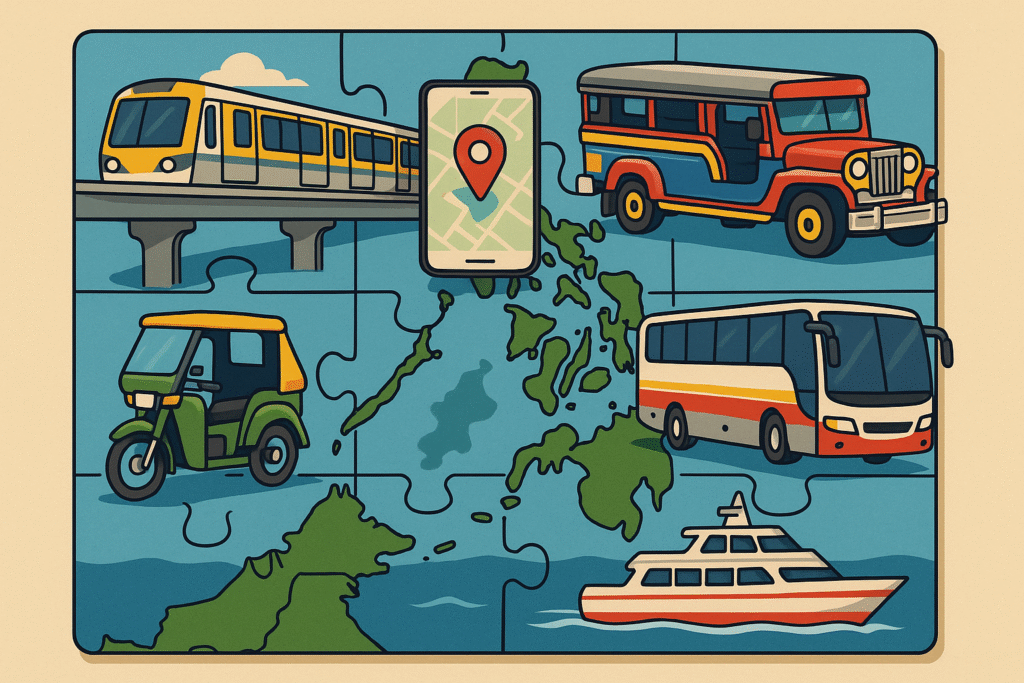
Travel in the Philippines is a tapestry of classic vehicles and modern convenience. Start with jeepneys—vibrant, open-air icons that crisscross urban and rural routes. They’re cheap and frequent, but deciphering routes can be tricky at first. Ask locals at the stop, keep exact change, and watch for overhead bars inside that you can tap when you’re ready to get off.
Tricycles dominate last-mile moves in towns. They’re perfect for beaches, markets, and resorts off the main road. Fares are often per ride rather than per person; clarify if it’s a “special” (private) trip or a shared route. In cities, UV Express vans shuttle commuters along fixed corridors; they’re faster than jeepneys but may pack tight. If you’re carrying large bags, a taxi or Grab may be easier.
Urban rail helps you beat congestion. Manila’s LRT/MRT links key districts; use a Beep card to skip ticket lines. Weekday peaks are intense—plan outside rush hours if possible. Buses provide a comfortable alternative for longer city hops and interprovincial travel. Premium lines offer reclining seats, Wi-Fi, and clean terminals. For northbound getaways to Baguio or La Union, booking ahead on weekends is wise.
Because the country spans many islands, ferries can be as important as flights. Fast crafts handle short hops—Cebu–Tagbilaran, Iloilo–Guimaras—while big roll-on/roll-off ships connect larger ports overnight. Bring a light jacket for chilly cabins and store valuables on your person. Monitor weather bulletins during rainy months; schedules can shift quickly, and safety overrides speed.
Ride-hailing apps streamline city travel. Grab is dependable in Metro Manila, Cebu, and other major areas, with clear pricing and driver tracking. Airport transfers are smoother with official taxis or ride-hailing pickup points—follow the signage. Traditional taxis vary; insist on the meter or settle a fare first, and consider small tips for good service.
Money matters: cash remains king, especially for jeepneys and tricycles. Keep a stash of coins and small bills. E-wallets (GCash/Maya) are popular in cities but patchy in smaller towns. If you’re using trains and some buses, a Beep card is handy. Ticket counters may close early in provincial terminals—arrive with time to spare.
Practical safety: guard against pickpockets on crowded platforms and vehicles. Sling bags worn across the chest and zipped pockets help. At night, stick to main roads, use reputable transport, and share your live location with a friend if riding alone. Weather awareness is critical—typhoons can affect both ferries and flights. Build flexibility into island-hopping plans, and consider travel insurance that covers delays.
Cultural grace goes far: queue patiently, offer your seat to elderly passengers, and greet with “po/opo” for politeness. Most people speak English and appreciate straightforward questions like “Where does this jeepney go?” With these habits and tools, moving around the Philippines becomes not just efficient but delightfully local.