
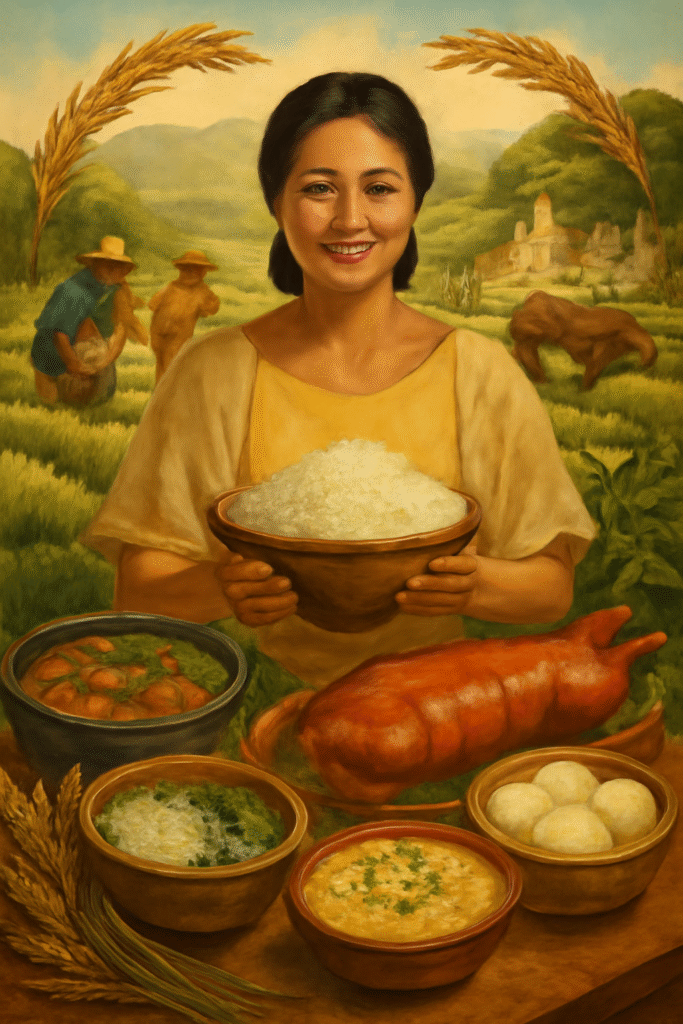
In the Philippines, rice is not just a side dish; it is a central ingredient that defines the essence of Filipino cuisine. It is consumed in nearly every Filipino meal and serves as the foundation for many dishes that carry deep cultural meaning. While rice is commonly known as a carbohydrate-rich food, its importance transcends mere sustenance, making it an integral part of Filipino identity and culinary heritage.
Rice is the primary source of energy for most Filipinos, who typically consume it multiple times a day. Whether paired with savory stews like sinigang (tamarind soup) or marinated meats like adobo (braised chicken or pork), rice complements a variety of main dishes with its subtle, neutral flavor. It helps balance the rich, bold spices and flavors that define Filipino cooking. As such, rice serves as an essential base, soaking up the sauces and juices from the main dish, enriching the overall dining experience.
Beyond its role in daily meals, rice also carries significant cultural importance in the Philippines. It symbolizes fertility, abundance, and sustenance, often featured in religious ceremonies, family gatherings, and major life events such as weddings and harvest festivals. In rural communities, rice is intertwined with local traditions and customs, with rice farmers celebrated for their contributions to the country’s food security.
One of the key features of Filipino rice dishes is their versatility. Plain rice, or kanin, can be served as an accompaniment to almost any dish, but it is also transformed into various delicacies. Dishes such as arroz caldo (rice porridge), palitaw (sweet rice cakes), and biko (sweet sticky rice with coconut milk) demonstrate the many ways rice can be enjoyed. Its ability to absorb different flavors and textures, from savory to sweet, makes it an indispensable ingredient in Filipino cooking.
The cultivation of rice is vital to the Filipino economy. With the country being one of the largest rice producers in Southeast Asia, rice farming sustains millions of Filipino families. Rice fields, or palayan, are a significant part of the agricultural landscape, and they hold both economic and cultural importance. The Philippine government continues to support rice production through various programs aimed at ensuring the nation’s rice security and promoting sustainable farming practices.
Rice is also a symbol of hospitality in Filipino culture. Serving rice to guests is a way of showing respect and appreciation. It is customary to offer guests a full plate of rice, often accompanied by a wide array of dishes. This practice reflects the Filipino value of bayanihan, which emphasizes community spirit and helping others in times of need.