
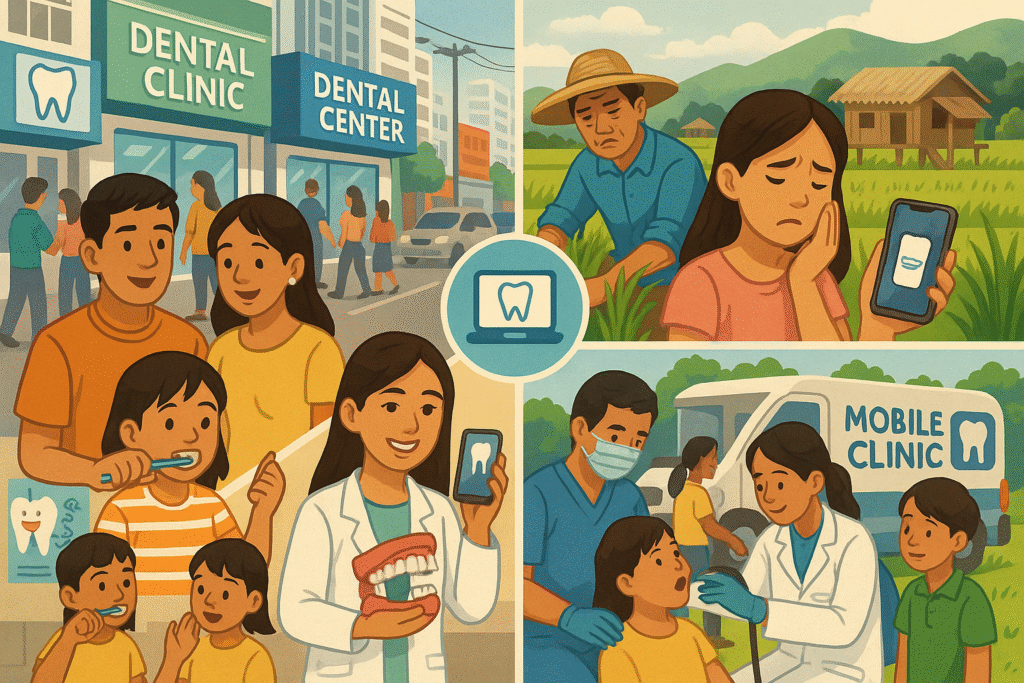
Dental care in the Philippines operates within a mixed health system where public and private providers coexist but do not always complement each other effectively. For many Filipinos, the way they experience dental health care depends heavily on where they live, how much they earn, and what kind of information they receive about oral hygiene.
The public sector offers dental services through government hospitals, rural health units, and city health offices. These facilities usually focus on essential treatments such as extractions, basic fillings, and pain relief. Because resources are limited, preventive services like regular cleaning, sealants, and more complex restorative care may not always be available. Dentists in public service often face pressure from high patient volumes and a shortage of equipment or materials, which can limit the time spent on each patient.
In contrast, private dental clinics provide a much broader range of services. Filipinos who can afford it may visit private clinics for root canals, crowns, orthodontics, implants, and cosmetic treatments. Clinics in major cities tend to be better equipped and may adopt newer technologies and techniques. However, the cost of private care can be prohibitive for many individuals and families, particularly those without employer-sponsored insurance or higher incomes.
Geographic disparities are a persistent issue. The majority of dentists are concentrated in urban and economically developed regions. Rural areas, island communities, and mountainous regions may have very few dental practitioners or none at all. This leads to situations where people rely on home remedies, over-the-counter painkillers, or traditional beliefs rather than professional care. Travel to the nearest city may require both time and money that households cannot easily spare, reinforcing the perception that dental treatment is something to avoid unless absolutely necessary.
Awareness of dental health is improving but still uneven. Public health campaigns and school-based programs help spread messages about brushing, flossing, and reducing sugar intake. Some schools implement regular tooth-brushing activities and coordinate with local dentists for check-ups. However, not all communities have sustained access to such programs. Cultural attitudes can influence behavior as well: some people see tooth loss as an inevitable part of aging, rather than a preventable outcome.
The integration of dental health into broader health initiatives is slowly gaining ground. Oral health is being linked more explicitly to conditions like diabetes and heart disease, emphasizing that the mouth is not separate from the rest of the body. This perspective encourages doctors and nurses to include oral health advice in their encounters with patients and may eventually support stronger policies and funding for dental services.
Emerging solutions show promise. Community-based initiatives, mobile dental clinics, and outreach missions help address gaps in remote areas. Training non-dental health workers to deliver basic oral health education can extend the reach of information beyond clinics. As technology becomes more accessible, teleconsultations and digital platforms may also support initial assessments and follow-up advice, especially where dentists are scarce.
Improving access to dental care in the Philippines will require long-term commitment: policies that incentivize dentists to serve in underserved areas, increased public funding for preventive and restorative treatments, and consistent educational campaigns that reach both children and adults. With strategic planning and community involvement, oral health can become a more achievable priority for people across the country.