
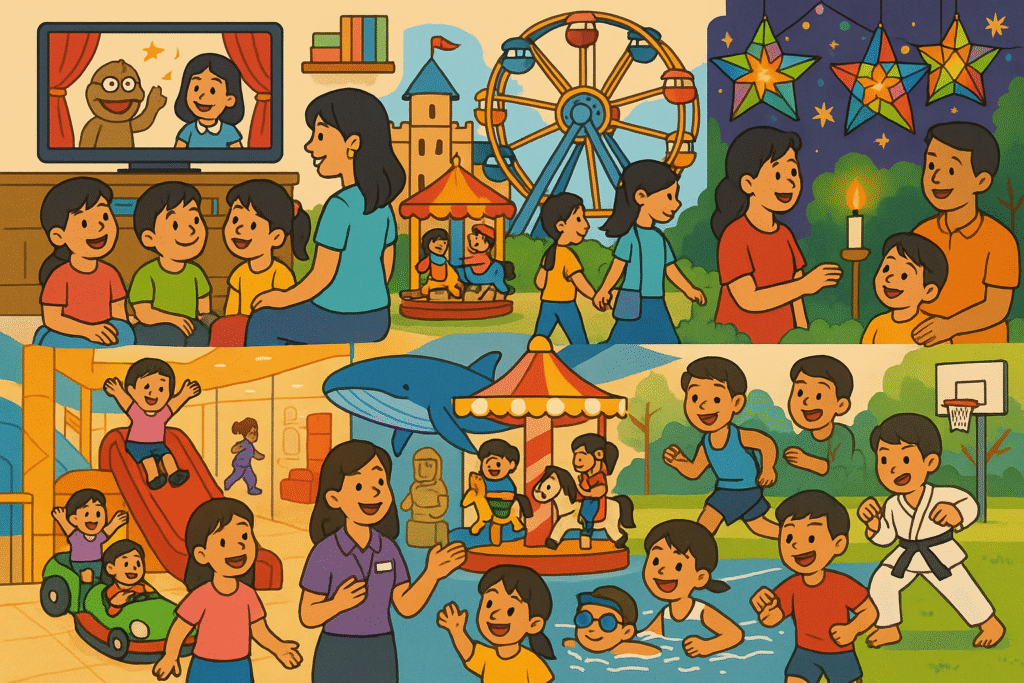
In the Philippines, entertainment for children is closely tied to family time. Parents, grandparents, and siblings usually take part in the activities, turning simple shows and events into shared experiences that kids remember for years.
At home, many children grow up watching a mix of local and international programs. Classic educational shows like Batibot introduced basic concepts, Filipino language, and simple life lessons through puppets and friendly hosts. Shows such as Hiraya Manawari and Bayani offered dramatized stories that taught values and history in a child-friendly way. Today, these are often complemented by modern series and animated shows on cable and streaming platforms, giving children many options that balance entertainment and learning.
Online content has become another essential part of kids’ daily lives. Filipino children often watch music videos, nursery rhymes, science experiments, and craft tutorials on YouTube. Parents may use these videos as tools for early literacy and numeracy, or to teach English and Filipino words. Some families prefer channels that incorporate Filipino culture, such as local songs, games, or folk stories.
Outside the house, city kids are spoiled for choice with commercial entertainment venues. Theme parks like Enchanted Kingdom and Star City are often top picks for birthdays, school trips, or family weekends. These parks offer a mix of thrilling and gentle rides, stage shows, and photo spots with mascots and characters. Many attractions within these parks are designed to be accessible and safe for small children, with height restrictions and trained staff.
Malls, which are abundant throughout the country, act as indoor playgrounds for families. Almost every major mall has an area dedicated to children’s entertainment—soft play zones, kiddie rides, arcade centers, and toy stores. On special days, malls organize events such as superhero shows, princess tea parties, storytelling sessions, and arts-and-crafts corners. These activities are usually free or low-cost, making them accessible to a wide range of families.
Meanwhile, community-based entertainment remains strong, especially in smaller towns and neighborhoods. Barangay (village) events often include games like sack races, “pabitin” (a hanging frame of goodies that children try to grab), and “palosebo” (climbing a greased pole, usually watched by older kids). Local officials and organizations sometimes host movie nights, talent contests, and sports tournaments specifically for children.
Religious and cultural celebrations play a big part as well. During Holy Week and Christmas, churches and schools organize plays, nativity reenactments, children’s choirs, and charity drives that involve kids as performers and volunteers. During fiestas, children join dance troupes, costume parades, and beauty pageants tailored for their age group.
For many Filipino families, education and entertainment are intertwined. Schools coordinate field trips to museums, science centers, and historical sites, where interactive exhibits and guided tours capture children’s curiosity. Some museums in Metro Manila and major cities offer hands-on displays, mini-workshops, and themed days specifically for young learners.
In practice, children’s entertainment in the Philippines is a blend of modern media, commercial venues, and age-old community traditions. Whether a child is excited about a new cartoon, a mall show, or a town fiesta, the experience is usually shared with family and friends, reinforcing social ties while providing fun and enrichment.