
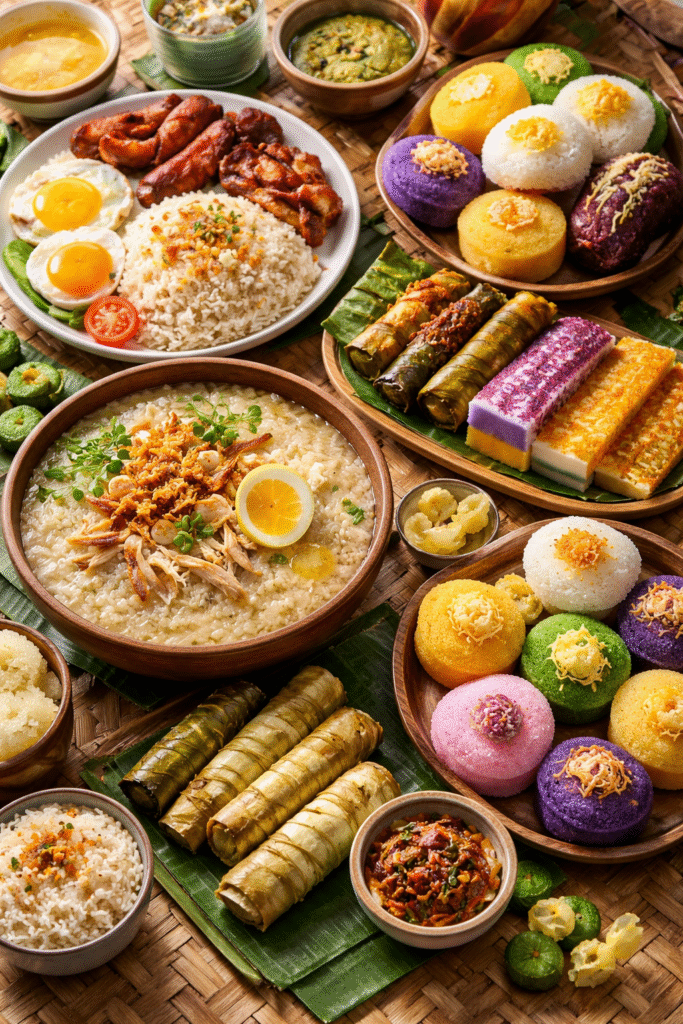
In the Philippines, rice is not simply something eaten with a meal; it is the ingredient that defines the meal. Many Filipinos grow up eating rice three times a day, and this deep dependence on rice has produced an impressive variety of dishes. From savory morning plates to soft steamed cakes sold in neighborhood stalls, rice is transformed in ways that reflect both practicality and creativity. Filipino cuisine offers a broad picture of how one staple can take on many textures, flavors, and meanings.
A classic example is sinangag, the country’s well-loved version of fried rice. Unlike heavily seasoned fried rice found in some other cuisines, sinangag is usually restrained and straightforward. The rice is stir-fried with garlic until aromatic, allowing the grain’s natural flavor to remain noticeable. Leftover rice is preferred because it is firmer and less sticky, which helps create a looser texture. Sinangag is closely tied to the Filipino breakfast culture known as silog, in which fried rice and egg are paired with a protein such as marinated beef tapa, cured pork tocino, bangus, or longganisa. In this setting, fried rice is not an afterthought; it anchors the entire plate.
Rice also becomes nourishment in its softest and most soothing form through dishes like lugaw and arroz caldo. Lugaw is a plain rice porridge that can be dressed up with garlic, spring onion, or fish sauce, while arroz caldo includes chicken and ginger and is usually richer and more aromatic. These dishes are often associated with comfort, home care, and recovery from sickness, but they are equally common as affordable street food or evening meals. Their popularity shows how rice in Filipino cuisine is not only filling but emotionally resonant. It can provide warmth, simplicity, and familiarity in a way few other foods can.
Another important part of Filipino rice cooking is the world of kakanin, a category of rice-based delicacies usually served as snacks, desserts, or festival foods. Here, rice is often combined with coconut milk, palm sugar, and banana leaves. Sticky rice desserts such as biko and wrapped treats like suman demonstrate how rice can move from everyday necessity to ceremonial food. These dishes are often seen during family gatherings, religious feasts, and holiday celebrations. Their preparation can be labor-intensive, which gives them a special value beyond taste alone.
Among these rice delicacies, puto holds a special place. Puto is a steamed rice cake known for its tender texture and mild sweetness. Traditionally, it was made by soaking rice, grinding it, and allowing the batter to ferment lightly before steaming. Today, many recipes use rice flour for convenience, but the appeal remains the same: puto is soft, fragrant, and easy to enjoy. It may be plain, colored, topped with cheese, or enriched with ingredients like coconut or ube. In some regions, puto is sold with savory dishes, while in others it appears mainly during merienda or celebrations.
Taken together, these dishes show the adaptability of Filipino rice cookery. Fried, simmered, steamed, sweetened, or fermented, rice changes form without losing its central place in daily life. Filipino cuisine proves that a staple ingredient does not have to be repetitive. Instead, it can become a source of endless variation, carrying history, regional identity, and household memory in every bite.