
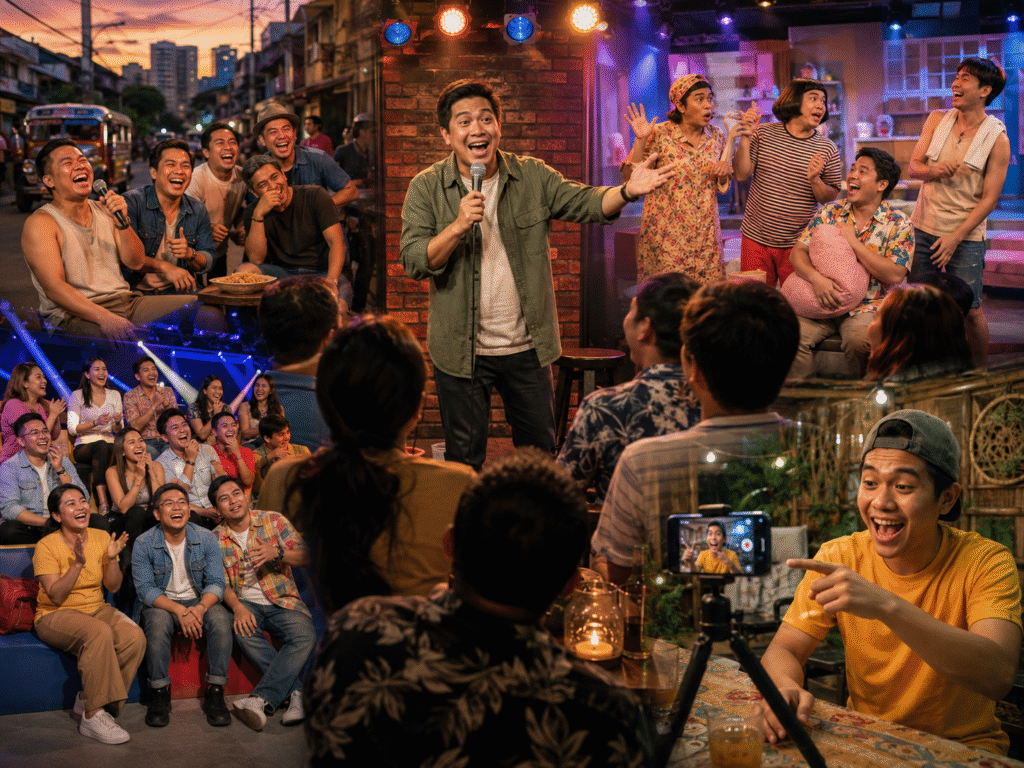
The comedy scene in the Philippines is one of the most colorful parts of the country’s entertainment industry. It combines performance, storytelling, music, improvisation, satire, and emotional honesty. Filipino audiences enjoy comedy not only because it makes them laugh, but also because it mirrors their experiences. From family arguments and romantic heartbreak to politics and economic struggles, almost every part of Filipino life can become a source of humor.
A career in Filipino comedy usually requires more than writing jokes. Many successful comedians are multi-talented entertainers. They may perform stand-up, act in films, host live shows, sing, dance, or create comedy sketches. This versatility is important because Philippine show business often blends different forms of entertainment. A comedian may appear in a sitcom, perform in a comedy bar at night, host a variety show, and later star in a movie.
Comedy bars have been especially important in developing Filipino comedic talent. These venues give performers the chance to sharpen their timing, interact with audiences, and improve their improvisation. Unlike scripted television comedy, live comedy requires immediate reaction. If a joke fails, the comedian must recover quickly. This kind of training has helped many performers become confident and spontaneous entertainers.
The Philippines has produced several legendary comedy figures. Dolphy is remembered as one of the most influential comedians in Philippine history. His characters were often ordinary Filipinos facing life’s problems with kindness, humor, and patience. His work in films and television helped define family-friendly Filipino comedy. Another major figure is Vic Sotto, whose career spans sitcoms, fantasy-comedy films, and noontime television. His calm delivery and natural comic presence made him a household name.
Michael V. is another important figure because of his skill in sketch comedy and parody. Through “Bubble Gang,” he created memorable characters and humorous versions of popular songs, advertisements, and social trends. His comedy is often admired for being clever and carefully written. Vice Ganda represents a newer mainstream comedy style: fast, bold, expressive, and highly interactive. Coming from stand-up and comedy bar culture, Vice Ganda became a major television host, film star, and public personality.
Popular Filipino comedy shows have shaped the taste of several generations. “John en Marsha” became a classic because it presented family life in a funny yet recognizable way. The show used domestic situations, money problems, and household relationships as comedy material. “Home Along Da Riles” also became iconic because it showed the life of a poor but loving family living near the railway. Through humor, it explored social class, survival, and Filipino family values.
“Bubble Gang” is a major example of sketch comedy in the Philippines. Its format allows different styles of humor, including parody, slapstick, satire, and recurring characters. Because it comments on trends and public behavior, it has remained relevant for many years. Noontime programs such as “Eat Bulaga!” and “It’s Showtime” also keep comedy alive through live hosting, games, jokes, and audience participation.
Today, Filipino comedy has expanded through social media. Young comedians and content creators can now become popular by posting short videos, skits, reaction clips, and relatable jokes online. Digital comedy often highlights everyday Filipino situations, such as strict parents, school pressure, workplace drama, and neighborhood gossip.
The world of Filipino comedy continues to grow because it adapts to every generation. Its strength comes from its ability to transform ordinary experiences into shared laughter. It entertains, comforts, and reminds audiences that humor is one of the most important parts of Filipino culture.