
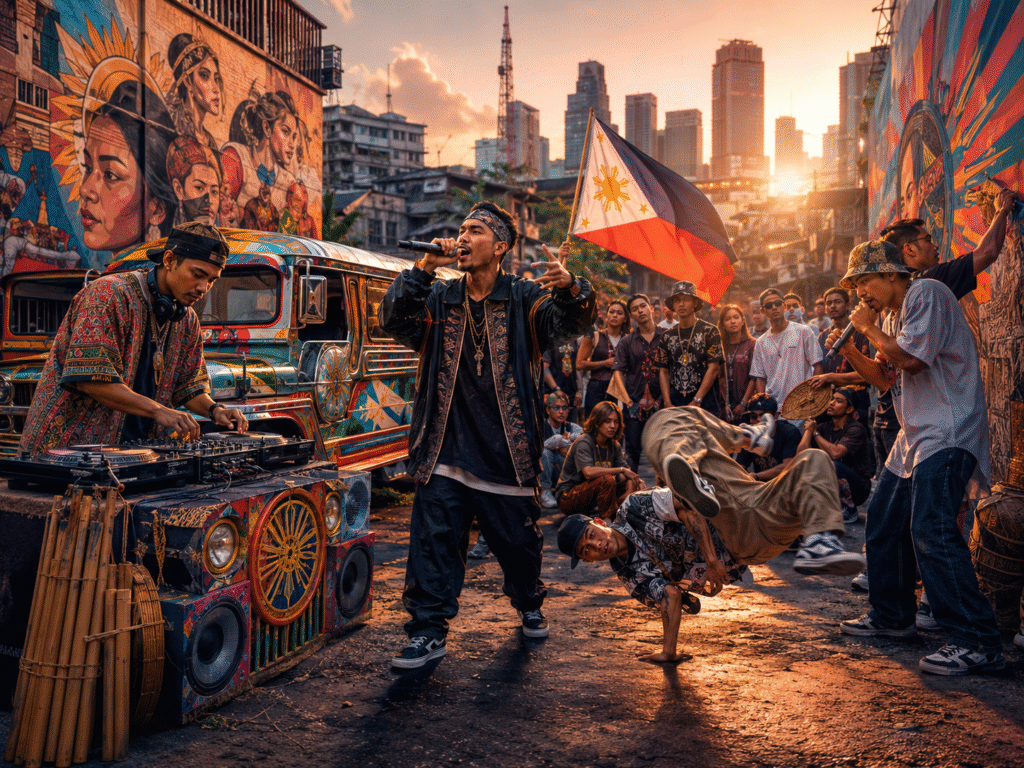
Hip hop, originally emerging from the streets of New York City in the 1970s, has long been a vehicle for self-expression and social awareness. In the Philippines, the genre took root during the late 1980s and early 1990s, evolving into a vital part of the country’s musical landscape. Filipino musicians adapted hip hop not only as a musical style but also as a cultural platform, blending Western influences with local experiences to reflect the realities of urban life.
One of the earliest Filipino hip hop pioneers, Francis Magalona, used rap to promote Filipino identity and nationalism, proving that hip hop could be a powerful tool for storytelling beyond entertainment. Similarly, Andrew E. incorporated humor and social commentary into his music, making hip hop accessible while addressing everyday concerns of ordinary Filipinos. These artists laid the foundation for a uniquely Filipino hip hop culture, one that integrates local language, history, and social issues into its lyrical content.
Philippine hip hop distinguishes itself through its emphasis on social themes and realism. Unlike mainstream pop, which often emphasizes romantic narratives, hip hop offers perspectives on economic hardship, political corruption, and urban life struggles. Songs frequently highlight inequality, migration, and the pressures of city living, providing a platform for marginalized voices that are rarely represented in mainstream media. This socially conscious approach has given Filipino hip hop a sense of authenticity that resonates strongly with listeners.
Linguistic versatility is another hallmark of the genre. Filipino rappers often weave together Tagalog, English, and regional dialects, creating a multilingual musical expression that mirrors the Philippines’ cultural diversity. The genre is closely associated with broader urban culture, including graffiti, breakdancing, and street fashion, establishing a cultural ecosystem that extends beyond just the music. Hip hop is not merely sound—it is a lifestyle, a statement, and a form of resistance against cultural homogenization.
Musically, Philippine hip hop has embraced experimentation and fusion. Artists combine electronic beats with traditional instruments or indigenous rhythms, creating a sound that is both modern and deeply rooted in Filipino heritage. Collaborations with pop, rock, and electronic musicians have expanded the genre’s appeal, demonstrating hip hop’s versatility and its impact on other musical styles. These creative intersections showcase the genre’s ability to evolve while maintaining cultural relevance.
In recent years, digital platforms and social media have amplified the reach of Philippine hip hop. Aspiring artists can now share their music with audiences nationwide, breaking geographical barriers and democratizing exposure. Competitions, online streaming, and hip hop festivals have nurtured a vibrant community, encouraging innovation and collaboration among new generations of Filipino musicians.
Ultimately, hip hop’s influence on Philippine music extends beyond rhythm and rhyme. It serves as a cultural lens, reflecting societal realities while giving voice to marginalized communities. Filipino hip hop continues to grow as both an art form and a social movement, illustrating the country’s creative adaptability and its engagement with global musical trends.