
The influence of Western fashion on Filipino clothing is not only about garments; it is also about identity, culture, and social change. In the Philippines, fashion has often reflected the country’s complex history of colonization, modernization, and global exchange. Western clothing entered Filipino society through colonial rule, education, religion, media, trade, and migration. Over time, these influences changed not only what people wore, but also how they understood elegance, professionalism, femininity, masculinity, and modern life.
During the Spanish colonial era, European fashion became associated with refinement and social status. Spanish customs encouraged more covered and formal clothing, especially for women. This reshaped native dress into garments that combined local fabrics with European silhouettes. The baro’t saya, for example, reflected modesty and grace while still preserving Filipino materials and craftsmanship. Later, the traje de mestiza and the terno became more elaborate, showing how Western-inspired clothing could be transformed into national dress.
Western fashion also influenced ideas of class. In colonial society, clothing often separated the wealthy and educated from ordinary people. European-style garments suggested privilege, access to education, and closeness to colonial culture. Those who wore fine fabrics, embroidered blouses, structured skirts, suits, or polished shoes were often seen as socially elevated. Fashion became a visible sign of one’s place in society.
The arrival of American rule changed the direction of fashion in the Philippines. While Spanish influence emphasized formality and tradition, American fashion introduced practicality and modern comfort. Schools, offices, and government institutions promoted Western-style uniforms and professional clothing. Men wore suits, collared shirts, and ties, while women adopted dresses, skirts, blouses, and later more relaxed casual wear. American clothing became connected with education, progress, and modern citizenship.
Western media played a large role in shaping Filipino taste. Films, magazines, advertisements, beauty pageants, and television presented Western fashion as stylish and desirable. Filipino women admired Hollywood gowns, curled hairstyles, high heels, and makeup trends. Men were influenced by Western sportswear, leather jackets, denim jeans, and business suits. These styles were not always copied exactly; they were adjusted to Filipino lifestyles, budgets, and weather.
The influence of Western fashion also affected gender expression. Western dress introduced new possibilities for women, especially in urban areas. Shorter skirts, tailored dresses, trousers, and office wear reflected women’s growing participation in education and employment. For men, Western suits and business attire became symbols of professionalism and authority. In both cases, fashion expressed changing social roles.
However, Western influence did not erase Filipino identity. Instead, Filipino fashion developed through blending. Designers used Western tailoring while preserving local textiles and decorative techniques. Traditional garments were redesigned for modern events, combining heritage with contemporary style. For instance, the terno may use Western construction methods, but its butterfly sleeves remain strongly associated with Filipino elegance.
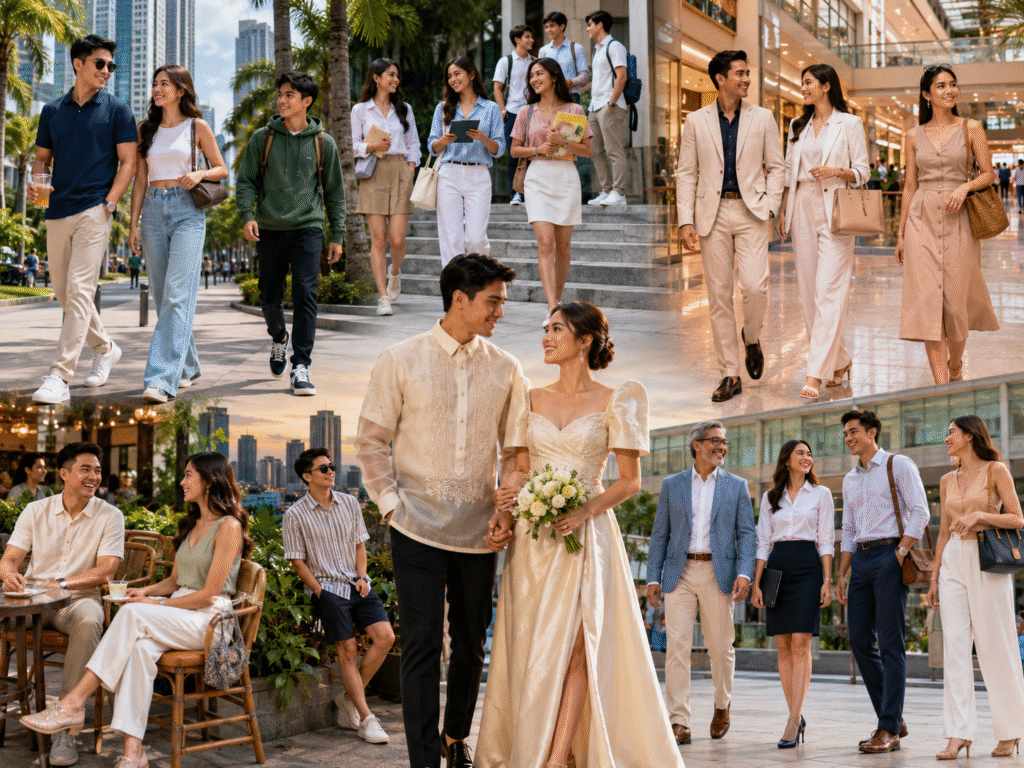
In modern Philippine society, Western fashion is everywhere, from office clothing and wedding gowns to streetwear and mall fashion. Yet local identity remains visible through fabric choices, embroidery, regional weaving, and cultural symbolism. Filipino fashion shows that influence does not always mean imitation. It can also become adaptation, reinvention, and cultural expression.