
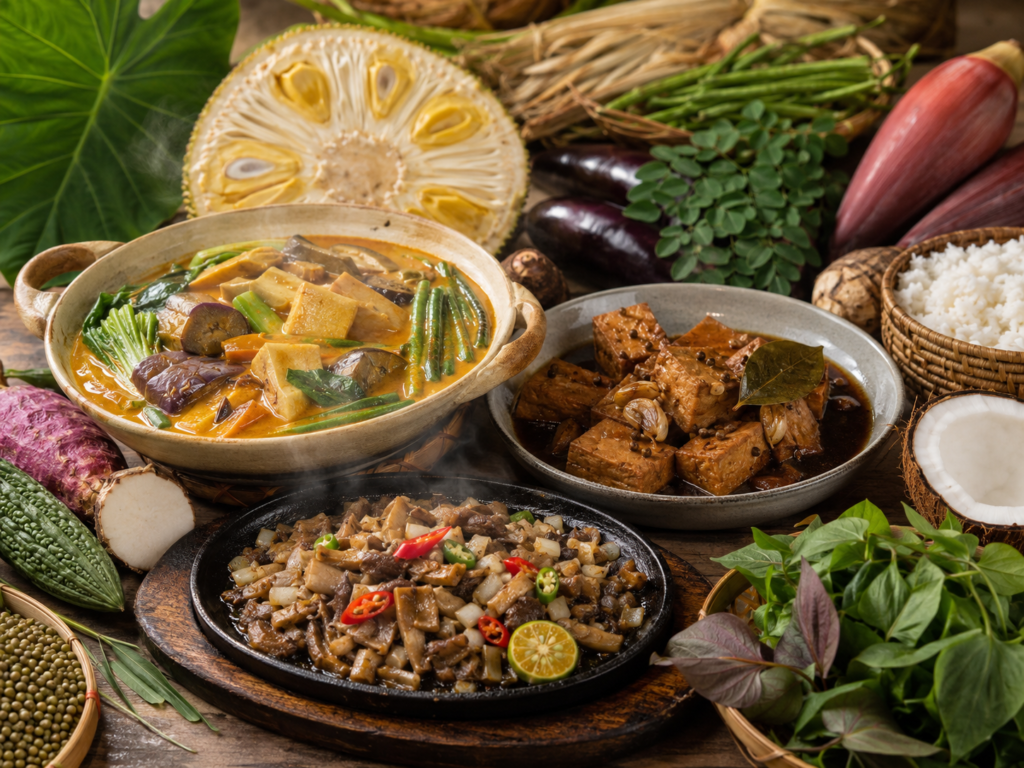
The strongest flavors in Filipino cooking do not come exclusively from meat. Vinegar, garlic, coconut milk, tomatoes, chilies, fermented seasonings, and slow cooking give many Filipino dishes their distinctive character.
This matters as more diners seek vegetable-centered meals without abandoning traditional taste. Filipino cuisine already has the ingredients needed to meet that demand. The main task is adapting recipes that have gradually acquired pork, fish sauce, shrimp paste, or meat broth.
Flavor Comes From Technique, Not Only Protein
Filipino cooks rely heavily on sautéing garlic, onions, and tomatoes before adding the primary ingredients. This technique, known locally as gisa, creates a savory base for beans, leafy greens, squash, and noodles.
Vinegar is another important element. It adds brightness, preserves food, and balances rich coconut-based sauces. Soy sauce, calamansi, black pepper, ginger, and chilies can then add complexity without using animal products.
For this reason, converting a Filipino dish into a vegetarian meal does not have to make it bland.
Vegetable Dishes With Strong Regional Identity
Ginataang Langka
Ginataang langka uses unripe jackfruit simmered in coconut milk. Young jackfruit has a fibrous texture that absorbs garlic, ginger, chili, and coconut flavors effectively.
Some traditional recipes include shrimp, dried fish, or pork. A vegetarian version can use mushrooms or fried tofu, while a fully vegan version should also avoid fish sauce and shrimp paste.
Adobong Kangkong
Water spinach, known as kangkong, can be cooked using the familiar adobo combination of vinegar, soy sauce, garlic, pepper, and bay leaves. The stems remain slightly crisp while the leaves absorb the sauce.
This dish demonstrates that adobo is a cooking method rather than a single meat recipe. Tofu, mushrooms, eggplant, and string beans can be prepared in the same style.
Ensaladang Talong
Grilled eggplant is peeled, chopped, and mixed with tomatoes, onions, and a sharp calamansi or vinegar dressing. The smoky eggplant makes the dish more satisfying than a conventional green salad.
Traditional seasoning may include fish sauce or shrimp paste. Salt, soy sauce, or a small amount of miso can provide a vegetarian alternative.
Tortang Talong
Tortang talong is made by dipping grilled eggplant in beaten egg before frying it like an omelet. It is appropriate for ovo-vegetarians but not for vegans.
A vegan interpretation can use chickpea flour batter, although this is a modern adaptation rather than the standard household recipe.
A Common Dining-Situation Problem
A current challenge for vegetarian travelers is the difference between a dish’s visible ingredients and its seasoning. Pinakbet, noodle dishes, soups, and sautéed greens may look entirely vegetable-based, but their sauces can contain seafood products.
This is especially relevant in markets, family-run restaurants, and buffet counters where recipes are prepared in advance. Asking whether a dish contains “patis” or “bagoong” is often more effective than asking only whether it contains meat.
Building a More Balanced Filipino Meal
A practical plant-forward plate may include rice, mung bean stew, grilled eggplant salad, sautéed leafy greens, and fresh tropical fruit. This combination provides carbohydrates, plant protein, fiber, vitamins, and varied textures.
The Food and Agriculture Organization maintains information about the Philippines’ food-based dietary guidelines, including the importance of consuming varied food groups. The reference can be viewed through the FAO Philippines Dietary Guidelines page.
For modern Filipino restaurants, the opportunity is not simply to imitate Western vegan food. It is to highlight the country’s own vegetables, regional techniques, and coconut-based dishes while clearly labeling seafood-based condiments.