
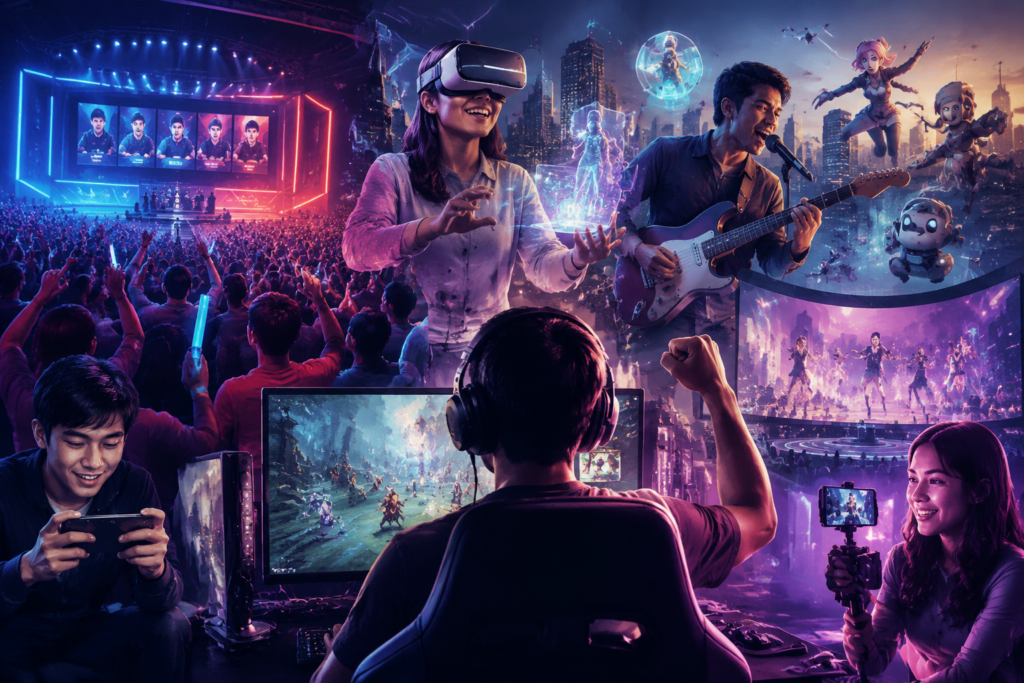
The Philippine entertainment industry is entering a new digital era as audiences increasingly move from traditional television and cinema experiences toward online platforms. Technology has changed not only how Filipinos consume entertainment but also how production companies create, distribute, and monetize content.
For decades, major television networks controlled the country’s entertainment ecosystem through broadcast programming, celebrity management, and advertising-driven business models. However, the rise of over-the-top (OTT) streaming platforms has introduced a more competitive environment where viewers have greater control over what, when, and where they watch.
In 2026, entertainment companies in the Philippines are adapting to a market where audience attention has become one of the most valuable resources. Streaming services, mobile applications, and social media platforms now influence entertainment decisions as much as traditional television ratings once did.
Data from DataReportal’s Digital 2026 Philippines report highlights the continued importance of internet usage, mobile connectivity, and social media engagement among Filipinos, shaping how digital content is consumed nationwide. The report can be accessed through:
https://datareportal.com/reports/digital-2026-philippines
Streaming Platforms Are Increasing Demand for High-Quality Filipino Content
The expansion of streaming platforms has created new opportunities for Philippine entertainment companies to produce content with wider market potential. Global services such as Netflix, Disney+, Amazon Prime Video, and regional platforms have invested in Filipino films and series because of the country’s strong storytelling tradition and growing digital audience.
Unlike traditional broadcasting, streaming platforms allow Filipino productions to reach viewers outside the Philippines without depending entirely on local distribution networks. A drama series produced in Manila can now attract audiences in countries with Filipino communities, including the United States, Canada, the Middle East, and parts of Asia.
This international accessibility has encouraged local creators to improve production standards. More projects are investing in cinematic visuals, professional writing teams, advanced post-production, and culturally relevant stories that can appeal to both domestic and global audiences.
The success of Filipino titles on digital platforms demonstrates that technology has become a bridge connecting local creativity with international entertainment markets.
Mobile Entertainment Is Becoming the Main Gateway for Filipino Viewers
One of the most important factors shaping Philippine entertainment innovation is the dominance of mobile consumption. With millions of Filipinos accessing content primarily through smartphones, entertainment companies are redesigning their strategies around shorter formats, mobile-friendly experiences, and interactive engagement.
Short-form video platforms such as TikTok, YouTube Shorts, and Facebook video have influenced audience expectations. Viewers increasingly discover actors, musicians, and entertainment projects through viral online content before watching full-length productions.
This change has created a new promotional ecosystem where social media campaigns can determine the success of movies, television programs, and music releases.
Entertainment companies now invest heavily in digital marketing strategies, including influencer partnerships, online communities, livestream events, and audience interaction campaigns.
Local Digital Platforms Are Strengthening Philippine Content Ownership
While international streaming companies dominate much of the global market, Philippine-owned platforms are also becoming important players in the country’s entertainment transformation.
Local services are focusing on Filipino-specific content, including teleseryes, independent films, documentaries, concerts, and exclusive digital programs. These platforms understand local viewing preferences and provide opportunities for regional stories that may receive limited exposure through international services.
A notable example is ABS-CBN’s continued development of digital entertainment distribution through platforms such as iWantTFC, which provides Filipino content access to audiences locally and internationally.
The official platform information is available at:
https://www.iwanttfc.com/
The growth of local streaming services demonstrates how technology allows Philippine companies to maintain cultural influence while competing in a global digital marketplace.
Data Analytics Is Changing Entertainment Business Decisions
Modern entertainment production increasingly relies on data analytics to understand audiences. Streaming platforms collect information about viewing duration, preferred genres, search behavior, and audience demographics.
These insights help producers determine which stories have stronger market potential and how content should be promoted.
For Philippine entertainment companies, this represents a major shift from relying mainly on traditional ratings and intuition. Data-driven decision-making allows creators to identify niche audiences and develop specialized content strategies.
Technology is therefore changing entertainment from a purely creative industry into a combination of storytelling, analytics, and digital business innovation.
The Philippine entertainment sector is becoming more connected, competitive, and internationally visible because of these technological developments. Streaming platforms, mobile consumption, and data-based strategies are creating opportunities for Filipino creators to expand their influence beyond traditional boundaries.