
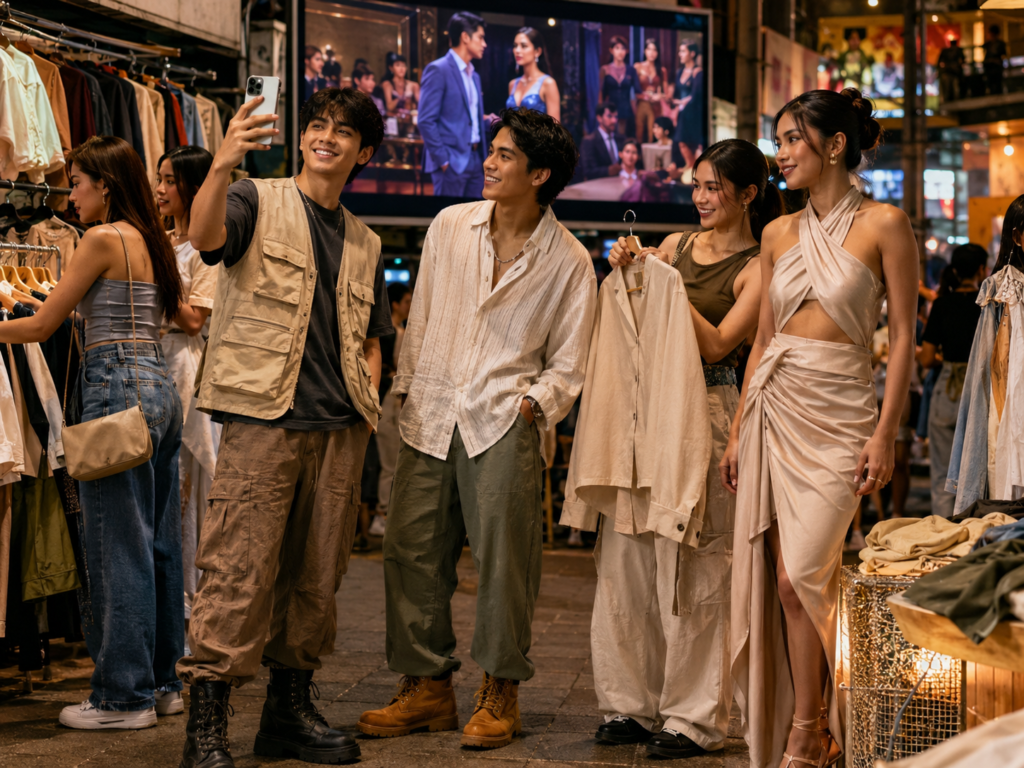
In 2026, the Philippine fashion industry is being steered not by traditional fashion editors alone but by a tight-knit constellation of showbiz personalities whose every airport look and music video outfit sends ripples across retail. The walls between the entertainment stage and the design atelier have crumbled, giving rise to a hybrid creative economy where a single Instagram post by a P-pop idol or a red-carpet moment can mint trends overnight.
The Idol as Fashion Curator
P-pop groups such as SB19 and BINI have matured into full-fledged style arbiters. Their music video styling—often a mix of neo-filipiniana elements, techwear, and Korean street influence—creates a visual lexicon that young Filipinos adopt immediately. After SB19’s March 2026 single release, the group’s coordinated use of black Mindanao-inspired woven vests generated a spike in orders for Lake Sebu T’boli weavers, as documented by the Philippine Textile Research Institute. The group’s management team now treats wardrobe as a cultural statement, collaborating directly with regional artisans to produce limited capsule collections that sell out via the group’s official merch site in minutes.
Red Carpet as the Ultimate Collection Launchpad
Award shows like the FAMAS, Gawad Urian, and the Star Magic Ball have transformed into de facto fashion weeks. At the 2026 ABS-CBN Ball, Liza Soberano walked the carpet in a Rajo Laurel creation that combined piña fabric with laser-cut neoprene, a silhouette that trended on Twitter Philippines for over six hours. The gown was subsequently featured in Vogue Philippines’ digital edition, and high-street brand Plains & Prints released a simplified version within three weeks. This pipeline—celebrity muse, luxury designer, mass retailer—has compressed the traditional fashion cycle, making couture concepts accessible faster than ever before.
Homegrown Brands and Celebrity DNA
Direct celebrity ownership of fashion labels is also accelerating. Heart Evangelista’s collaboration with local bag manufacturer Zarah Juan produced a series of hand-painted satchels that championed endangered Philippine flora, blending advocacy with luxury. Meanwhile, actor James Reid’s streetwear line, Transparent Animal, now occupies pop-up spaces in SM Aura and Ayala Malls, drawing foot traffic that rivals international anchor brands. These ventures thrive because the artist brings a ready-made community of followers who trust their taste. A 2026 BusinessWorld report on the Philippine retail sector noted that celebrity-linked fashion brands grew at an aggregate rate of 11 percent, outperforming the broader apparel market growth of 6 percent.
Digital Platforms as the New Fashion Magazines
YouTube and TikTok have replaced the glossy monthly as the primary style discovery tool. Celebrity vlogs like “What’s In My Bag” or “GRWM for a Taping Day” function as extended product placements that feel intimate. In the first quarter of 2026, TikTok Philippines recorded that fashion-related content featuring local showbiz figures generated over 2.3 billion views. This staggering number explains why luxury houses like Louis Vuitton and Gucci aggressively court Filipino celebrity ambassadors for regional campaigns, knowing that a single well-styled post can convert into sales in the robust Southeast Asian market.
Heritage Meets Pop
What separates the current wave from earlier celebrity fashion cycles is the deliberate injection of Philippine cultural identity. Stylists are increasingly sourcing from Iloilo hablon weavers, Maranao brass artisans, and Cordilleran backstrap loom communities to dress their famous clients for magazine covers and concert tours. The move is not purely aesthetic; it resonates with a nationalistic consumer base that is eager to see its heritage validated onscreen. Consequently, the entertainment industry has become the most effective platform for preserving and commercializing indigenous textiles, creating a virtuous circle where ancestral craft enjoys a prime-time spotlight.
The Philippine fashion narrative in 2026 is being authored by people who sing, dance, and act—and the wardrobe choices they make are not just personal; they are economic and cultural events.