
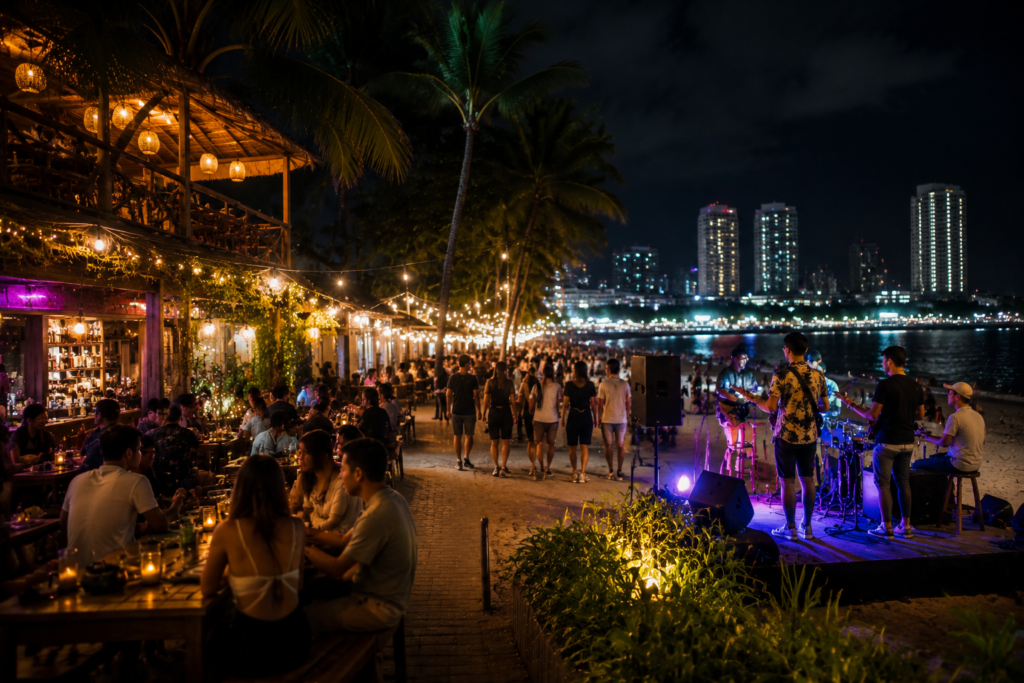
The Philippines after dark is a sensory experience built on music, food, and conversation. Across Manila, Cebu, Davao, and other urban centers, 2026 brings a refreshed nightlife scene that welcomes both locals and tourists. The Department of Tourism’s official website (https://www.philippines.travel/) offers updated listings, making it easier to find safe and exciting evening activities. From neon-lit districts to quiet craft beer halls, the country’s major cities offer a wide spectrum of nightlife.
Manila’s Poblacion, BGC, and Cultural After-Dark Spots
Manila’s nightlife is fragmented into distinct neighborhoods, each with its own character. Poblacion in Makati is the indie favorite, with speakeasy-style bars and small live music stages tucked into converted houses. Bonifacio Global City, or BGC, caters to those who prefer upscale rooftop bars and modern clubs. In Malate and Intramuros, the scene shifts toward cultural performances and heritage night walks. This variety means a visitor can experience three completely different nights without leaving the capital. The area’s walkable streets and ride-hailing availability make hopping between districts straightforward.
Cebu’s Mango Square, IT Park, and Waterfront Vibes
Cebu City offers both loud and laid-back options. Mango Square is the traditional party hub, where dance floors and karaoke bars stay open until the early hours. IT Park, by contrast, is a more relaxed district with gastropubs and rooftop hangouts popular among young professionals. Near the waterfront, live bands and night markets add a local touch, with grilled seafood and regional music creating a distinctly Cebuano evening. Many waterfront venues offer open-air seating with sea breezes, making them ideal for a slower-paced night out.
Davao, Angeles City, and Boracay: Regional Nightlife Gems
Travelers seeking something beyond the two main metropolises will find plenty. Davao City’s nightlife is orderly but enjoyable, with craft breweries and acoustic lounges that close earlier than in Manila. Angeles City, located near Clark airport, has a dense, walkable strip of bars and live music venues. Boracay’s White Beach remains a top spot for fire dancing and beachfront parties, though rules keep the noise and alcohol consumption within designated areas. These regional gems give visitors a broader understanding of Filipino entertainment culture.
What Makes Philippine Urban Nightlife Unique
The local nightlife culture revolves around live entertainment and food. Filipino musicians are known for their ability to play everything from classic rock to OPM, making live band bars a staple in every major city. Cocktail bars are also experimenting with tropical ingredients like dalandan and tuba. Late-night night markets and 24-hour eateries ensure that the evening never truly ends. For visitors, joining these local rituals is often the most memorable part of a trip.