
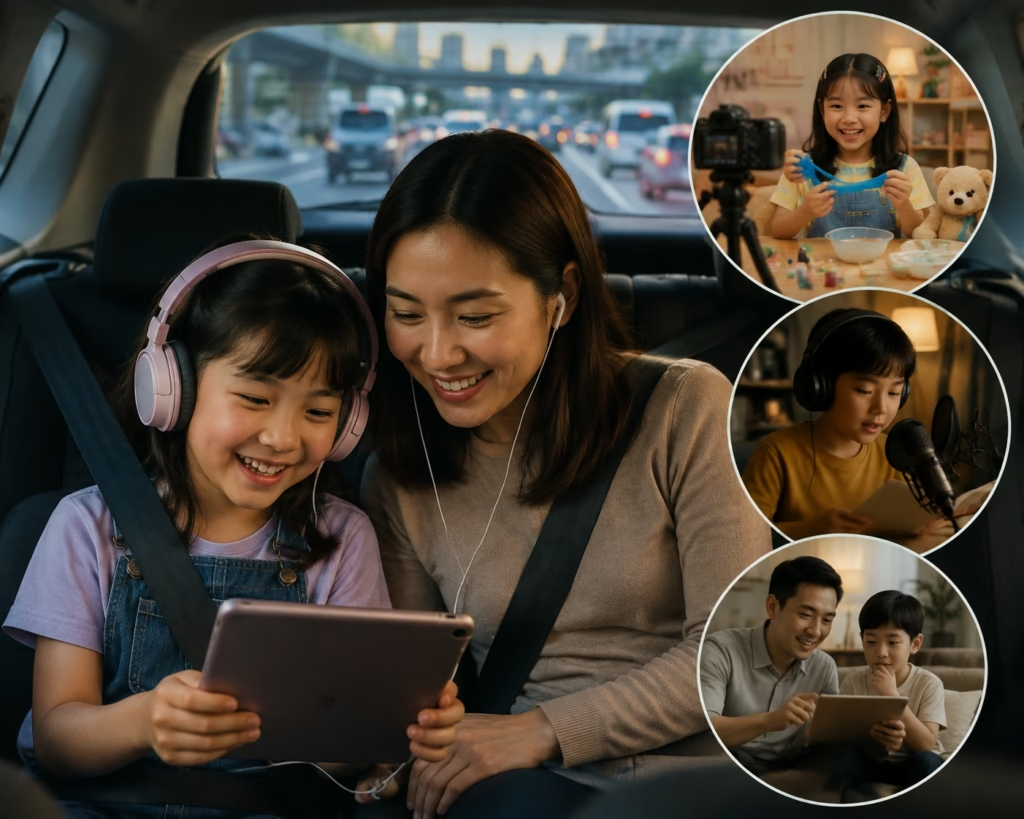
Amid endless talk about the death of conventional television, the broadcasting industry in the Philippines is showing remarkable resilience, especially in the children’s entertainment sector. 2026 is witnessing how free-to-air TV is rediscovering its relevance by focusing on its core mission: providing equal access to entertainment and education for all segments of society, including those with limited internet connectivity.
Adaptation Strategies of National Television Stations
Major networks like GMA Network and ABS-CBN (through partnerships with Zoe Broadcasting and A2Z) continue to innovate. They are not competing directly with streaming platforms on the basis of on-demand viewing; instead, they offer a “co-viewing experience.”
Programs like Talents Academy and weekend morning blocks are now packaged more interactively. TV stations leverage second-screen integration, where child viewers are encouraged to open their parents’ smartphone apps to scan QR codes displayed on screen. These codes unlock educational games or bonus content related to the episode being aired, creating an entertainment ecosystem that unites the television screen and the touchscreen.
Spotlight on Live-Action and Variety Shows
The children’s content trend in the Philippines in 2026 is not only about animation. Live-action shows with adventure and school-life themes are making a comeback. Series like Team Yey!, known for its science and experiment segments, continue to earn high ratings. The success of these shows lies in energetic hosts and an infotainment approach that does not talk down to children.
Talent search competitions for kids have also evolved. Competition formats no longer only assess singing or dancing skills but also public speaking, coding, and even young entrepreneurship. This reflects the aspirations of modern Filipino parents who want their children to be not just entertainers but future leaders.
The Vital Role of Government Regulation
Content safety is a top priority. The Movie and Television Review and Classification Board (MTRCB) is enforcing stricter regulations on programs rated “G” (General Patronage) and “PG” (Parental Guidance). In 2026, MTRCB is actively promoting media literacy among parents, teaching them how to verify ratings and age-appropriate content.
The Philippine government, through the Department of Education (DepEd), is also broadcasting learning modules on dedicated TV channels. This is a legacy from the pandemic era that has been modified into a fun supplementary learning program. The synergy between broadcasters and regulators is what keeps the quality of children’s viewing in the Philippines intact amid the ever-expanding freedom of the internet.