
Weaving Science into Fashion’s Future
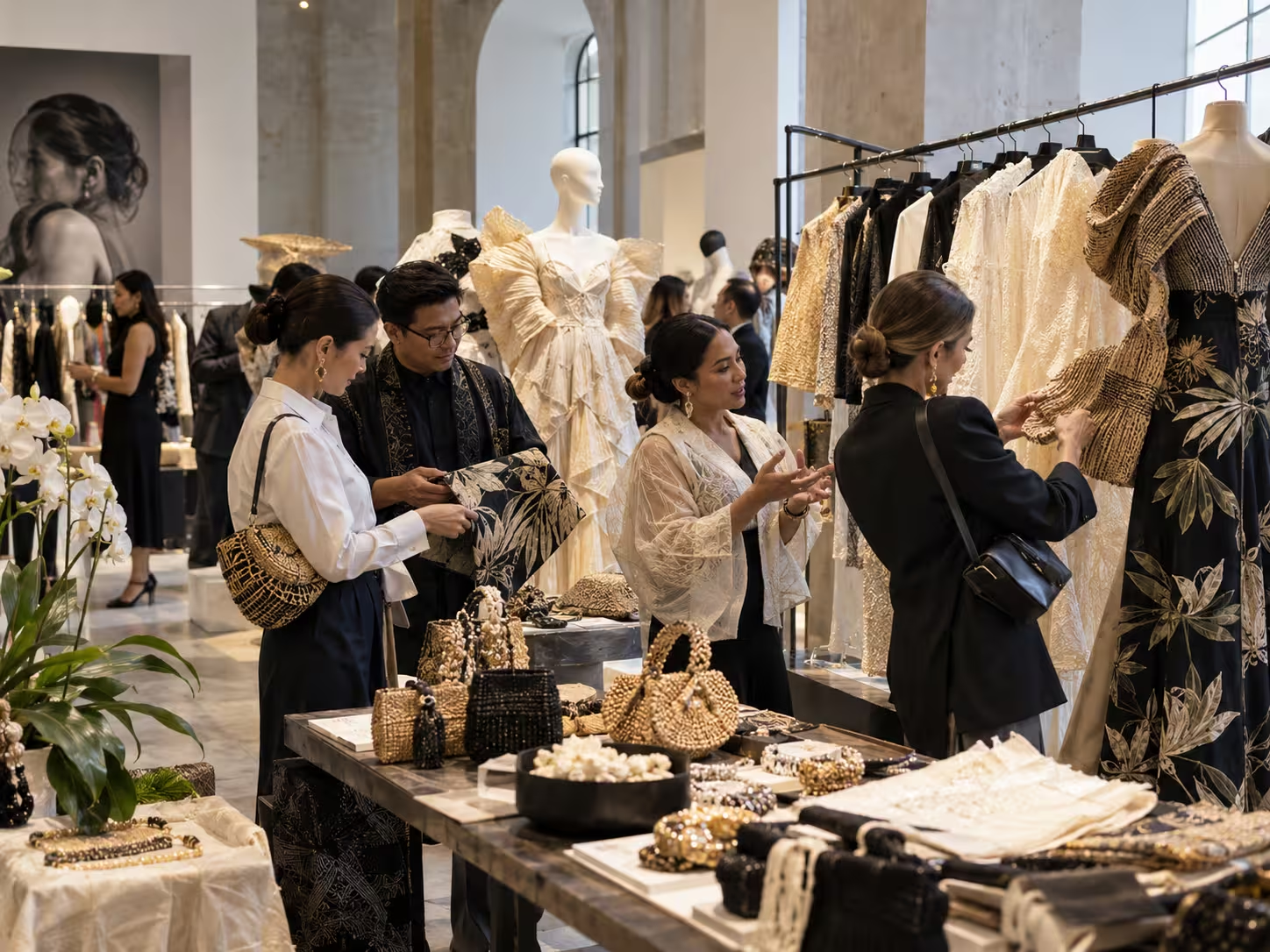
While the spotlight often falls on designers, the true engine of FASHIONPhilippines Milan 2026 is the material innovation driving it. Under the theme “Reimagined Philippine Textiles,” the showcase at Fondazione Sozzani from September 22 to 24, 2026, is as much a trade mission for the country’s textile science sector as it is a fashion event. Spearheaded by the Department of Science and Technology – Philippine Textile Research Institute (DOST-PTRI), the initiative is positioning Filipino natural fibers and technologies as high-value components of the global fashion supply chain.
From Farm to Fabric: The Innovation Pipeline
The materials being presented are far from traditional souvenirs. The showcase features textiles made from abaca and pineapple leaf (piña), including technologies that blend these local natural fibers with cotton to produce durable and versatile fabrics suitable for modern fashion and footwear. A standout innovation is Piña Seda, a textile recognized as part of UNESCO’s intangible cultural heritage, which combines delicate pineapple-leaf fibers with lustrous Philippine silk to create refined, elegant fabrics.
Furthermore, the presentation highlights natural dyes derived from annatto, coffee pulp, indigo, and mahogany bark. These nature-based colorants offer a distinctive palette rooted in Philippine biodiversity, opening possibilities for additional value from locally available agricultural resources.
A Value Chain for National Impact
The strategic importance of this textile focus extends far beyond the runway. By creating global demand for these innovative materials, the program aims to generate opportunities that ripple through the entire Philippine economy. Stronger demand can open pathways for farmers and fiber producers, provide new markets for weavers and textile manufacturers, and create opportunities for Filipino designers to develop products for international consumers.
Seven pioneering Philippine textile companies are leading this manufacturing contingent, including La Herminia, Isla-Tek, Creative Definitions, and AbacaTek. For these companies, Milan is a crucial platform for technology transfer, commercial validation, and market access on a global scale. As the co-founder of Isla-Tek noted, the opportunity to bring centuries-old local materials to the global stage is “a dream”. This initiative is proving that Filipino textile innovation, rooted in science and heritage, belongs on the world’s most prestigious fashion stages.