
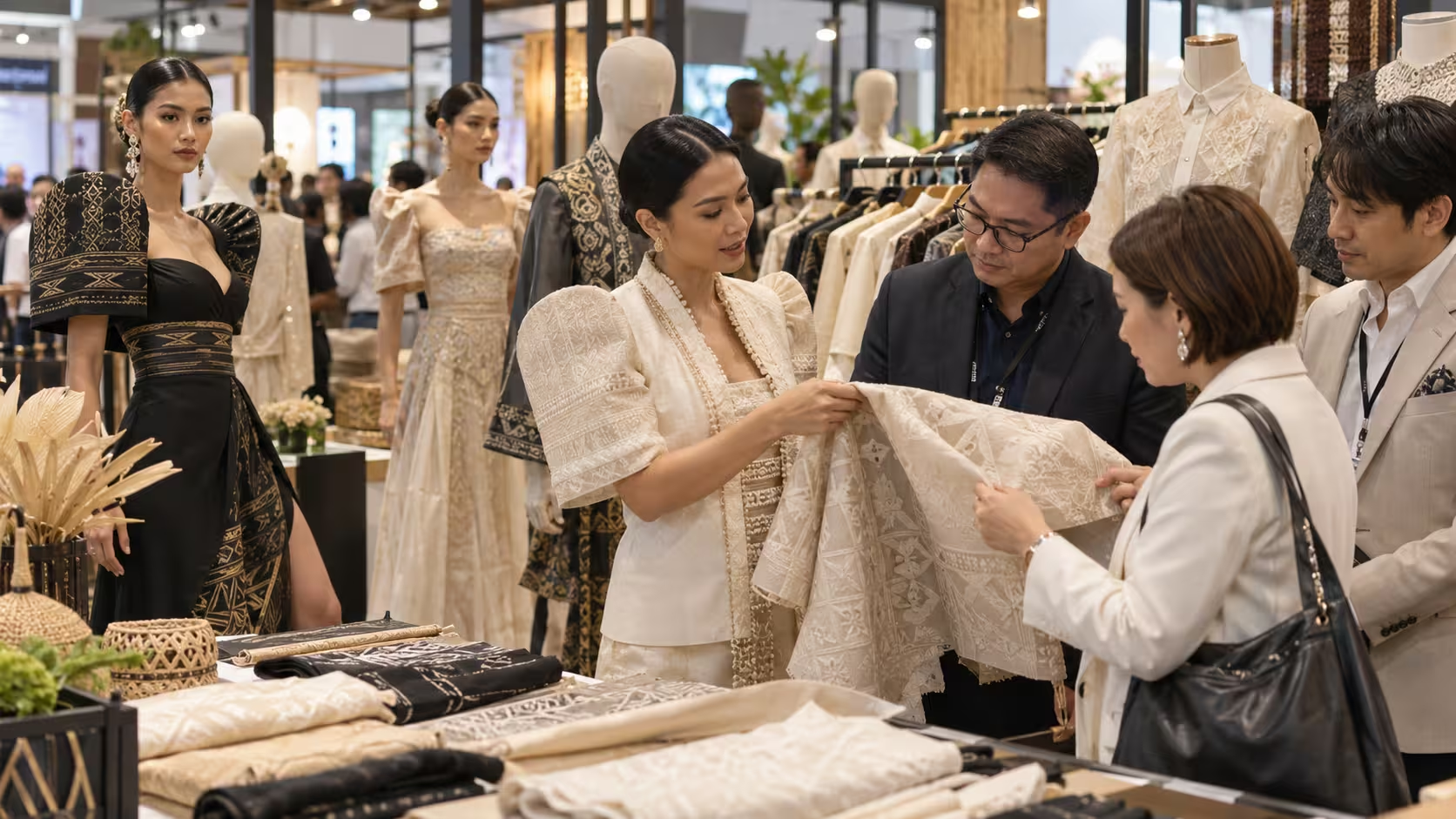
The Architecture of a Fashion Renaissance
A fashion renaissance rarely happens by accident. Behind the headline-grabbing runways of Manila Fashion Week 2026 lies a deliberate ecosystem of mentorship, editorial amplification, and government-backed export strategy. Vogue Philippines has functioned not merely as a chronicler of this moment but as an active participant. Its September/October 2026 issue featured designs by Yesha Rodriguez, an iACADEMY Fashion Design and Technology alumna, worn by Chef Rhea Rizzo—a small but telling example of how the magazine integrates emerging creatives into the broader cultural narrative.
The Fashion Asia Hong Kong Pipeline
The most consequential institutional bridge between Manila and the wider Asian fashion world is Fashion Asia Hong Kong’s 10 Asian Designers to Watch. In 2026, two Filipino designers—Prince Padilla of Novel and Roko Arceo of Maligaya Clothing Co.—were selected from an international panel that included Robert Wun and Sara Sozzani Maino. The exhibition opened in Hong Kong before traveling to Shanghai Fashion Week, giving Filipino labels direct access to regional buyers, press, and retail partners. Past honorees like Feng Chen Wang and Shuting Qiu have gone on to achieve global success, establishing the platform as a genuine launchpad rather than a symbolic gesture.
Statecraft as Fashion Strategy
The Philippine government has moved decisively to treat fashion as a strategic export. The DTI’s Malikhaing Pinoy program, launched internationally in Bangkok in January 2026, featured a collaborative collection led by Rajo Laurel and was timed to coincide with the Philippines’ assumption of the ASEAN Chairship. Trade Secretary Cristina A. Roque framed the initiative explicitly: “As we lead ASEAN in 2026, we are showing our Southeast Asian neighbors our cultural heritage… ensuring that the Philippine creative sector drives trade and tourism.” The strategy is bearing fruit: at Hong Kong Fashion InStyle 2026, Philippine brands booked retail sales of US38,398.36andnegotiateddealsworthUS 283,994.91—totaling over US$ 322,000.
Milan, Tokyo, and the Geography of Ambition
Filipino designers are also making inroads at Milan Fashion Week through the FASHIONPhilippines initiative, which brought 12 Filipino labels to the Italian fashion capital in September 2026. In Tokyo, the “Threads of Dreams” showcase—featuring Rhett Eala, Jaggy Glarino, and Joey Samson—was staged at Shibuya Hikarie Hall as part of Rakuten Fashion Week Tokyo 2027. These are not isolated appearances; they represent a coordinated, multi-front expansion.
The Next Test: Sustainability and Scale
The challenge ahead lies in scaling without losing the idiosyncratic voices that make this generation compelling. Bagasáo’s commitment to natural fibers and reused textiles, and Gil Justin Salazar’s semi-final placement in the 2026 Redress Design Awards, signal that sustainability is not an afterthought but a core competitive advantage. The infrastructure is in place. The talent is undeniable. What remains is the execution.