
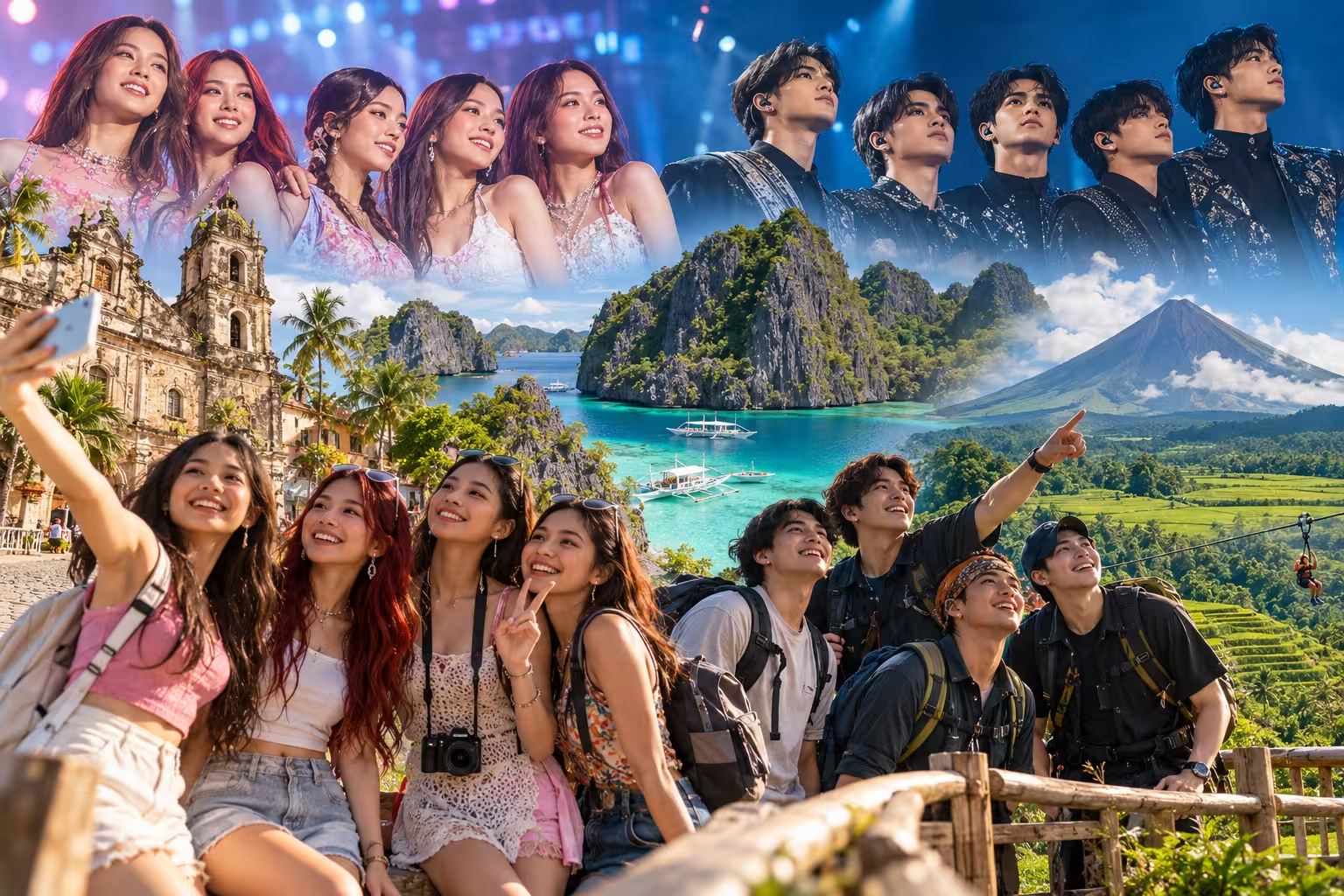
When a Concert Announcement Becomes a Travel Event
The Korean Embassy in Manila confirmed something in February 2026 that travel analysts had suspected for months: Filipinos were applying for South Korean visas at a rate 17 percent higher than the same period in previous years, during what are traditionally the slowest travel months of January and February. The primary reason cited by applicants? Tickets to BTS’s full-group comeback concert on March 21 in Seoul—the band’s first complete performance in nearly four years following mandatory military service.
This is not an isolated anomaly. It is a textbook example of what researchers now call “fandom-induced travel demand”—a phenomenon where cultural events, particularly musical performances, generate measurable shifts in cross-border movement patterns. The Philippine case offers particularly clear data because of the sheer volume of fans involved and the visa requirement that creates a documentation trail.
The Scale of Fan Mobilization
When BTS announced the Arirang world tour, Philippine fan communities organized visa application drives, group flight bookings, and accommodation sharing arrangements. The Korean Embassy reported that over 100,000 users flooded the booking platform within minutes of ticket sales opening, crashing screens and forcing the embassy to extend visa processing times to 20 working days from March 17 onward.
Nearly 300,000 fans were expected to descend on Seoul for the comeback performance, according to projections cited by Philippine media. Among them, a significant Filipino contingent—part of the over 600,000 Filipinos who visited South Korea in 2025, making the Philippines one of the country’s top source markets.
Beyond the Concert: How Fandom Reshapes Itineraries
The BTS-driven travel surge illustrates something more profound than a single-event spike. Fan travel is inherently multi-purpose. A fan flying to Seoul for a concert also visits Myeong-dong for shopping, poses in rented hanbok at Gyeongbokgung Palace, and seeks out filming locations from K-dramas and music videos. The concert becomes the anchor of a broader cultural pilgrimage.
Travel platform data supports this pattern. Searches for accommodations in Goyang and Busan—cities connected to BTS-related activities—increased more than sevenfold from the Philippines during the tour announcement period. This is not merely ticket purchasing behavior; it is destination research, indicative of travelers planning extended stays and multi-city itineraries.
The Strategic Implications for Destination Marketers
The Filipino BTS phenomenon offers lessons for tourism boards across Southeast Asia. First, fandom travel demand is highly predictable once an event is announced—there is a clear signal window between announcement and travel. Second, the demographic profile of fan travelers skews young (millennials and Gen Z) and digitally native, making them responsive to social media marketing but resistant to traditional advertising. Third, fan travel generates disproportionate economic impact because fans tend to spend on merchandise, dining, and experiences beyond the concert ticket itself.
For the Philippines, the BTS effect is a double-edged insight. It demonstrates that Filipino consumers will spend significantly on cultural travel—but currently, much of that spending flows outward. The challenge for Philippine tourism authorities is to create similarly compelling cultural events that attract inbound fans from other countries, effectively reversing the flow. The DOT’s P-Pop campaign with BINI and SB19 represents an early attempt to build that reverse infrastructure.