
The Arithmetic of a Skip
A concert in Manila can sell out and still make less financial sense than a half-full show in Bangkok. The reason sits in the tax code. The Philippines imposes a 30% amusement tax on gross ticket sales, which means a promoter begins with only 70% of revenue before artist fees, venue rental, production, security, marketing and equipment imports are accounted for. In Thailand, by contrast, a 7% VAT typically applies without a comparable amusement tax on gross sales, leaving roughly 93% of ticket revenue in the room before costs are distributed.
On a hypothetical P100 million gross ticket sale, the difference is immediate: Manila loses P30 million to tax at the gate, while Bangkok loses about P7 million. That gap does not disappear. It is absorbed by thinner margins, reduced artist guarantees, smaller production budgets, or—increasingly—a decision to skip Manila altogether. Industry observers have linked the trend of major K-pop and Western acts bypassing the Philippines to this structural disadvantage, with promoters describing the Manila market as high-risk unless a show reaches 90% to 100% capacity.
Creative Casualties of a Thin Margin
The tax burden does not stay inside the promoter’s spreadsheet. When margins are compressed, the creative supply chain feels it first. Local production teams, stage designers, lighting technicians, sound engineers, choreographers, wardrobe stylists and freelance creatives are often engaged on project-based contracts with budgets that are already negotiated down before the first rehearsal. A thinner headline show does not necessarily cancel those roles, but it caps their rates, shortens their engagement windows and reduces the experimental risk that emerging artists need in order to develop.
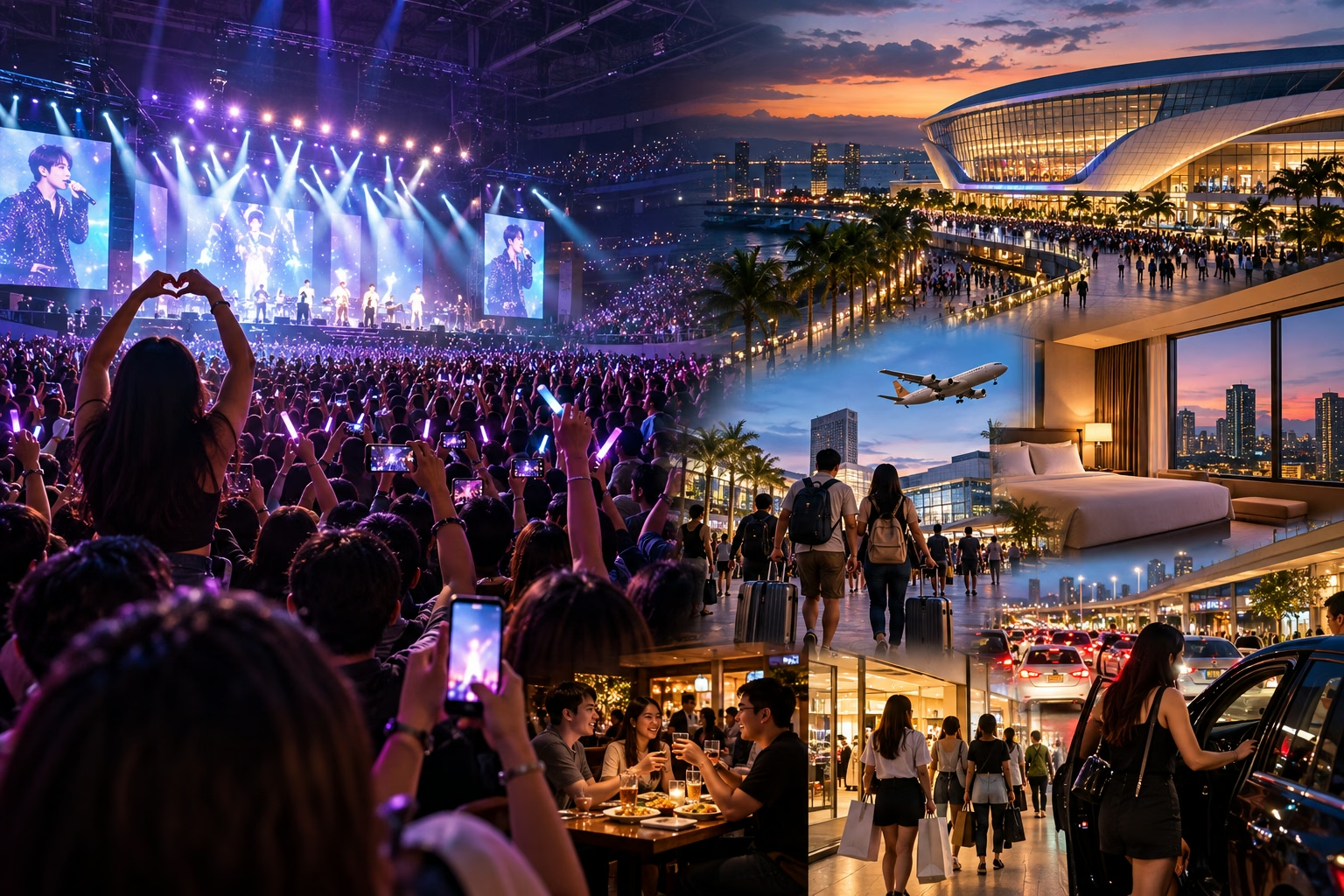
The irony is that the Philippine live sector is already proving it can generate world-class output under pressure. SM Prime’s venues drew over one million visitors in the first eight months of 2026, up 52% year-on-year, and the MOA Arena alone staged more than 110 shows in that window. Demand is not the problem. The problem is that the revenue captured at the ticket window is being taxed at a rate that makes the Philippines a harder sell than its regional neighbors, even when the audience is demonstrably present.
What a Level Playing Field Would Look Like
Industry stakeholders are not asking for a subsidy. They are pointing to a structural asymmetry. If Manila’s effective take from a P100 million gate is P70 million while Bangkok’s is P93 million, the Philippine market is competing for the same international tours with a 23-percentage-point handicap before a single creative fee is paid. That handicap shapes which artists route through the country, how many local creatives are hired, and whether the Philippine concert economy remains a destination or becomes a pass-through market.
The conversation is beginning to move beyond complaints. Promoters, venue operators and policy observers are framing the amusement tax as a competitiveness issue rather than a cultural one. A concert economy that already supports tourism, retail and transport—and that Live Nation Philippines says contributes 18% of the entertainment industry’s GDP—has a legitimate case for a tax structure that recognizes its role as an economic driver. Until that case is heard, the Philippines will keep selling out arenas while watching some of the world’s biggest tours book their regional stops elsewhere.