
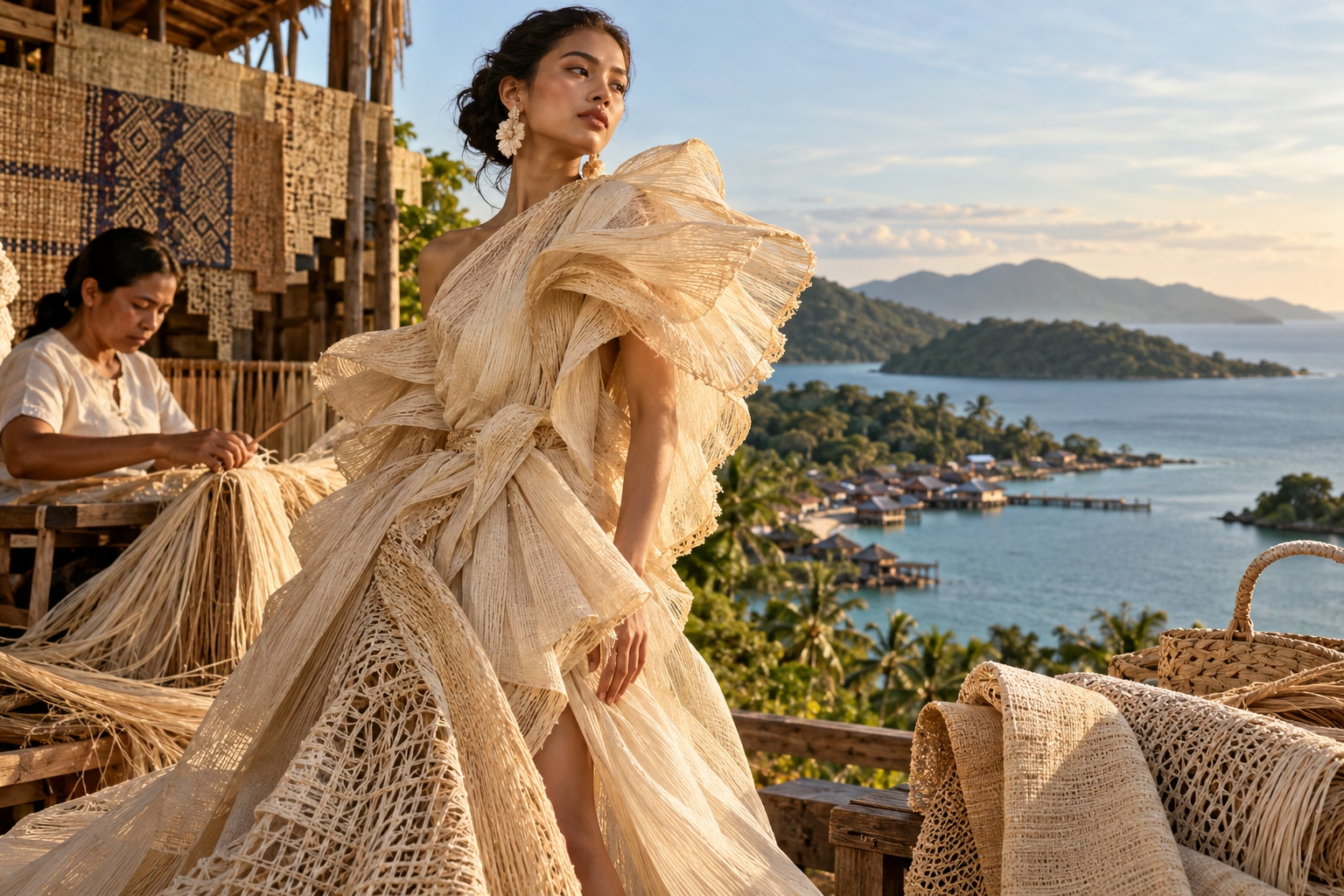
The international fashion world has long reserved its highest praise for the ateliers of Paris and Milan. But in early 2026, a different kind of couture story unfolded against the skyline of Bangkok. Veteran Filipino designer Rajo Laurel presented his 33-piece collection, “Lahí,” meaning “inheritance,” a powerful statement that Philippine Tropical Fabrics are not merely folkloric curiosities, but sophisticated, architectural materials capable of commanding the global stage. This was not a showcase of traditional costumes; it was a direct dialogue between Filipino identity and the highest echelons of global fashion, presented in collaboration with the Department of Trade and Industry’s Malikhaing Pinoy program.
The Architecture of Piña and the Power of Process
What set Laurel’s collection apart was its conceptual rigor. He did not simply use local fabrics; he re-engineered them. Piña textiles, traditionally confined to formal barongs, were pushed beyond their customary ties, transformed into sculptural, barong-inflected silhouettes and reimagined regional dress forms. The collection privileged form over function, treating the fabric as a medium for structural experimentation. Laurel describes this as a process of transformation, turning “straw into weeds into pineapple into a thread that becomes embroidery.” This alchemical approach is central to the new premium identity of Philippine Tropical Fabrics. It moves the conversation away from pity or preservation and toward a narrative of innovation and mastery. The “humble” materials, as Laurel calls them, become the very source of their exclusivity and desirability.
A New Narrative for Filipino Craftsmanship
The significance of “Lahí” extends beyond the runway. It represents a crucial shift in storytelling. For decades, the global fashion narrative often framed non-Western craftsmanship as a static tradition to be “saved.” Laurel’s work, however, is a living, breathing assertion of contemporaneity. He positions himself as a product of generations of Filipino creativity, and his collection is an affirmation of what Filipino artists can do with the resources around them. By presenting this collection to an international audience, Laurel is effectively building a new brand narrative for Philippine Tropical Fabrics—one of luxury, intellectual rigor, and avant-garde design. This is the kind of storytelling that Vogue Philippines has been championing, and it provides a template for a new generation of designers: the path to global relevance lies not in imitation, but in the radical, innovative elevation of one’s own material culture. Vogue Philippines’ official platform at https://www.vogue.ph/ remains a key venue for documenting these editorial and runway developments.