
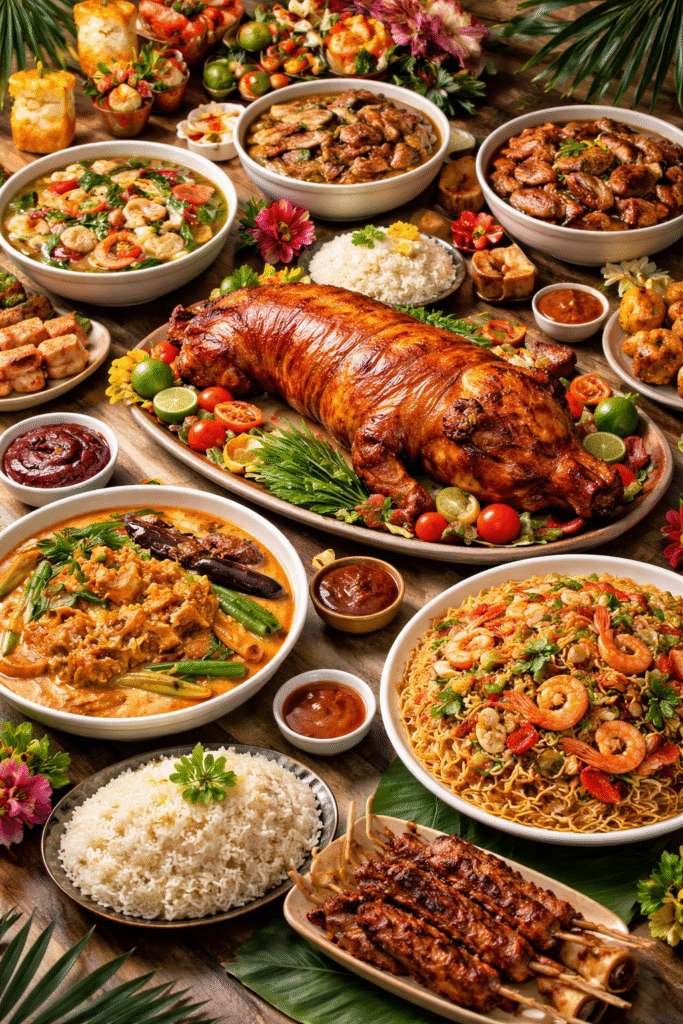
The Philippines is a nation deeply rooted in food traditions, especially when it comes to celebrating important life events. From family reunions to national holidays, food plays a central role in Filipino gatherings. The main dishes served during these special occasions are not just delicious—they carry a sense of nostalgia, history, and community. Let’s explore some of the essential Filipino dishes that you’ll often find during major celebrations.
Lechon, the star of many Filipino celebrations, is a whole roasted pig that’s usually slow-cooked over charcoal. The process of preparing Lechon involves marinating the pig with various spices, and the final result is a crispy, golden-brown skin with tender, juicy meat. This dish is typically served during large-scale gatherings such as weddings, birthdays, and fiestas. For many Filipinos, Lechon represents not just a meal, but the essence of sharing and togetherness, as it is often a communal dish that everyone enjoys.
Another popular Filipino dish found at celebrations is Kare-Kare. This rich, comforting stew features a mixture of oxtail, tripe, and sometimes pork, all simmered in a savory peanut sauce. Served with bagoong (fermented shrimp paste) on the side, Kare-Kare has a unique balance of flavors—creamy and nutty with a slight salty kick from the shrimp paste. This dish is especially common during holidays such as Christmas and New Year, adding a distinct flavor profile to the table.
For those looking for something with a bit more zest, Sinigang is a tangy, sour soup often served with pork, shrimp, or fish. The signature flavor of this dish comes from tamarind, and it’s packed with vegetables like okra, eggplant, and kangkong (water spinach). Sinigang is often a crowd favorite at celebrations because of its refreshing flavor that cuts through the richness of other Filipino dishes, offering a light and appetizing alternative.
Spicy food lovers will be drawn to Bicol Express, a dish native to the Bicol region in the southern part of the country. Made with pork or shrimp cooked in coconut milk and spiced up with chili peppers, this dish is an explosion of flavors that appeals to those who enjoy a bit of heat. It’s a common feature in family reunions and gatherings where bold flavors are appreciated.
Another dish that adds color and flavor to any celebration is Pancit. The dish symbolizes longevity and is often served at birthdays and other significant life milestones. Different regions of the Philippines have their own versions of Pancit, including Pancit Canton, Pancit Malabon, and Pancit Palabok. These noodles are stir-fried with a mix of meat, seafood, and vegetables, and their vibrant colors make them a feast for both the eyes and the taste buds.
Adobo, while typically a household dish, can also be found at special occasions. It is a savory meat dish, usually made with chicken or pork, marinated in soy sauce, vinegar, garlic, and spices, and then braised until tender. The tangy and savory flavors of Adobo are a Filipino comfort food favorite, and its presence at celebrations speaks to its deep cultural roots.
Each of these dishes tells a story, not only of Filipino culinary ingenuity but also of the communal spirit that defines Filipino gatherings. Whether it’s a dish of Lechon, a comforting bowl of Kare-Kare, or a plate of Pancit, these meals reflect the Filipino way of celebrating life’s milestones and connecting with loved ones over shared meals.