
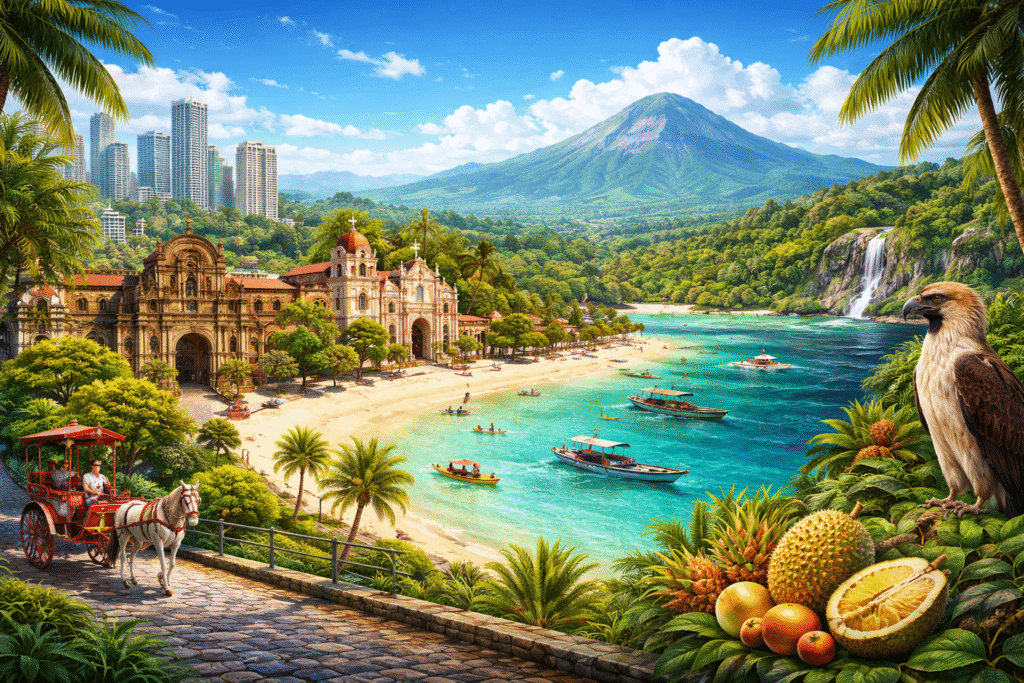
The Philippines is home to many vibrant cities that showcase the country’s unique blend of culture, history, and natural beauty. Among the most visited cities are Manila, Cebu, and Davao, each offering a variety of attractions that will captivate any traveler. From historical landmarks and modern shopping hubs to pristine beaches and scenic parks, here’s an in-depth guide to these three amazing cities.
Manila: The Heart of the Philippines
Manila is a bustling metropolis that combines a rich historical past with the energy of modern urban life. The city’s iconic districts, such as Intramuros, are rich in heritage and offer visitors a step back in time. This walled city is home to notable landmarks like the San Agustin Church, the oldest stone church in the Philippines, and the Fort Santiago, a fortification dating back to the Spanish era.
In contrast to its historical side, Manila is also a thriving modern city with attractions such as Mall of Asia, which offers everything from shopping and dining to ice skating and concerts. Nearby, the city’s entertainment districts, such as Makati and BGC, are full of trendy spots where you can enjoy a lively nightlife scene.
For food lovers, Manila is a paradise. You can try a wide array of Filipino dishes, from the savory “sinigang” (sour soup) to the sweet “bibingka” (rice cake). Don’t forget to sample the popular Filipino street food like “isaw” (grilled chicken intestines) and “fish balls.”
Cebu: Where History Meets Paradise
Cebu, located in the central Visayas region, is a city rich in historical significance. The island’s history can be explored through landmarks like Magellan’s Cross, where the Portuguese explorer Ferdinand Magellan planted a cross in 1521, and the Basilica Minore del Santo Niño, home to the oldest image of the child Jesus in the Philippines.
But Cebu is not only about history; it’s also a tropical paradise with stunning beaches and crystal-clear waters. The island’s coastal areas, like Mactan, are famous for luxury resorts, world-class diving, and snorkeling. For a more laid-back beach experience, head to the serene Bantayan Island, which offers a tranquil escape with its white sand beaches.
For nature enthusiasts, Cebu offers thrilling experiences like canyoneering in Badian and whale shark watching in Oslob. The province also offers beautiful waterfalls such as Kawasan Falls, which is a perfect spot for swimming and relaxation.
Davao: A City of Nature and Adventure
Davao is a haven for those who appreciate nature and eco-tourism. One of its main attractions is Mount Apo, the highest mountain in the Philippines, which offers excellent trekking opportunities. The mountain is known for its biodiversity, with rare species of plants and animals.
Davao is also famous for its conservation efforts, and a visit to the Philippine Eagle Center is highly recommended. The center focuses on protecting the endangered Philippine Eagle and other wildlife species native to the region. Visitors can learn about conservation programs and see these majestic birds up close.
The city also boasts stunning parks such as Eden Nature Park, a perfect place for outdoor activities and relaxation, and the Davao Crocodile Park, where you can learn about the conservation of crocodiles and interact with a variety of animals.
Additionally, Davao is known for its fresh produce, particularly durian, a famously pungent fruit. The city’s diverse food scene offers a unique taste of Mindanao’s local delicacies, such as “tinolang manok” (chicken soup) and “satti” (grilled meat skewers with spicy sauce).
Whether you’re drawn to Manila’s rich heritage, Cebu’s stunning beaches, or Davao’s unspoiled nature, these cities provide a range of experiences that make them essential stops on any trip to the Philippines.