
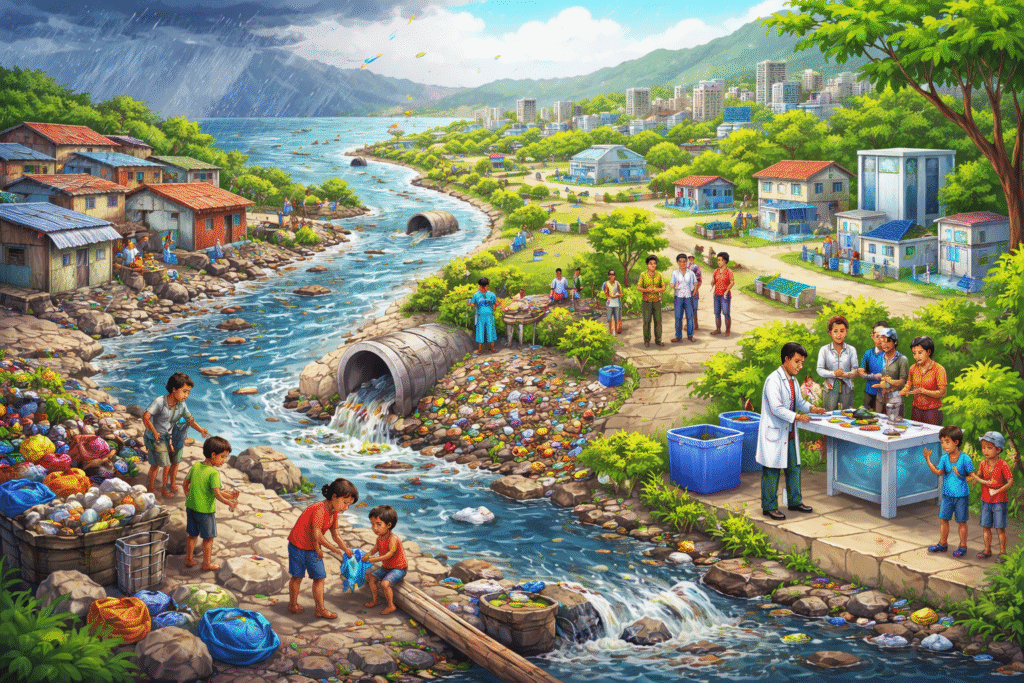
The Philippines faces a complex environmental health situation shaped by population growth, urban expansion, poverty, and recurring natural hazards. Environmental health refers to the way surroundings influence human well-being, including air, water, sanitation, housing, and waste conditions. In the Philippine context, these issues are deeply interconnected. A polluted river does not only damage ecosystems; it can also affect drinking water, food sources, hygiene, and disease transmission.
A major challenge is the growing pressure on urban environments. Cities continue to attract migrants seeking jobs and better services, but infrastructure has not always expanded at the same pace. This has led to overcrowded neighborhoods, traffic congestion, and informal settlements in areas exposed to flooding or industrial pollution. In many urban communities, people live close to busy roads, dumpsites, creeks, or drainage canals. Such environments increase daily exposure to dirty air, unsafe water, noise, and poor sanitation.
Air pollution remains one of the most visible environmental health problems. Vehicle exhaust is a major source, particularly where public transport fleets include aging diesel-powered units. Industrial emissions and construction dust add to the burden. Poor air quality can trigger coughing, eye irritation, breathing difficulties, and long-term lung and cardiovascular disease. For workers who spend much of the day outdoors—such as drivers, vendors, and traffic personnel—the health risks can be even greater.
Water and sanitation conditions vary widely across the country. While some areas have improved service coverage, others still rely on unsafe wells, delivered water, or contaminated surface sources. When sanitation systems are weak, human waste can enter groundwater or nearby rivers. During heavy rains and floods, this contamination spreads quickly, affecting both homes and public spaces. Illnesses such as acute gastroenteritis, parasitic infection, and leptospirosis can rise when people are exposed to polluted floodwater or consume unsafe water.
Waste management is another serious concern. Many local governments have adopted segregation rules, but implementation is uneven. In some places, waste collection remains irregular, and recyclable, organic, and hazardous waste are mixed together. Plastic packaging, food waste, and discarded materials often accumulate in waterways and coastal areas. This does not only create visual pollution; it also harms fisheries, threatens marine biodiversity, and creates health hazards when waste decomposes or is burned.
The country’s exposure to climate-related disasters makes environmental health even more fragile. Typhoons, heat waves, flooding, and sea-level rise can destroy infrastructure and overwhelm local health systems. Stagnant water after storms supports mosquito breeding, while damaged toilets and water lines create sanitation emergencies. Coastal communities may also face saltwater intrusion and declining water quality, affecting both drinking supplies and agriculture.
Effective responses require action at several levels. National agencies need to improve environmental monitoring, enforce regulations, and support local governments with funding and technical assistance. At the city and municipal level, investments in drainage, sewerage, waste processing, and green public transport can produce direct health benefits. Strengthening primary healthcare and disease surveillance can also help detect environmental health threats earlier.
Public participation is just as important. Communities that understand waste segregation, safe water handling, urban gardening, flood preparedness, and mosquito control are better equipped to protect themselves. Universities, NGOs, and civil society groups can contribute research and local innovation. By combining policy, infrastructure, and community action, the Philippines can reduce environmental health risks and create healthier, more resilient living conditions.