
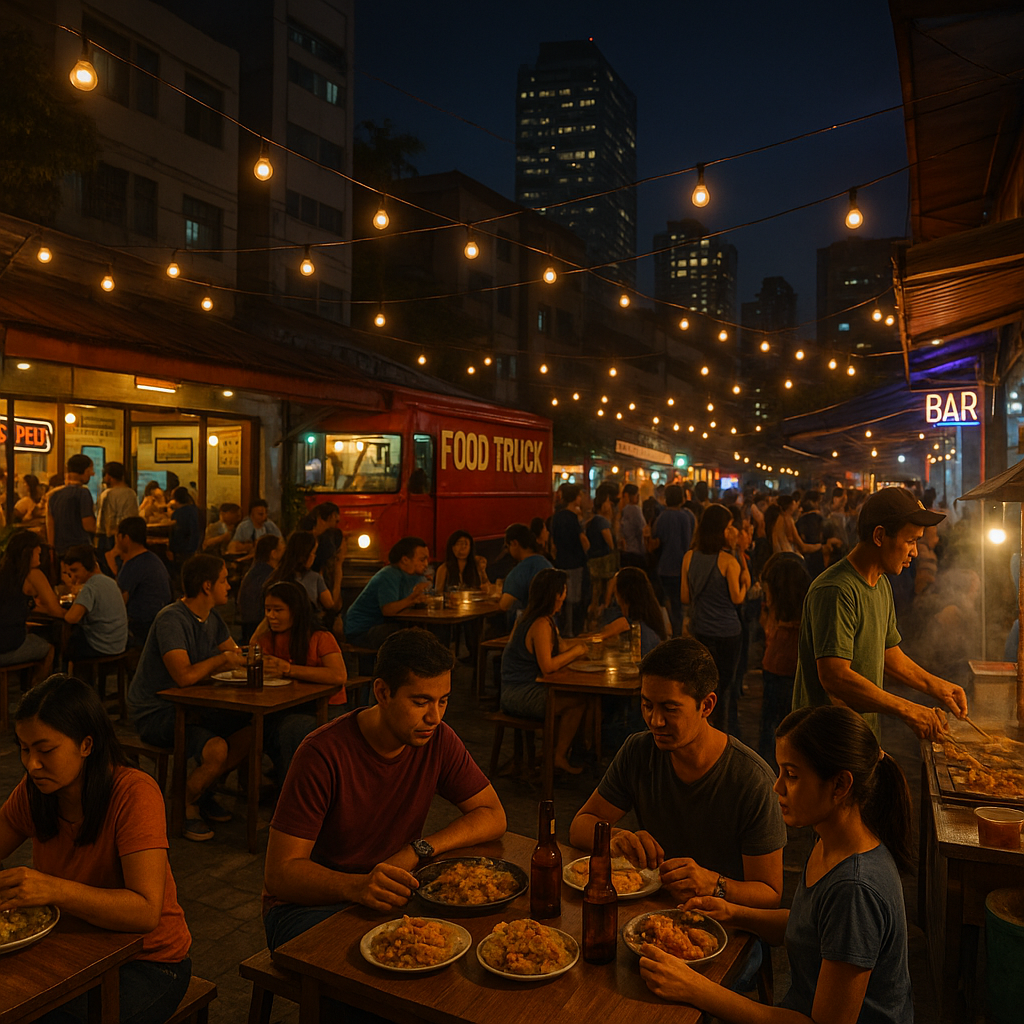
In major Philippine cities, the real charm often appears after dusk. Offices close, traffic slowly clears, and another kind of energy takes over the streets. Nightlife here is deeply tied to what people eat, where they gather, and how they unwind. Food is the anchor of social life, making evening dining spots essential parts of the urban landscape.
Manila provides countless examples of this. Neighborhoods like Poblacion, BGC, and Malate have become known for their dense clusters of bars, cafés, and eateries. On a single block, you might find a craft beer bar beside a tiny noodle shop, followed by a family-run turo-turo where dishes are displayed in trays for customers to choose from.
Street food culture adds a colorful layer to this scene. Vendors push carts or set up portable grills near parks, side streets, and transportation hubs. They sell kwek-kwek (orange-battered quail eggs), fish balls, and an assortment of grilled meats, all accompanied by sauces that range from sweet to eye-wateringly spicy. These snacks are quick, affordable, and highly social, as friends gather around the cart to eat and chat.
Night markets give a more structured, festival-like alternative. Certain districts host regular evening markets featuring food stalls, handmade goods, and occasionally live performances. Here you can sample regional dishes like Ilocos empanada or Cebu lechon without leaving the city, turning dinner into a miniature food tour of the country.
Bars and lounges rely heavily on pulutan dishes to keep their patrons satisfied. Sizzling sisig is almost always present, often served on a hot plate with a raw egg and calamansi. Other favorites include chicharrón, kinilaw (a local version of ceviche), and cheesy baked mussels. These plates are shared across the table, encouraging a slow, relaxed pace for the night.
In recent years, a wave of contemporary Filipino restaurants has transformed urban dining. Chefs are revisiting classic dishes with new techniques: longganisa in gourmet sliders, laing croquettes, or ube incorporated into pastries and cocktails. These spots are common in lifestyle malls, art districts, and business centers, attracting diners who want both nostalgia and novelty.
Dessert and drinks extend the experience. Trendy cafés stay open late with cold brew, specialty coffee, and cakes inspired by local flavors like calamansi or mango. At the same time, street vendors continue to sell taho, banana cue, and halo-halo, catering to people who prefer simple, familiar sweets.
Accessibility is also a key factor. Many Filipinos depend on public transport, so popular night food hubs tend to cluster near MRT stations, jeepney terminals, and major roads. This makes it easy for office workers to grab dinner before heading home or meet friends for a quick nightcap.
Urban nightlife in the Philippines is a tapestry woven from flavors, music, and conversation. From crowded sidewalks lined with smoking grills to chic bars offering inventive cocktails and pulutan, the cities invite you to experience their personality through food long after the sky turns dark.