
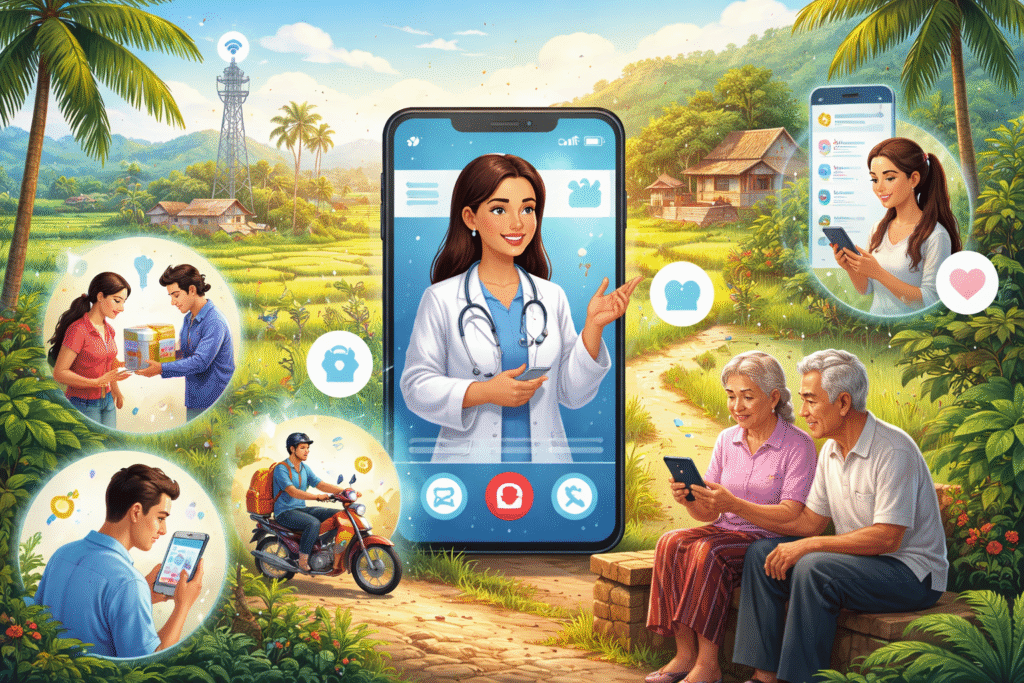
Telemedicine and health apps have rapidly changed the way healthcare is delivered in the Philippines. These digital health services are bridging gaps in access to medical care, especially in regions where healthcare facilities are scarce. With the country’s archipelagic nature and challenges related to geography, telemedicine has become an indispensable tool for ensuring that Filipinos can receive medical consultations and care from the comfort of their homes.
Telemedicine, which leverages digital technology to enable remote consultations between patients and healthcare providers, has seen significant growth in the Philippines over the past few years. The country’s large rural population often faces barriers to healthcare, such as long travel times and limited access to specialists. Telemedicine offers a practical solution by connecting patients to doctors through video calls, chat, or phone consultations, making it easier to seek medical advice without needing to travel long distances.
Several telemedicine services are now available in the Philippines, including “Telemedic,” which offers a wide range of services such as online consultations, prescriptions, and medical referrals. This service has been particularly beneficial during the COVID-19 pandemic, where social distancing and lockdown measures made in-person visits to clinics and hospitals difficult. Telemedicine platforms help reduce overcrowding in healthcare facilities and provide a safe alternative for patients needing routine checkups or medical advice.
On the other hand, mobile health applications are also playing a significant role in the Philippines’ digital health landscape. Health apps are becoming increasingly popular as they offer a convenient way for individuals to track their health, schedule appointments, and access medical information. These apps often feature useful tools such as symptom checkers, medication reminders, and personalized health tips that help users stay on top of their well-being.
A popular health app in the Philippines is “Salud,” which provides users with access to a network of doctors, medical services, and pharmacies. By simply using their smartphones, users can schedule appointments, access teleconsultations, and get prescriptions delivered to their doorsteps. This feature has been especially valuable for Filipinos who may not be able to visit their doctors regularly or have trouble finding time for medical consultations due to busy schedules.
The use of health apps in the Philippines also supports the management of chronic conditions. For instance, patients with diabetes can use apps to monitor their blood sugar levels, track their medication schedules, and receive tips on managing their condition. These tools help patients stay informed and take control of their health, which is crucial for preventing complications and improving overall health outcomes.
While the adoption of telemedicine and health apps continues to rise in the Philippines, the digital divide remains a challenge. Many rural and economically disadvantaged areas lack reliable internet connections, making it difficult for residents to fully benefit from these services. Additionally, some individuals may not be comfortable with technology or may not have access to the devices required to use these digital health tools. To address these challenges, the Philippine government and private companies are working together to improve infrastructure and increase digital literacy, ensuring that more Filipinos can access these innovative healthcare solutions.