
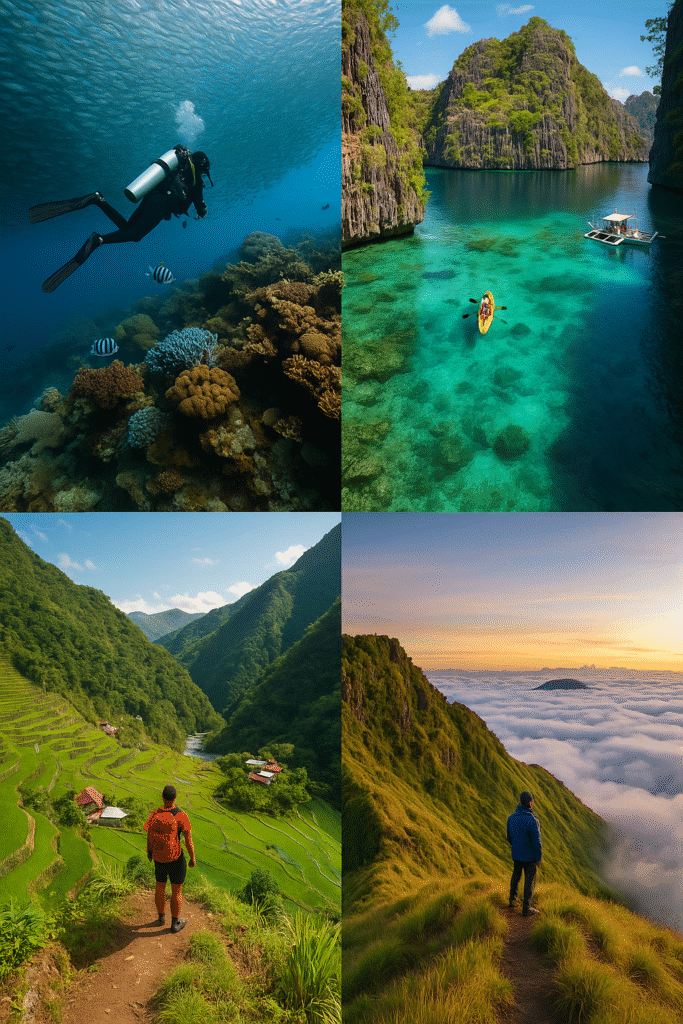
Imagine waking before dawn on a small Philippine island. The air is warm, the sky is streaked with pink, and the sound of gentle waves reaches your window. By noon, you might be exploring a coral wall thrumming with life, and by the end of the week, you could be standing on a mist-covered ridge, watching the sun rise above a blanket of clouds. This mix of sea and mountain adventure is what makes the Philippines so compelling.
The marine environment is often the first thing that attracts travelers. In places like Palawan, days are easily filled with island-hopping tours. Boats weave between dramatic karst cliffs to reveal lagoons where the water shifts from deep blue to electric green. Snorkeling here introduces you to giant clams, darting reef fish, and sometimes even sea turtles gliding through the clear water. Many tours include simple grilled lunches on tiny beaches, adding a rustic charm to the experience.
For those who want to push a bit further, scuba diving is a natural progression. Coron stands out with its combination of limestone islands and historic wrecks, some lying at depths accessible to relatively new divers. Underwater, coral-encrusted hulls, schools of fish, and shafts of sunlight filtering down create a surreal atmosphere. On the other side of the archipelago, trips to remote reefs like Tubbataha reward advanced divers with encounters with sharks, rays, and dense fish life in a protected marine park.
Surf culture has taken root in the Philippines as well. Siargao has evolved from a sleepy island to a major surfing hub, with board rentals, surf schools, and laid-back cafés lined up along its roads. While hardcore surfers chase heavy reef breaks, beginners can learn in smaller, safer waves with patient instructors. Even if you never stand on a board, watching the sunset from a beachfront bar after a day in the water is part of the island’s appeal.
When your legs start to itch for a different challenge, the mountains answer. In Northern Luzon, the landscape changes to rolling hills and layered rice terraces. Trekking through Batad feels like walking through a living amphitheater carved by generations of farmers. Simple guesthouses and lodges provide shelter, while evenings are spent with hot meals, cool air, and star-filled skies far from city lights.
Adventure can also be wet and wild inland. In Cebu, the canyoneering route to Kawasan Falls is a favorite for thrill-seekers. Guided groups trek, swim, and jump from rocks into emerald pools as they follow the river downstream. Life vests and helmets are standard, and good guides help participants judge which jumps match their comfort level, making it accessible to reasonably fit travelers.
Practical considerations round out the journey. Good footwear is essential for mountain trails, while reef-safe sunscreen and proper fins or booties help protect both you and the marine environment. It’s wise to research operators that prioritize safety briefings and environmental care, especially for activities like diving, caving, or canyoning. Listening to local advice about weather, currents, and trail conditions is just as important as any gear you pack.
The real magic of adventure travel in the Philippines lies in the variety packed into relatively short distances. One day you’re paddling a kayak under overhanging cliffs, the next you’re sharing coffee with villagers at a highland homestay. This blend of seascapes and mountainscapes makes the country an exceptional stage for travelers seeking both excitement and a deeper connection with the places they visit.