
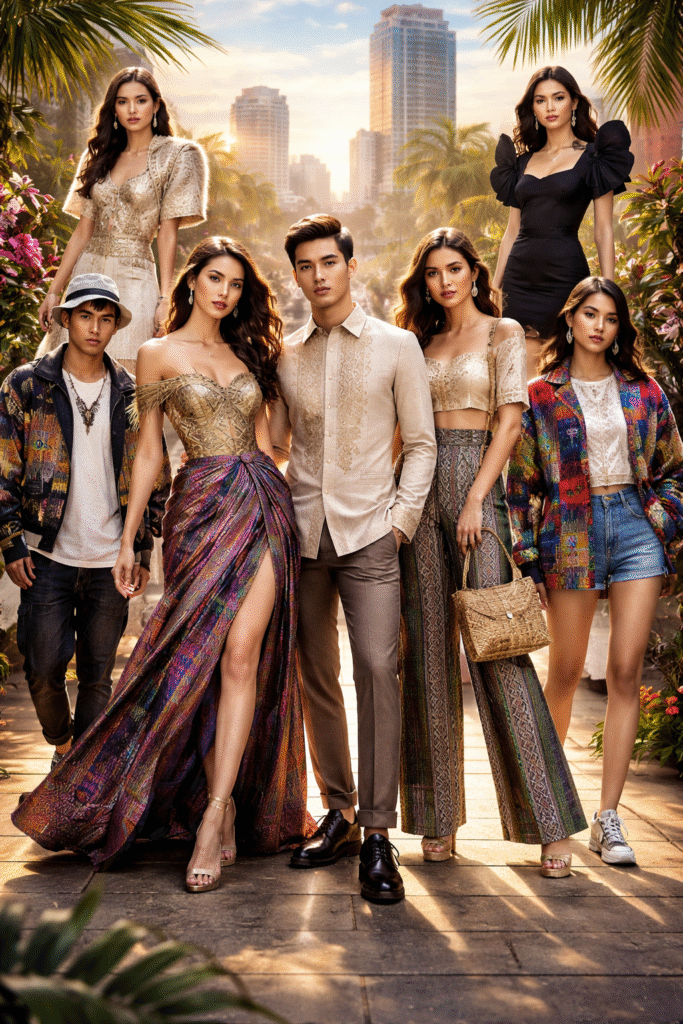
The evolution of Philippine fashion has seen a fascinating shift toward the fusion of Western trends with local Filipino elements. Over the years, fashion designers in the Philippines have creatively integrated Western styles with indigenous materials, patterns, and techniques to produce a hybrid look that captures the nation’s cultural diversity. This unique combination has led to a modern, sophisticated style that speaks to both Filipino traditions and global fashion sensibilities.
One of the most noticeable ways in which Western and Filipino fashion have come together is through the reimagining of the barong Tagalog, a traditional Filipino garment. Originally a symbol of formality and national pride, the barong has undergone a transformation, with designers incorporating modern Western cuts, fabrics, and styles. For instance, designers such as Francis Libiran have redefined the barong by using luxe materials like satin and lace while incorporating elements of Western tailoring. This results in a contemporary version of the barong that retains its traditional significance but appeals to a younger, fashion-forward audience.
Another significant aspect of the fusion between Western and local fashion is the use of Filipino textiles in modern clothing. Fabrics like piña, jusi, and tinalak are carefully woven by skilled Filipino artisans and have long been part of the country’s traditional dress. However, designers have found innovative ways to update these materials, pairing them with Western-style clothing such as tailored pants, dresses, and blouses. This has led to the creation of outfits that reflect both the country’s history and modern trends, allowing for a deeper appreciation of Filipino craftsmanship while embracing international influences.
Streetwear in the Philippines is another area where Western fashion meets local influence. In recent years, street style has become a dominant force in the local fashion scene, with young Filipinos embracing global trends such as oversized jackets, cargo pants, and graphic tees. Filipino designers have responded to this demand by incorporating indigenous Filipino designs, such as ikat patterns or tribal prints, into streetwear collections. This has led to a thriving subculture where traditional Filipino symbols are worn alongside modern Western pieces, making Filipino fashion more relevant in today’s globalized world.
The increasing popularity of Filipino fashion influencers on social media platforms has also played a significant role in showcasing the blending of Western and local styles. Influencers such as Verniece Enciso and Georgina Wilson often feature outfits that marry Western fashion trends with elements of Filipino culture, from wearing bahag inspired skirts to accessorizing with handcrafted local jewelry. Their social media presence has helped raise awareness of Filipino fashion both in the Philippines and abroad, encouraging others to experiment with the fusion of styles in their own wardrobes.
Local fashion designers and brands have also leveraged global platforms such as New York Fashion Week and Paris Fashion Week to showcase their works that blend Western and Filipino influences. This global exposure has allowed Filipino fashion to break into the international scene, with designers like Bienvenido “Bennie” A. J. Ong being recognized for their innovative and culturally rich collections. By presenting designs that combine both Western aesthetics and Filipino craftsmanship, these designers are ensuring that Filipino fashion remains relevant on the world stage.
Finally, the fusion of Western and local styles in fashion also presents an opportunity for sustainability. By incorporating Filipino-made fabrics and accessories, designers are not only promoting the country’s rich cultural heritage but also supporting sustainable practices. Many local artisans are employed in the creation of traditional textiles, and by incorporating these materials into contemporary designs, Filipino fashion helps create a more sustainable and ethically responsible industry.
Through the blending of Western trends with local traditions, Filipino fashion has created a hybrid style that reflects the country’s ability to evolve while maintaining its cultural identity. As the global fashion landscape continues to change, this fusion will likely remain a key feature of Philippine fashion, offering new ways to celebrate Filipino culture while engaging with the broader international fashion scene.