
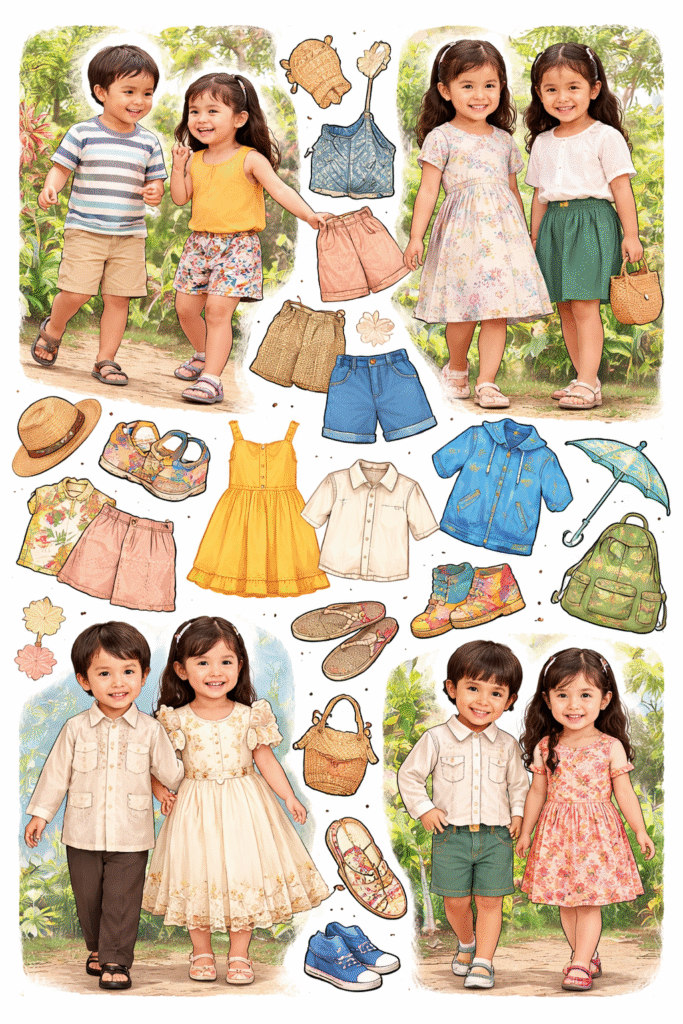
To understand children’s fashion in the Philippines, start with the environment. The country’s heat, humidity, and rainy seasons strongly influence what families buy, how children dress for school and weekends, and which materials become everyday favorites. Filipino kids’ style is often admired because it looks cheerful while staying realistic for an active lifestyle.
Fabric choice is the foundation. Parents tend to prefer breathable fibers—especially cotton and linen-like blends—because they reduce discomfort in hot weather. Children sweat easily, and itchy or heavy fabrics can ruin even the cutest outfit. That’s why many everyday looks involve soft T-shirts, airy blouses, lightweight dresses, and relaxed shorts. Even when families dress up, they often seek clothing that still “feels light” on the body.
Because rain can arrive suddenly, smart layering becomes a quiet style skill. Kids may wear simple base layers with a thin jacket or hoodie that can be removed quickly when the sun returns. Water-resistant sandals, quick-dry shorts, and easy-to-clean footwear are practical choices, especially for school commutes and weekend errands. You’ll also see backpacks and accessories designed to survive rain—another way function influences fashion.
Color and print are where Filipino kids’ fashion really pops. Bright shades, tropical patterns, and playful graphics are widely embraced. This isn’t only a trend; it’s part of a broader cultural comfort with expressive color. Outfits for children might feature sunny yellows, ocean blues, or lively florals—tones that match the landscape and the upbeat energy of Filipino family life.
Comfort isn’t only about fabric—it’s also about fit and mobility. Many kids’ outfits prioritize elastic waistbands, adjustable straps, and silhouettes that don’t restrict movement. Whether a child is playing outside, dancing at a family party, or sitting through a school event, clothing needs to keep up. This creates a style identity that is both cute and flexible: coordinated sets, loose rompers, and easy dresses that don’t require constant adjusting.
Cultural events introduce a more formal side, but even that formality is adapted to climate. Kid-friendly versions of dress shirts, embroidered tops, and formal dresses are often designed with lighter linings or breathable layers. A child’s “special occasion” outfit in the Philippines may look elegant, yet it usually avoids heavy structures that would be uncomfortable in warm weather.
Another distinctive aspect is how families often build wardrobes through a mix of new purchases and budget-friendly finds. The Philippines has a strong culture of value shopping, and many parents get creative—mixing affordable basics with one standout piece for birthdays or holidays. This encourages experimentation and makes style feel accessible rather than exclusive.
Filipino children’s fashion is inspiring because it proves that practicality doesn’t have to look boring. Climate-aware styling—breathable fabrics, flexible fits, rain-ready details—creates outfits that support real life. Add joyful colors and a celebration-loving culture, and you get a children’s fashion scene that feels both functional and full of personality.