
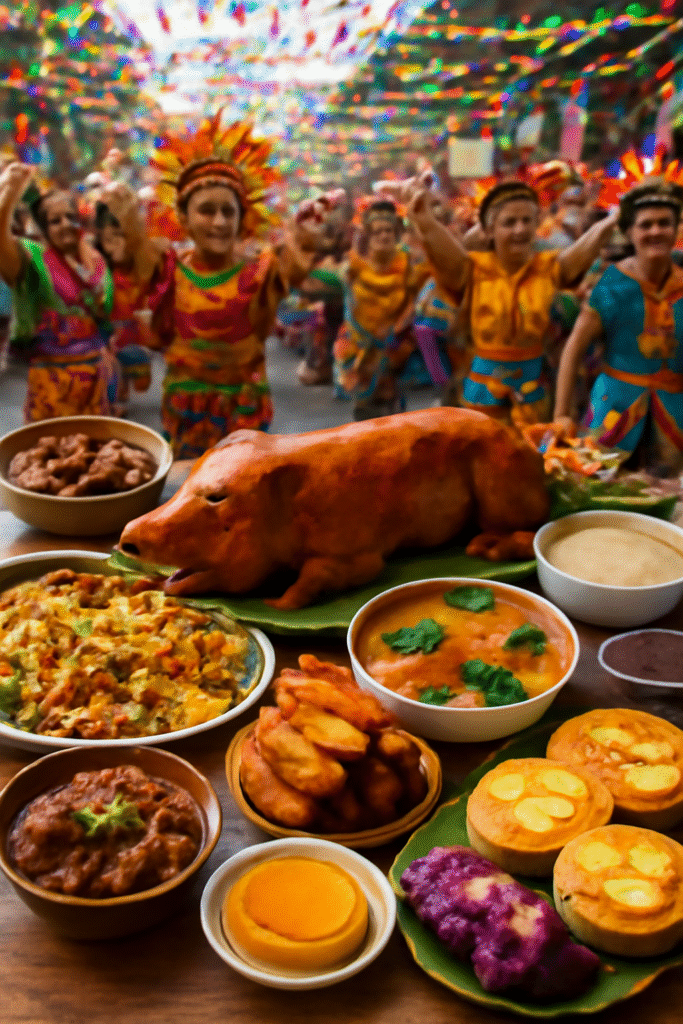
In the Philippines, food is much more than just sustenance; it’s a central part of every festival and celebration. Filipino festivals, which are held throughout the year, often feature a wide variety of traditional dishes that highlight the rich culinary heritage of the country. These dishes are not only delicious but are also deeply connected to Filipino traditions, history, and symbolism, making them an integral part of any celebration.
One of the most iconic dishes served during festive occasions is Lechon, the whole roasted pig. Lechon is a must-have at large celebrations like Christmas, weddings, and even town fiestas. This dish has Spanish roots, but over the years, it has evolved into one of the most celebrated Filipino culinary delights. The preparation of Lechon is an event in itself, with the pig being meticulously seasoned and roasted over an open flame, resulting in a crispy skin and tender meat. The communal nature of serving and sharing Lechon embodies Filipino values of togetherness and hospitality.
Another traditional dish commonly found at Filipino festivals is Pancit, a dish believed to symbolize long life and prosperity. Various versions of Pancit exist throughout the Philippines, with popular types including Pancit Malabon, Pancit Bihon, and Pancit Canton. Whether served with shrimp, pork, or chicken, Pancit is often enjoyed on birthdays and New Year’s Day as a way to ensure good health and luck. The tradition of serving Pancit at festivals is deeply ingrained in Filipino culture, where it’s seen as an essential part of any festive meal.
Festivals like Sinulog in Cebu are known for their vibrant atmosphere and diverse food offerings. During Sinulog, street food stalls are set up everywhere, offering a variety of snacks and meals that celebrate local flavors. One such treat is Banana Cue, a fried caramelized banana on a stick, which is a popular street snack during these festivities. Another favorite is Adobo, a dish of marinated pork or chicken in a savory blend of soy sauce, vinegar, garlic, and spices. Adobo is often seen during family gatherings and festivals as a representation of Filipino comfort food, made to bring people together.
Kare-Kare, a rich peanut stew, is another beloved dish served during Filipino celebrations. It is commonly prepared for town festivals and family reunions, particularly in the provinces. The dish typically consists of oxtail, tripe, and vegetables such as string beans, eggplant, and banana hearts, all cooked in a creamy peanut sauce. Traditionally, it is served with a side of Bagoong, a fermented shrimp paste, which adds a salty contrast to the sweetness of the sauce. The sharing of Kare-Kare during festive occasions reflects the communal nature of Filipino feasts, where the meal is as much about togetherness as it is about the food itself.
Sweets also play an important role in Filipino festivals, with many delicious desserts that have become synonymous with celebrations. Bibingka, a rice cake made with rice flour, coconut milk, and sugar, is a popular delicacy during Christmas, particularly after the Simbang Gabi (night mass). The cake is often cooked in a clay pot lined with banana leaves, which gives it a distinct flavor. Another popular dessert is Puto Bumbong, a sticky rice cake made from glutinous rice and flavored with coconut and brown sugar. This dish is traditionally steamed in bamboo tubes and is a favorite treat during Christmas and other local festivals.
Among Filipino desserts, Leche Flan is perhaps the most iconic. This creamy custard dessert made from egg yolks, sugar, and milk is often served at weddings, birthdays, and other special occasions. The smooth texture and sweet flavor make it a beloved part of the Filipino culinary landscape, and it’s often one of the first dishes to be devoured during a festive meal. It’s said that the sweetness of Leche Flan symbolizes joy and celebration, which aligns with its frequent presence in Filipino parties and festivals.
Food is also symbolic in Filipino culture, with certain dishes representing good fortune, wealth, or blessings for the upcoming year. During New Year’s Eve, for example, many families prepare a special feast that includes Pancit (for long life), round fruits (for prosperity), and sticky rice desserts (to ensure family unity). This symbolism plays a big role in Filipino celebrations, making food an essential part of the festival experience.
Filipino food is an essential part of the country’s celebrations and festivals, linking together generations, communities, and regions in a shared appreciation of culinary traditions. Whether it’s the grandeur of Lechon, the symbolism of Pancit, or the sweet comfort of Bibingka, Filipino dishes are much more than just meals; they are expressions of love, hospitality, and cultural pride. In the Philippines, food isn’t just something to be eaten—it’s something to be celebrated, shared, and cherished during every festival and special occasion.