
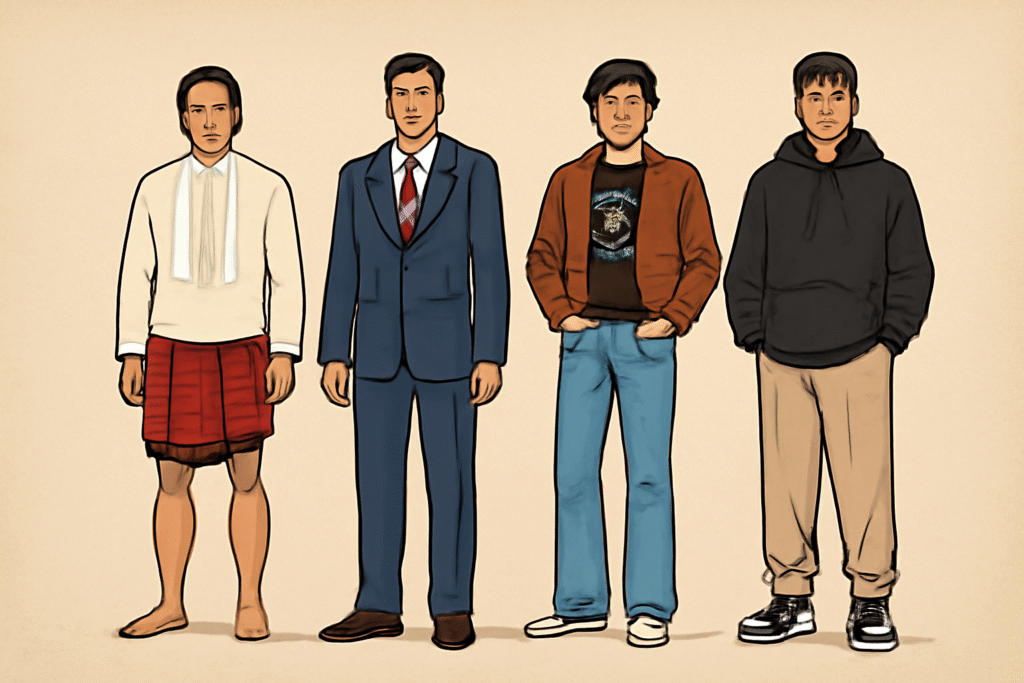
The fashion landscape for men in the Philippines has evolved dramatically, reflecting both the country’s historical changes and the global fashion movements that have shaped its trends. From traditional Filipino wear to the current fusion of casual and formal styles, men’s fashion in the Philippines showcases the nation’s adaptability and unique cultural identity.
Early Filipino Fashion: A Glimpse of Tradition
In the pre-colonial Philippines, Filipino men wore functional and comfortable garments, reflecting the country’s tropical climate and practical needs. The “bahag” or loincloth was the traditional clothing for men, allowing freedom of movement, while the “barong Tagalog” was introduced during Spanish rule. This traditional garment, which is now worn on formal occasions, became a symbol of Filipino pride and national identity. Made from light, natural fabrics, the barong was used as a marker of status and cultural significance during colonial and post-colonial times.
The American Influence and Westernization of Fashion
The early 20th century brought new styles to the Philippines with the American colonial period. Filipino men began to embrace Western-style suits, shirts, and trousers. This shift reflected not only the influence of American fashion but also the desire for modernity. Filipino men started to wear Western suits as part of their daily attire, signaling a new era in fashion, marked by a departure from purely traditional clothing.
The adoption of Western attire became increasingly popular, especially among the elite, as it represented social status and modernization. The formal suit and tie, typically worn for formal events and business meetings, became a staple in Filipino men’s wardrobes, with the barong Tagalog also becoming the go-to garment for special occasions and national celebrations.
Casual Fashion Emerges: The Mid-20th Century Shift
By the mid-20th century, men’s fashion in the Philippines began to embrace more casual, everyday styles, a reflection of the economic growth and cultural shifts of the time. The 1950s and 1960s introduced casual wear such as polo shirts, slacks, and chinos. This era marked the start of more practical yet stylish attire becoming part of daily life, with Filipino men opting for comfort without sacrificing fashion.
Meanwhile, the influence of Hollywood and global pop culture became apparent in the 1970s, when rock ‘n roll-inspired looks took hold. Men in the Philippines were seen wearing bell-bottom jeans, leather jackets, and T-shirts, mirroring Western fashion trends. While casual styles flourished, the barong Tagalog continued to play a vital role in formal events, maintaining its cultural significance.
Contemporary Trends: Blending Casual with Formal
Today’s Filipino men’s fashion is an exciting mix of formal and casual influences. The younger generation, in particular, has embraced streetwear, often pairing casual clothing like sneakers, hoodies, and graphic tees with more formal pieces like blazers or dress shoes. This fusion creates a look that is both comfortable and polished, reflecting the evolving needs of modern Filipino men.
In addition, the barong Tagalog has undergone a makeover, with designers incorporating modern fabrics and styles to make it more versatile. The once exclusively formal garment has now become more adaptable, suitable for both professional and semi-formal settings. The modernization of traditional Filipino wear has made it more accessible to younger generations, contributing to its continued relevance in contemporary fashion.
A Reflection of the Changing Times
The evolution of men’s fashion in the Philippines is a testament to the country’s ability to adapt while preserving its cultural heritage. From the traditional barong Tagalog to the casual styles of the 21st century, Filipino fashion has mirrored the changing social and political landscape of the nation. The mix of casual and formal styles that define modern Filipino men’s fashion reflects the country’s dynamic culture and its global influences.