
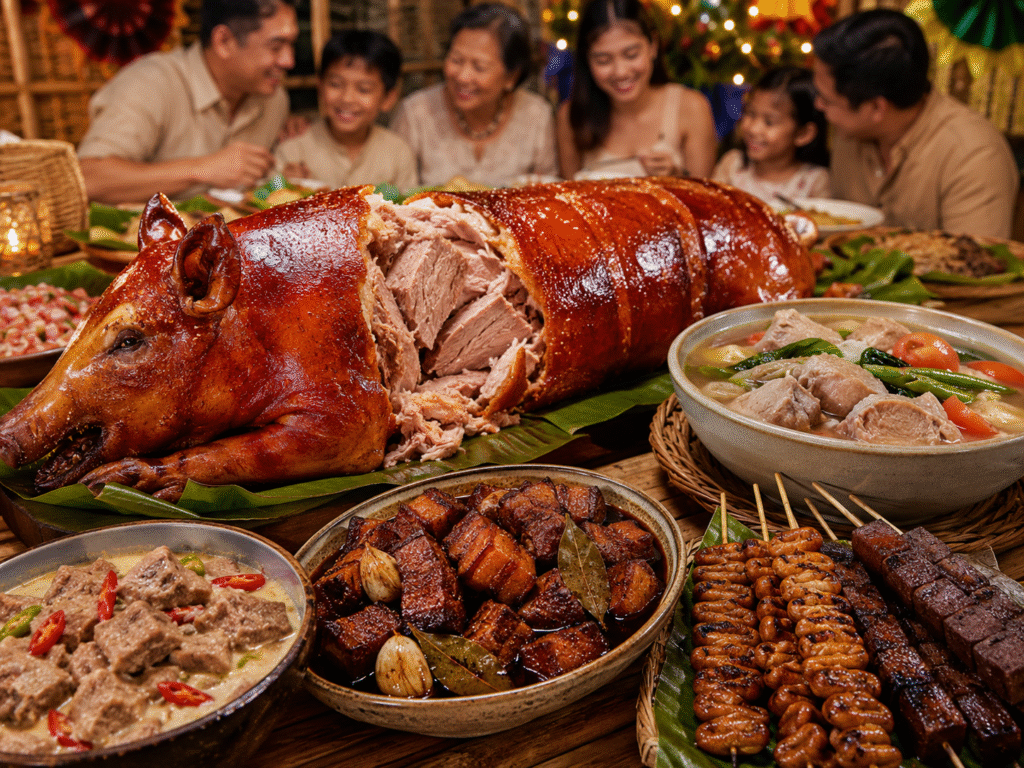
Filipino food is a melting pot of flavors, blending indigenous, Spanish, Chinese, and American influences into a singular culinary identity. Among the many ingredients that dominate Filipino kitchens, pork stands out as one of the most popular and versatile choices. The inclusion of pork in Filipino cuisine is a reflection of its ability to absorb flavors and its rich cultural significance.
The history of pork consumption in the Philippines dates back to the Spanish colonial era, where the Spanish introduced the domestication of pigs. Since then, pork has remained a key component in Filipino cooking, especially for celebratory dishes. One of the most iconic pork dishes is lechon, a whole roasted pig that is a centerpiece in festive feasts. This dish, often prepared for major events such as weddings or birthdays, requires hours of slow-roasting over a charcoal fire, producing succulent meat and crispy skin.
Another well-loved dish is sinigang na baboy, a sour tamarind-based soup that pairs tender pork with a variety of vegetables. The richness of the pork blends perfectly with the tangy broth, making it a comforting dish, particularly during the rainy season. The dish is often accompanied by steamed rice and is a mainstay in Filipino households, enjoyed by families across generations.
Adobo is another staple that features pork. This dish is a slow-cooked stew that combines pork with vinegar, soy sauce, garlic, and bay leaves. The flavors meld together over time, creating a savory, tangy sauce that perfectly complements the richness of the pork. The beauty of adobo lies in its versatility—families across the Philippines have their own variations, whether it’s adding potatoes, coconut milk, or even hard-boiled eggs.
Street food culture in the Philippines is also heavily centered around pork, with grilled pork skewers, such as bbq and betamax (grilled coagulated blood), being popular among locals. These street foods offer a quick and affordable snack that exemplifies the Filipino love for bold, savory flavors.
Pork is also found in various other Filipino dishes that are less known internationally but equally delicious. Bicol express is a spicy dish made with pork, shrimp paste, and coconut milk. This dish is rich in flavor with the heat from the chilies and the creaminess from the coconut milk balancing the fatty pork. It is a staple of Bicolano cuisine, a region known for its use of chilies and coconut milk.
One dish that stands out for its complexity and rich flavor is kare-kare. While traditionally made with oxtail, variations of this dish also feature pork hocks or pork belly. The pork is stewed with vegetables in a rich, peanut-based sauce, making for a hearty, flavorful meal. The dish is often enjoyed with bagoong (fermented shrimp paste) on the side to add saltiness, creating a perfect balance of flavors.
In Filipino cuisine, pork is more than just an ingredient—it is an essential part of family traditions, celebrations, and the daily dining experience. From hearty stews to succulent roasted pork, each dish tells a story of Filipino heritage and the creativity of its people. Pork-based dishes are beloved not only for their flavor but also for their ability to bring people together, making them an integral part of Filipino food culture.