
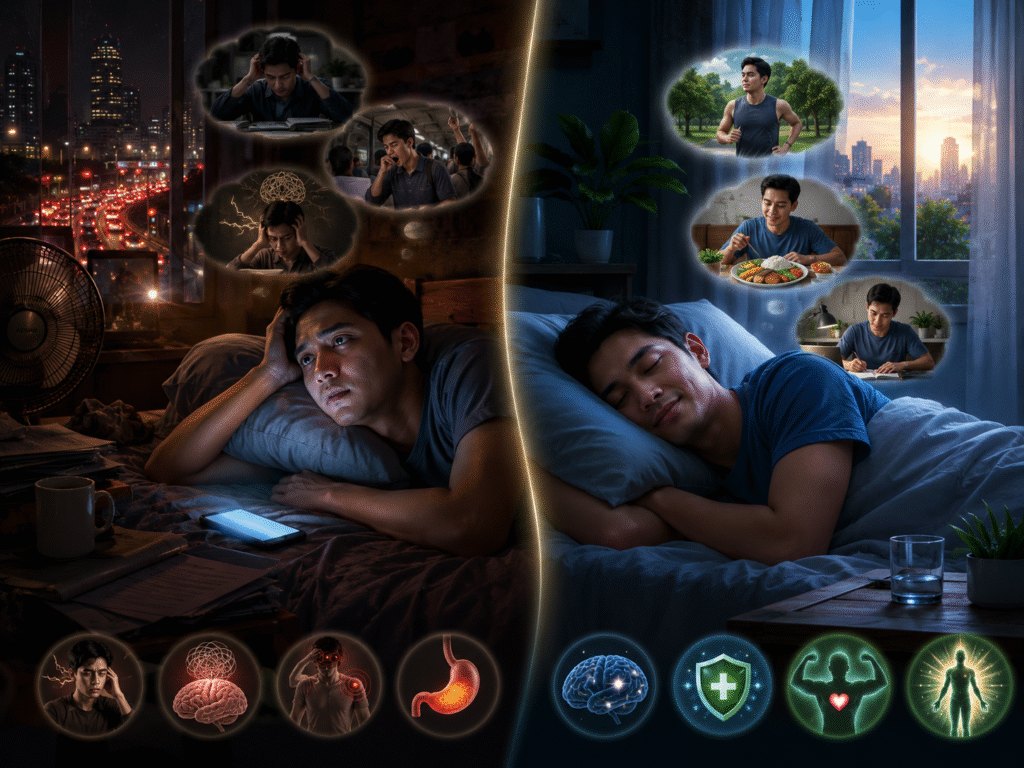
Sleep habits have a powerful effect on the overall health of people in the Philippines. Although food, exercise, and medical care are often discussed when talking about wellness, sleep is just as important. A person’s sleeping schedule can influence the immune system, heart function, mental stability, weight control, and daily performance.
In the Philippines, many individuals struggle to maintain consistent sleep. One reason is the fast pace of urban living. Workers in cities often spend several hours commuting because of heavy traffic. This means they may leave home before sunrise and arrive back late in the evening. As a result, sleep becomes shorter and less regular. Students also experience sleep problems because of assignments, exams, online learning, and social media use.
Another important factor is shift work. The Philippines has a large number of employees working in call centers, hospitals, factories, restaurants, and security services. Many of these jobs require evening or overnight shifts. Working at night and sleeping during the day can confuse the body’s internal clock, also known as the circadian rhythm. When this rhythm is disrupted, the body may have difficulty regulating hormones, energy, digestion, and mood.
One of the most noticeable effects of poor sleep is fatigue. People who do not sleep enough often wake up feeling tired, even after several hours in bed. This can reduce productivity and increase mistakes at work or school. For drivers, construction workers, machine operators, and healthcare staff, sleepiness can also become a safety risk. A tired mind reacts more slowly and makes poorer decisions.
Sleep is closely connected to immune defense. During deep sleep, the body repairs tissues and strengthens its ability to fight disease. When Filipinos regularly sleep late or wake up too early, the immune system may become weaker. This can increase the chance of getting sick, especially in crowded homes, schools, offices, and public transportation.
Poor sleep may also contribute to serious long-term illnesses. Studies in general health science have linked lack of sleep with high blood pressure, heart disease, obesity, and type 2 diabetes. This is important for the Philippines because many families already face lifestyle-related health risks, including high intake of processed food, sugary beverages, and limited physical activity. When unhealthy sleep is added to these habits, the risk becomes greater.
Mental and emotional health are also affected. Sleep loss can make a person more impatient, anxious, forgetful, and emotionally sensitive. In Filipino family culture, where people often carry responsibilities for children, parents, siblings, and work, emotional stress can build up quickly. Without enough rest, it becomes harder to manage pressure calmly. For students, poor sleep can damage memory, attention, and academic performance.
Digital habits are another major reason many Filipinos sleep late. Smartphones are widely used for messaging, videos, online games, and social networking. These activities can keep the brain active at night. Screen light can also interfere with the natural sleep hormone melatonin, making it more difficult to feel sleepy.
Healthier sleep can be achieved through practical steps. A regular sleep and wake time helps train the body. Reducing phone use before bed, keeping the bedroom dark, avoiding heavy meals late at night, and limiting coffee in the afternoon can improve sleep quality. Families can also support one another by respecting rest time and reducing noise at night.
Better sleep patterns can improve the daily lives of Filipinos. With enough rest, people can think more clearly, handle stress better, strengthen their bodies, and reduce the risk of disease.