
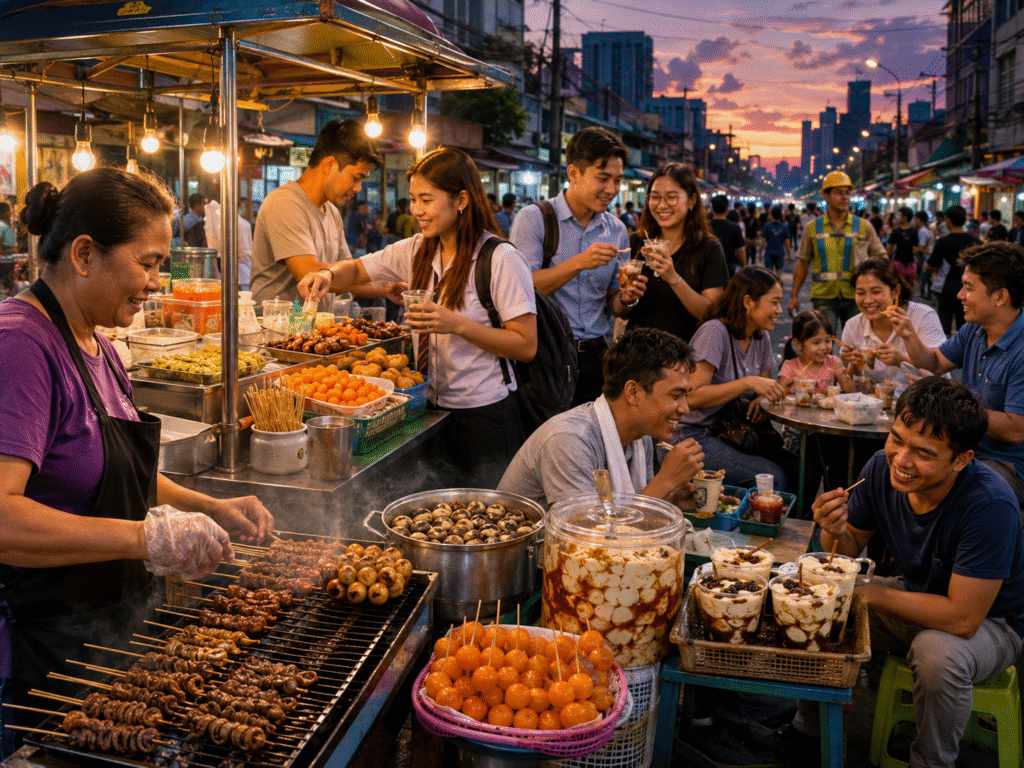
Street food is an essential thread in the fabric of Filipino daily life, offering convenience, culture, and community in equal measure. From the early hours of the morning until late at night, the streets come alive with vendors selling a wide array of snacks and light meals, ranging from grilled skewers and okoy (shrimp fritters) to sweet treats like puto (rice cakes) and halo-halo (shaved ice dessert). These affordable and flavorful offerings serve as a lifeline for millions of Filipinos navigating busy urban and rural routines.
One of the primary reasons street food is indispensable is its accessibility. Situated in strategic locations such as schools, bus terminals, office districts, and residential areas, vendors cater to people seeking a quick bite. Street food provides an alternative to home-cooked meals or restaurant dining, especially for individuals with tight schedules or limited budgets. In addition to convenience, these micro-enterprises create significant economic opportunities, allowing vendors to earn a living while supplying essential services to their communities.
Cultural heritage is deeply embedded in Filipino street cuisine. Many recipes have been handed down through generations, maintaining regional flavors and traditional cooking methods. Street food is not only eaten; it is experienced. Festivals, local celebrations, and neighborhood gatherings frequently feature items like kikiam, sizzling squid, or bibingka, each carrying stories of local history and culinary identity. These foods also offer a glimpse into the diversity of Philippine regions, with ingredients and preparation methods reflecting local agricultural practices and tastes.
Street food also fosters a sense of social cohesion. It provides informal meeting points where friends, families, and neighbors converge. Chatting over a skewer of isaw or sharing a cup of taho strengthens interpersonal bonds, making eating out more than just a physical necessity—it becomes a shared cultural activity. The lively atmosphere of food stalls, with their colorful displays and sizzling aromas, creates communal spaces that enhance urban and rural social life alike.
Health and safety have become increasingly emphasized in recent years. Authorities and vendors are collaborating to improve food handling, hygiene, and preparation methods. Many vendors now adhere to safety regulations, while awareness campaigns encourage consumers to make safer food choices. This evolution highlights the balance between preserving tradition and meeting contemporary health expectations.
Innovation in street food reflects the adaptability of Filipino culture. Modern vendors experiment with flavors, fusion dishes, and visually appealing presentations to capture the interest of younger generations and tourists. The ability to blend tradition with creativity ensures that street food remains a dynamic part of Philippine life, evolving with society while maintaining its cultural roots.
In essence, street food in the Philippines is a multidimensional phenomenon. It supports livelihoods, embodies cultural identity, encourages social interaction, and continues to evolve with modern demands. Its omnipresence and resilience demonstrate how deeply it is woven into the day-to-day experience of Filipinos.