
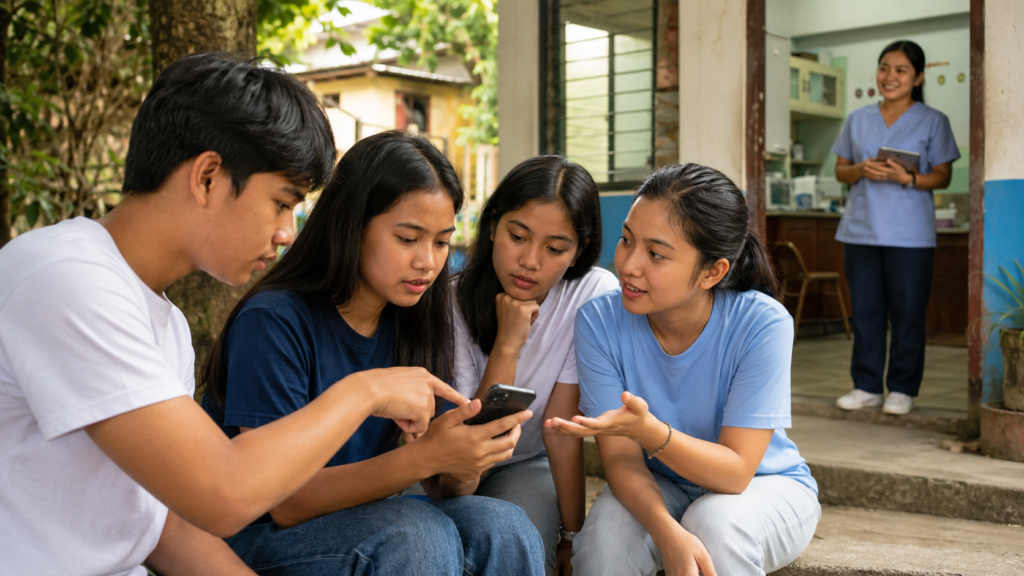
Sexual and reproductive health remains one of the most sensitive areas of adolescent health education in the Philippines. Cultural expectations, religious values, family discomfort, and fear of encouraging sexual activity often make adults hesitant to discuss contraception, consent, sexually transmitted infections, and pregnancy.
Yet avoiding these discussions can leave teenagers dependent on social media, pornography, classmates, or anonymous online forums for information. Much of that content is incomplete, misleading, or medically inaccurate.
The Philippine government and its development partners have increasingly promoted age-appropriate education and adolescent-friendly health services. The objective is not merely to prevent pregnancy. It is also to help teenagers understand consent, personal boundaries, healthy relationships, HIV prevention, sexual violence, and the long-term consequences of health decisions.
HIV Awareness Has Become More Urgent
The Philippines has faced a serious increase in HIV infections compared with many other countries in the Asia-Pacific region. Young people are an important focus of prevention because late diagnosis can allow the virus to spread while delaying life-saving treatment.
The UNAIDS Philippines country page provides official information on the national HIV situation, prevention priorities, treatment access, and populations requiring stronger outreach.
For adolescents, effective HIV education must go beyond telling students to avoid risky behavior. Teenagers need practical explanations of how HIV is transmitted, how it is not transmitted, where testing is available, and why people living with HIV should not face discrimination.
The Philippine HIV and AIDS Policy Act also strengthened the national response by protecting confidentiality, opposing discrimination, and expanding access to prevention and testing. These protections matter because fear of being exposed to parents, classmates, or community members can discourage young people from seeking services.
Youth-Friendly Clinics Can Close the Information Gap
Adolescent-friendly health facilities are designed to make young clients feel respected rather than judged. Staff members may provide counseling on menstruation, contraception, pregnancy, HIV testing, sexually transmitted infections, sexual violence, and mental health.
A clinic can technically offer these services while still failing to attract teenagers. Location, opening hours, staff behavior, privacy, and cost all influence whether adolescents feel safe enough to visit.
Some local governments and civil-society organizations use mobile clinics, school referrals, youth centers, and online appointment systems to improve access. Peer educators can also connect teenagers with professional services without attempting to replace trained health workers.
Addressing Teenage Pregnancy Requires More Than Abstinence Messages
Teenage pregnancy is connected to multiple factors, including poverty, school dropout, sexual abuse, unequal relationships, limited contraception access, and lack of accurate information. A campaign focused only on personal responsibility may overlook the conditions that shape a teenager’s choices.
Programs are more effective when they include education continuation, protection from exploitation, livelihood support for families, and counseling for young parents. Boys must also be included. Pregnancy prevention is often presented as a responsibility for girls, even though boys need equal education about consent, contraception, fatherhood, and respectful relationships.
The Role of Parents and Communities
Parents remain influential sources of health information, but many do not know how to begin these conversations. Community workshops can help parents use medically accurate language without abandoning family values.
The Philippine challenge is to create an approach that is culturally respectful while still giving adolescents information that can protect their health. Silence does not prevent sexual activity, HIV, exploitation, or pregnancy. Clear and responsible education gives teenagers a better chance of recognizing risk, seeking care early, and making informed decisions.