
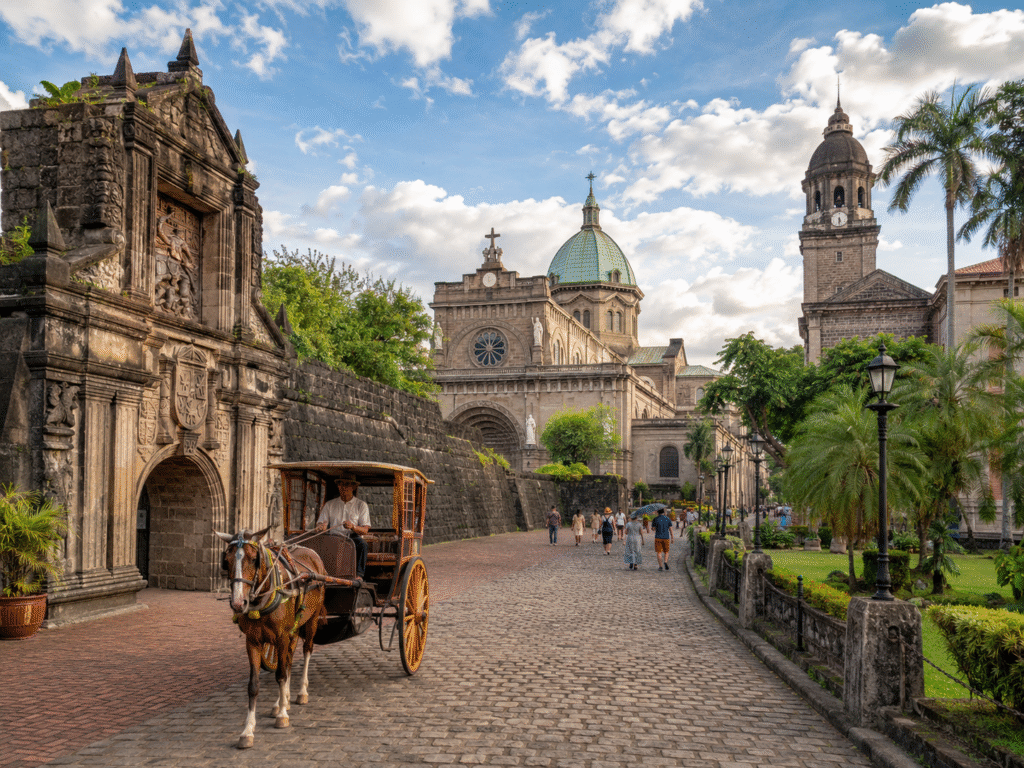
Intramuros, often referred to as Manila’s historic walled city, stands as a living museum of the Philippines’ colonial era. Located in the heart of the capital, it showcases a unique blend of Spanish architecture, religious landmarks, and historical fortifications that have withstood centuries of change. Its cobblestone streets and preserved structures invite travelers to step back into the late 1500s, when Spanish forces established Manila as the center of their colonial administration in Asia.
The city’s defensive walls, originally built using stone and earth, were designed to protect residents from invasions and raids. Among these fortifications, Fort Santiago is the most famous. Serving as both a citadel and a prison, it witnessed significant events in Philippine history. One of its most notable connections is with José Rizal, the national hero, who spent his final days imprisoned here. Today, visitors can explore the fort’s dungeons, historical markers, and the Rizal Shrine museum, which houses memorabilia related to his life and the nation’s fight for independence.
Religious structures in Intramuros highlight the strong Catholic influence introduced during Spanish rule. San Agustin Church, recognized by UNESCO for its baroque architecture, stands as the oldest stone church in the Philippines. Its elaborate interiors, featuring detailed murals and gilded altars, offer a visual testament to the artistry and devotion of its era. Similarly, Manila Cathedral impresses with its neo-Romanesque façade and vibrant stained-glass windows, reflecting centuries of devotion and architectural evolution, despite having been reconstructed multiple times due to natural disasters.
Cultural immersion is also a significant part of visiting Intramuros. The streets are dotted with museums and heritage houses that recreate life during the colonial period. Casa Manila Museum is a prime example, where antique furniture, period decorations, and artifacts transport visitors into the daily lives of the Filipino elite centuries ago. Additionally, tourists can enjoy kalesa rides along narrow streets, attend traditional dance performances, or participate in guided walking tours, all of which deepen the appreciation of Intramuros’ rich heritage.
Intramuros’ importance extends beyond its historic architecture. Its plazas, such as Plaza de Roma, were once civic centers where social and political events took place. They remain popular gathering spots, offering scenic views and a sense of connection to the past. Meanwhile, nearby souvenir shops and cafes allow visitors to experience Filipino culture through local crafts and cuisine, blending history with modern-day leisure.
Visiting Intramuros offers a holistic view of Manila’s colonial history, from the lives of Spanish administrators to the struggles for independence. Its walls, churches, and museums collectively narrate a story of resilience, artistry, and cultural identity. For anyone seeking to understand the Philippines’ historical roots while enjoying a picturesque and culturally rich environment, Intramuros remains a must-visit destination.