
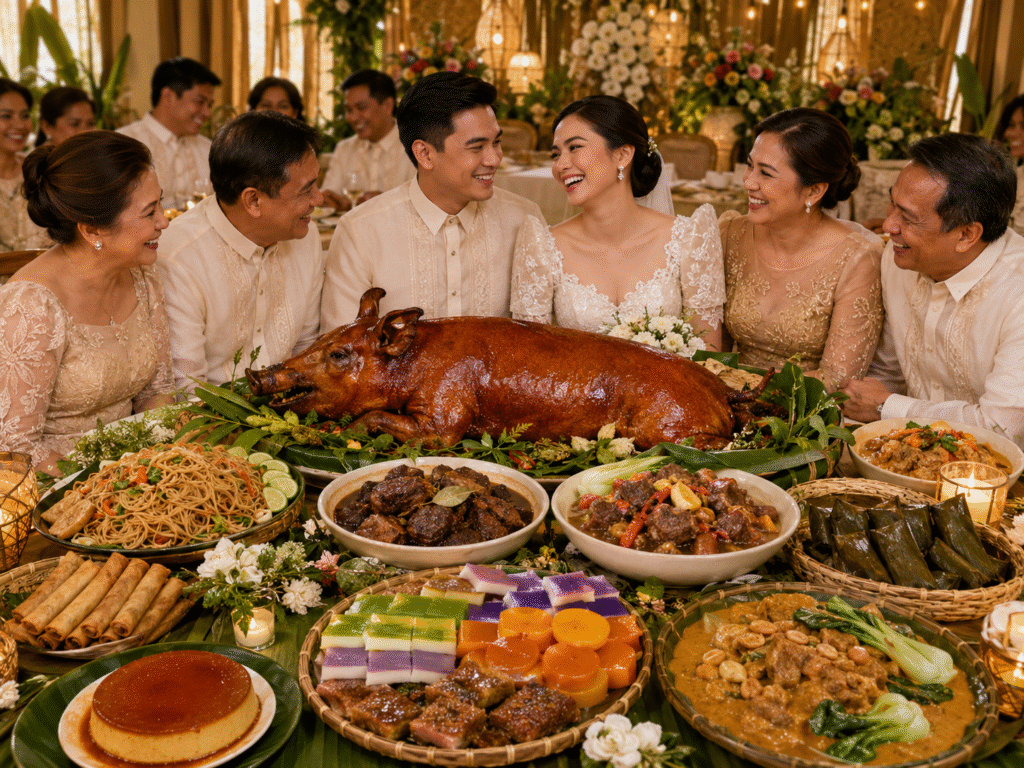
A Filipino wedding is rarely complete without a festive table filled with meaningful dishes. In Filipino culture, food plays a central role in important life events, especially marriage. A wedding meal is more than a reception menu; it is a public expression of family pride, gratitude, and hope. The dishes served often carry symbolic meanings related to long life, unity, sweetness, and prosperity.
Lechon is one of the most celebrated foods at Filipino weddings. This whole roasted pig is commonly served during major family occasions because it represents abundance. Its presence at the reception usually signals that the event is important and that guests are being honored. The crispy skin, flavorful meat, and dramatic presentation make lechon a centerpiece of the feast. In some celebrations, the carving of lechon becomes part of the excitement, drawing guests toward the buffet table.
Noodle dishes are also highly valued in Filipino wedding traditions. Pancit is served because noodles are associated with long life and lasting relationships. For newlyweds, pancit can symbolize the wish for a long and strong marriage. Families may choose Pancit Bihon for a lighter dish, Pancit Canton for a richer flavor, or Pancit Malabon for a seafood-based option. Regardless of the variation, pancit remains one of the most meaningful dishes on the table.
Many Filipino weddings also feature adobo, a dish deeply connected to home and heritage. Adobo is usually made with pork or chicken cooked in vinegar, soy sauce, garlic, pepper, and bay leaves. Its savory and slightly tangy taste makes it popular across generations. Including adobo in a wedding menu gives the celebration a familiar and comforting feeling. It reflects the importance of family meals and the everyday traditions that continue after the wedding day.
Other savory dishes often appear depending on the region and family preference. Kare-kare, a peanut-based stew commonly served with oxtail or beef, brings richness to the menu. Caldereta, a tomato-based meat stew, adds a hearty and festive flavor. Embutido, a Filipino-style meatloaf, and morcon, a rolled meat dish, are frequently prepared for special occasions because they require effort and careful preparation. Lumpia is also a favorite because its crisp texture and savory filling appeal to many guests.
Sweet foods are just as important as savory dishes. Filipino wedding desserts often include leche flan, fruit salad, and traditional rice cakes. Kakanin such as biko, sapin-sapin, suman, puto, and kutsinta bring a distinctly Filipino touch to the reception. Sticky rice delicacies can symbolize togetherness, making them meaningful for a couple beginning married life. Their colorful appearance also adds beauty to the dessert table.
Food traditions are connected to the wider wedding customs of the Philippines. During pamamanhikan, the families of the bride and groom meet formally, and food is commonly shared as a sign of respect. At the reception, serving a generous meal is a way of thanking relatives and friends who witnessed the union. Whether the wedding is held in a city hotel, a provincial home, or a beach venue, Filipino wedding food continues to reflect hospitality, cultural identity, and the deep value placed on family bonds.