
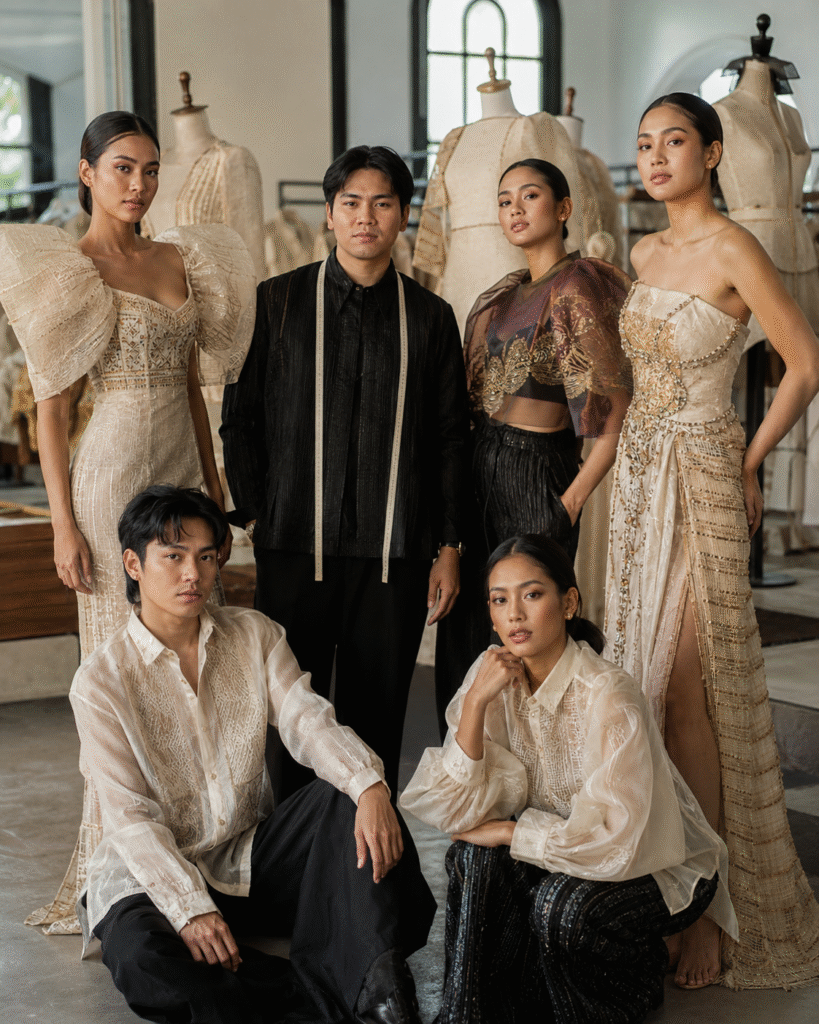
A powerful shift is happening in Philippine fashion. A younger wave of Filipino designers is stepping forward with collections that combine cultural memory, modern construction, and a global sense of style. These designers are not treating fashion only as clothing. They are using it as a platform to express identity, challenge expectations, and present the Philippines as a serious creative force in the international fashion scene.
What makes this generation exciting is its ability to balance tradition and modernity. Filipino fashion has access to a deep well of inspiration, from the architectural shape of the terno to the elegance of the barong and the beauty of locally made textiles. Young designers are reworking these references into clothes that feel fresh rather than nostalgic. A sleeve may hint at traditional dress, a fabric may recall native weaving, or a silhouette may reflect tropical ease, but the final look remains contemporary and wearable.
Names such as Jaggy Glarino, Renz Reyes, Carl Jan Cruz, Chris Nick, and other emerging Filipino creatives demonstrate how diverse this movement has become. One designer may focus on precise tailoring and dramatic form, while another may explore relaxed everyday clothing, youthful glamour, or gender-fluid styling. Their work proves that there is no single definition of Filipino fashion. Instead, the country’s fashion identity is becoming broader, more experimental, and more confident.
This is especially important at a time when the global industry is searching for new perspectives. For many years, fashion’s biggest narratives were dominated by European and American houses. Now, audiences are more curious about designers from Asia, Africa, Latin America, and other creative regions. Filipino designers can benefit from this change because they bring a layered cultural background. The Philippines has a history shaped by indigenous traditions, Asian trade, Spanish colonization, American influence, and modern pop culture. This mix gives young designers a rich visual language that feels different from what many global consumers already know.
Craftsmanship also gives Filipino designers a strong competitive advantage. The country has talented artisans who specialize in embroidery, beadwork, weaving, hand-finishing, and delicate garment construction. When young designers use these skills thoughtfully, their collections gain texture and authenticity. In luxury fashion, handwork matters because it shows time, care, and rarity. Filipino designers who connect modern design with local craftsmanship can create pieces that feel both personal and premium.
Another reason these designers may break through internationally is their awareness of sustainability. Many young fashion creatives understand that the future cannot rely only on mass production and disposable trends. Limited collections, locally sourced materials, upcycling, made-to-order systems, and artisan partnerships can help position Filipino fashion within the slow-fashion movement. This direction is not only ethical; it also strengthens brand identity. A garment with a story is often more memorable than one produced only to follow a seasonal trend.
Still, talent alone is not enough. Young Filipino designers need access to stronger funding, international trade shows, professional showrooms, global press, and reliable production systems. The fashion world can be difficult for designers from countries with smaller luxury markets. Shipping, sourcing, pricing, and visibility can become major obstacles. Yet digital platforms have reduced some of these barriers. Instagram, TikTok, online magazines, and celebrity styling can quickly introduce a designer to international audiences.
The promise of young Filipino fashion lies in its originality. These designers are not trying to imitate Paris or New York. They are shaping a language that comes from Manila, Cebu, Davao, and other creative communities across the Philippines. With courage, support, and strategic exposure, young Filipino designers could become influential figures who bring Philippine artistry to the center of global fashion conversations.