
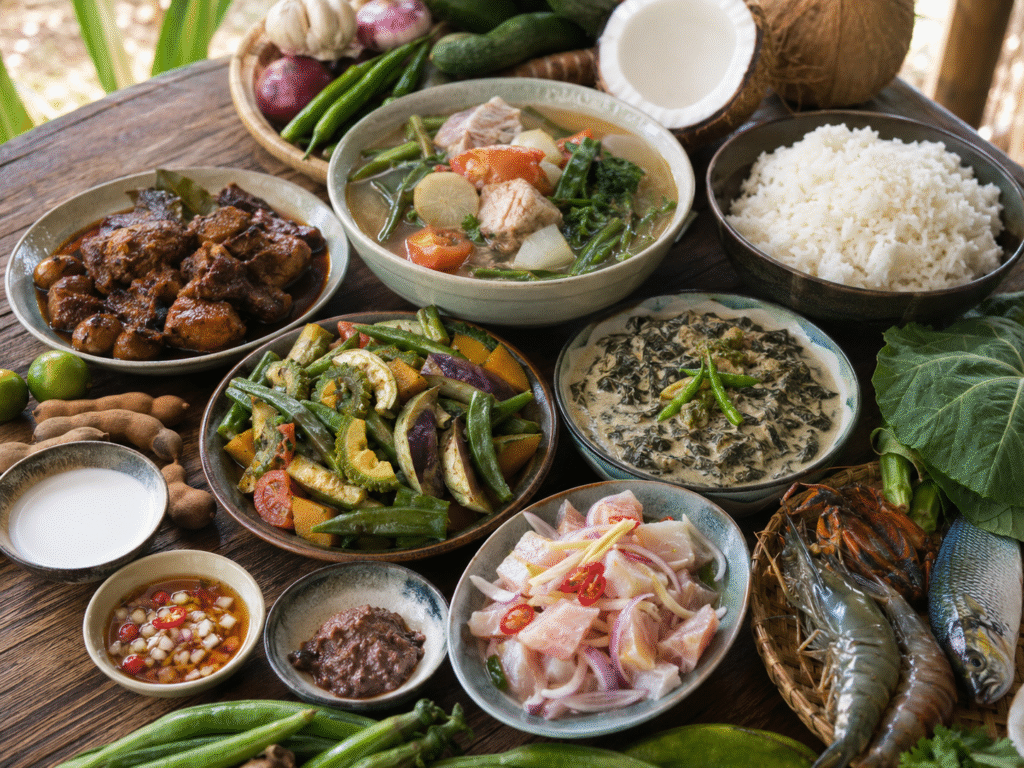
A Cuisine Built From Markets, Farms, and Shorelines
The most memorable Filipino dishes are not only defined by recipes. They are shaped by geography. The Philippines has farming towns, fishing villages, mountain communities, and coconut-growing provinces, and each environment contributes something different to the national table.
This is why Filipino food can be difficult to summarize in one sentence. It is sour, salty, sweet, smoky, creamy, and spicy, often within the same meal. The secret is local sourcing. A cook may use fresh coconut milk in Bicol, vinegar from sugarcane or coconut in the Visayas, or newly caught fish in coastal towns.
For readers who want to understand the agricultural foundation behind these ingredients, the Philippine Statistics Authority OpenSTAT portal provides official commodity data and regional statistics: https://openstat.psa.gov.ph/. It is a helpful reference for checking crops and food products connected to Philippine cooking.
Coconut Milk Creates Depth Without Heavy Cream
The Role of Gata in Filipino Food
Coconut milk, locally known as gata, is essential in many Filipino dishes. It appears in vegetable stews, seafood recipes, rice cakes, and spicy regional specialties. Unlike cream, gata has a distinct tropical aroma and a gentle sweetness that pairs well with chili, garlic, ginger, and fermented seasonings.
Laing is one of the best examples. Dried taro leaves are simmered slowly in coconut milk until they become tender and deeply savory. In ginataang kalabasa, squash and string beans absorb the richness of coconut, while shrimp or dried fish adds a salty backbone.
Calamansi and Vinegar Bring Filipino Brightness
Acidity as a Signature Flavor
Filipino cuisine uses sourness with confidence. Calamansi is squeezed over noodles, grilled fish, soy-based dips, and marinades. Vinegar is central to adobo, paksiw, and kinilaw. Tamarind gives sinigang its famous tang.
This acidity has practical and cultural value. It refreshes the palate in a hot climate and helps balance fatty pork, fried fish, and coconut-rich sauces. It also gives Filipino food its recognizable punch, making dishes taste lively rather than heavy.
Seafood Reflects the Country’s Island Identity
Fresh Fish as Daily Food, Not Luxury
In many coastal areas, fish is everyday food. Bangus, tilapia, tuna, mackerel, shrimp, crab, and shellfish appear in soups, stews, grilled dishes, and vinegar-based preparations. Kinilaw highlights the freshness of raw fish with vinegar, ginger, onion, chili, and citrus. Paksiw na isda uses vinegar and aromatics to produce a sharp, comforting fish dish that keeps well.
These recipes show how local ingredients influence technique. When fish is fresh, the cooking can be simple. The focus is on preserving its natural taste while adding sour, salty, and spicy layers.
Rice and Native Produce Complete the Meal
Rice is the center of most Filipino meals. It carries sauces from adobo, broth from sinigang, and coconut richness from ginataan. Around it, local vegetables such as eggplant, okra, bitter melon, water spinach, squash, and banana blossom create color and texture.
In modern food tourism, this connection between ingredient and place matters. Diners increasingly want stories behind the plate. Filipino cuisine offers exactly that: dishes that explain the land, climate, and community they come from.