
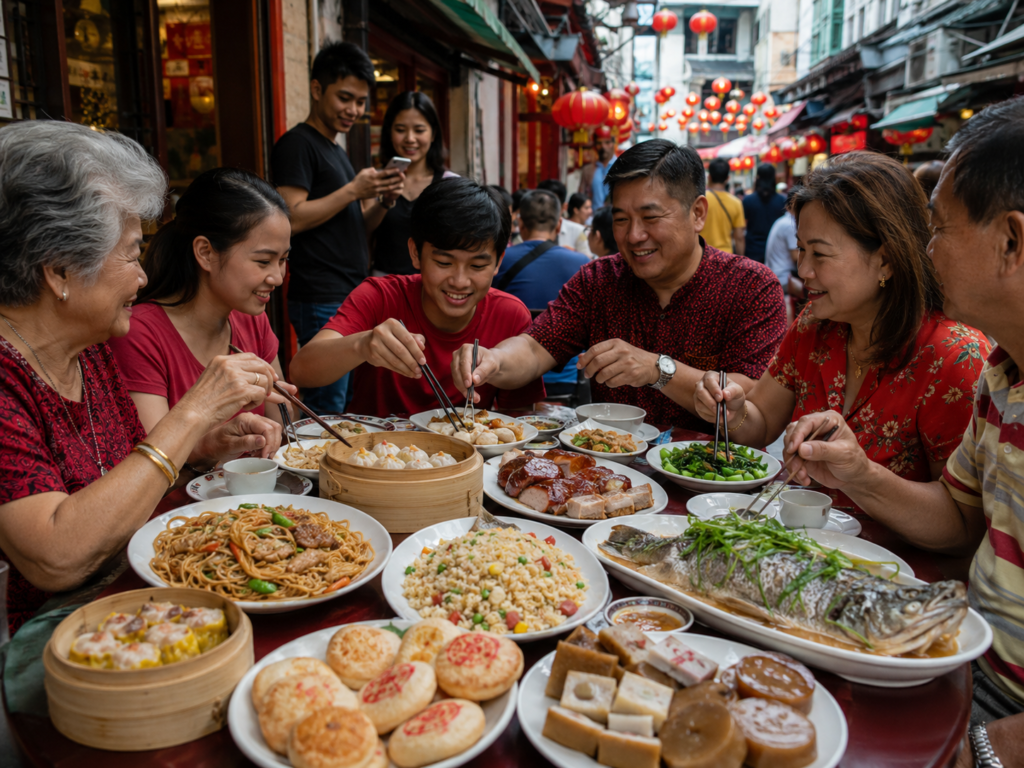
Few dishes demonstrate the Chinese influence on Filipino cuisine as clearly as pancit. The word refers broadly to noodles, but in the Philippines it represents much more than one recipe. Pancit is served at birthdays, neighborhood eateries, office gatherings, family reunions, fiestas, and formal celebrations.
Its origins are connected to Chinese traders and migrants who brought noodle-making and stir-frying traditions to Philippine port communities. Over time, Filipino cooks transformed those traditions into dozens of regional dishes shaped by local ingredients, geography, and cultural preferences.
Chinese Noodles Enter the Philippine Food System
Noodles offered several practical advantages. They cooked quickly, could feed large groups, and worked well with vegetables, meat scraps, seafood, and savory sauces. These qualities made them suitable for both commercial food stalls and household kitchens.
The commonly cited Hokkien roots of the word “pancit” also point to the importance of migrants from Fujian. Chinese noodle vendors became part of urban commercial life, especially in Manila. Their food was affordable and adaptable, helping noodles spread beyond Chinese communities.
Filipino diners eventually incorporated pancit into local traditions. The Chinese symbolism of long noodles representing longevity became especially influential. This explains why many Filipino families continue to serve pancit during birthdays, with guests sometimes advised not to cut the noodles unnecessarily.
Regional Reinvention Created Multiple Identities
Pancit did not remain a single standardized dish. Every region interpreted the noodle tradition differently.
Pancit Canton, named after the former Western term for Guangzhou, uses wheat-based egg noodles and is usually stir-fried with vegetables, meat, soy sauce, and broth. Pancit Bihon uses thin rice noodles and has become one of the most familiar versions served at Filipino gatherings.
Pancit Malabon reflects the coastal environment of Malabon City. It features thick noodles, a rich orange-colored sauce, seafood, hard-boiled eggs, and toppings such as shrimp and smoked fish flakes. Pancit Palabok uses a related sauce but is generally prepared with thinner noodles.
Local Ingredients Changed the Original Formula
Other varieties moved even further from their Chinese starting point. Pancit Batil Patung from Tuguegarao includes handmade noodles, sautéed meat, vegetables, egg, and a separate egg-drop soup. Pancit Habhab from Lucban is traditionally served on a banana leaf and eaten directly without a fork.
In Iloilo, Pancit Molo challenges the ordinary definition of pancit because it is a dumpling soup rather than a conventional noodle dish. Its thin dumpling wrappers function as the noodle element, while the filling and broth reveal a combination of Chinese technique and Filipino comfort-food preferences.
Pancit as a Record of Cultural Exchange
The diversity of pancit shows that Chinese influence did not erase local food identities. It provided a flexible culinary framework that different Filipino communities could reshape.
Encyclopaedia Britannica describes Philippine culture as the product of multiple Asian and Western influences. Pancit provides an everyday example of that historical blending, showing how a Chinese food tradition could become localized across an archipelago: Britannica – Philippines: Cultural Life.
Pancit in the Contemporary Food Landscape
Today, pancit remains relevant because it moves easily between tradition and convenience. Family-owned panciterias continue to prepare regional recipes, while supermarkets sell instant versions and restaurants offer upgraded presentations with premium seafood or heritage ingredients.
Food creators also use short-form video to introduce lesser-known pancit varieties to younger audiences. This visibility has encouraged renewed interest in provincial recipes that were once mainly recognized within their home regions.
Pancit’s enduring popularity reveals how foreign influence can become local heritage. Its Chinese foundation remains identifiable, but each bowl also records Filipino creativity, regional pride, and the social importance of sharing food.