
Along the banks of the Iloilo River, kerosene lamps flicker above bamboo rafts where talaba (oysters) are harvested at dawn. By 10 a.m., these briny bivalves arrive at Villa Beach’s row of thatched-roof cottages, shucked raw and served on tin plates with a vinegar-chili-garlic dip for pennies. This is Iloilo City, a metropolis that has long claimed the title of seafood capital of the Visayas, now in the middle of a quiet culinary renaissance that marries heirloom Ilonggo recipes with a newfound confidence.
Villa Beach and the Talaba Shacks
The stretch of sand known as Villa Beach in Arevalo district is the city’s talaba epicenter. Dozens of family-run shacks — Tatoy’s Manokan and Seafoods, Breakthrough Restaurant, and the more rustic Anhawan — sit on stilts over the water, their menus handwritten on cardboard. The oysters, cultivated on bamboo poles in the adjacent strait, arrive still dripping with brine. A platter of 20 bivalves costs under PHP 150, accompanied by sinamak spiced vinegar. Beyond oysters, the shacks offer imbao (mangrove clams) soup with lemongrass and ginger, a broth so clean it tastes like the sea distilled.
Heirloom Dishes in the City Center
In the city’s older districts, ancestral houses converted into restaurants are resurrecting nearly forgotten Ilonggo seafood dishes. Tinu-om nga isda — fish wrapped in banana leaves with tomatoes, onions, and a splash of coconut vinegar, then steamed — exemplifies the region’s gentle approach to seafood. At restaurants like 70N and Ponsyon by Breakthrough, chefs update these heirlooms with precision, serving blue crab tinu-om or ginamos (fermented fish) pasta that bridges the gap between street food and fine dining. The 2026 MICE and culinary tourism surge noted by the Department of Tourism has propelled Iloilo onto the food traveler’s radar; DOT Region 6’s 2026 Gastronomy Report shows a 31% increase in food-related tourist inquiries year-on-year.
The Riverside Boardwalk Renaissance
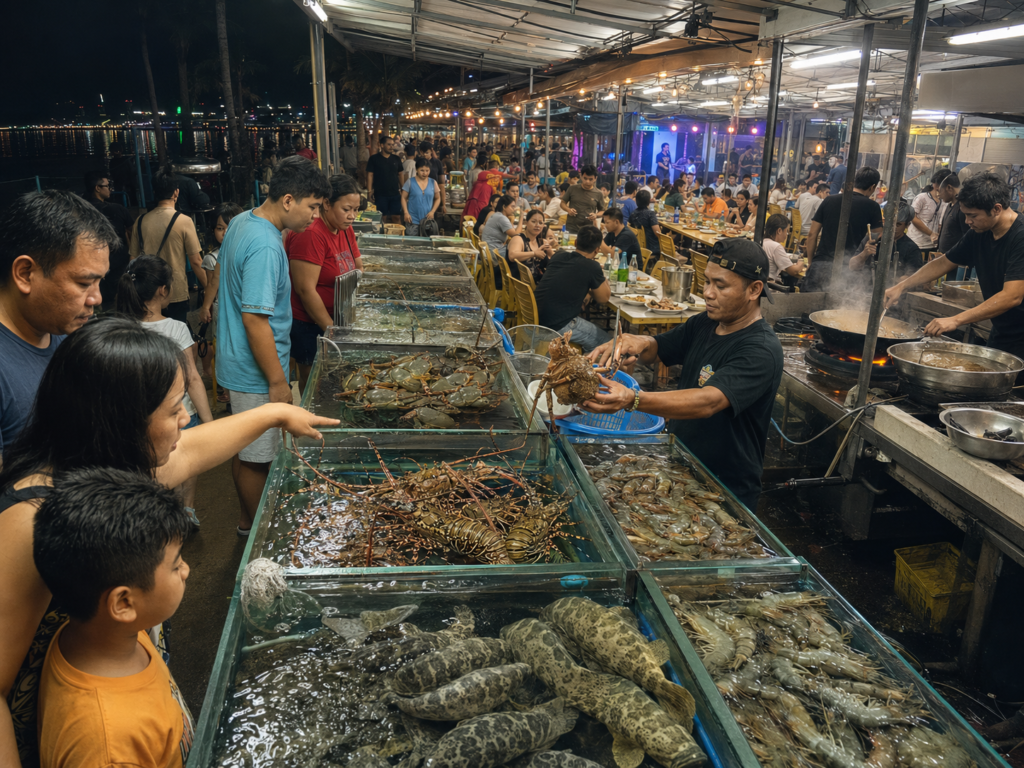
A major draw is the Iloilo River Esplanade, flanked by seafood pop-ups and established riverside restaurants. Breakthrough, which started as a small cottage in Villa, now operates a sprawling complex where diners select live seafood from tanks and watch the sunset paint the river gold. The signature dish — dihon nga managat (a whole fish, usually lapu-lapu, steamed in a banana leaf with coconut milk and turmeric) — encapsulates the Ilonggo philosophy: interference should be minimal when ingredients are this pristine.
A Season of Abundance and Dinagyang Feasts
Timing a visit with the Dinagyang Festival in January means witnessing the convergence of spiritual fervor and gastronomic excess. Streets fill with food stalls offering kagaycay (small mangrove crabs) stir-fried in salted egg, and baye-baye for dessert. Festival data from the Iloilo City government shows that food vendors’ revenues during Dinagyang 2026 jumped 18% over the previous year, with seafood dominating sales. This aligns with the Philippine Statistics Authority’s latest Fisheries Situation Report that the Western Visayas region remains a top producer of oysters, crabs, and shrimps, supplying both local markets and the export sector.
Iloilo’s seafood identity rests on its estuaries, rivers, and coastal waters that function as a natural pantry. Here, the humblest talaba shack and the most ambitious chef share a single creed: let the catch speak. Whether you are seated on a bamboo bench with the tide lapping at your feet or in a climate-controlled dining room, the taste of the Iloilo Strait is immediate, saline, and deeply rooted in a culture that has thrived on these waters for centuries.