
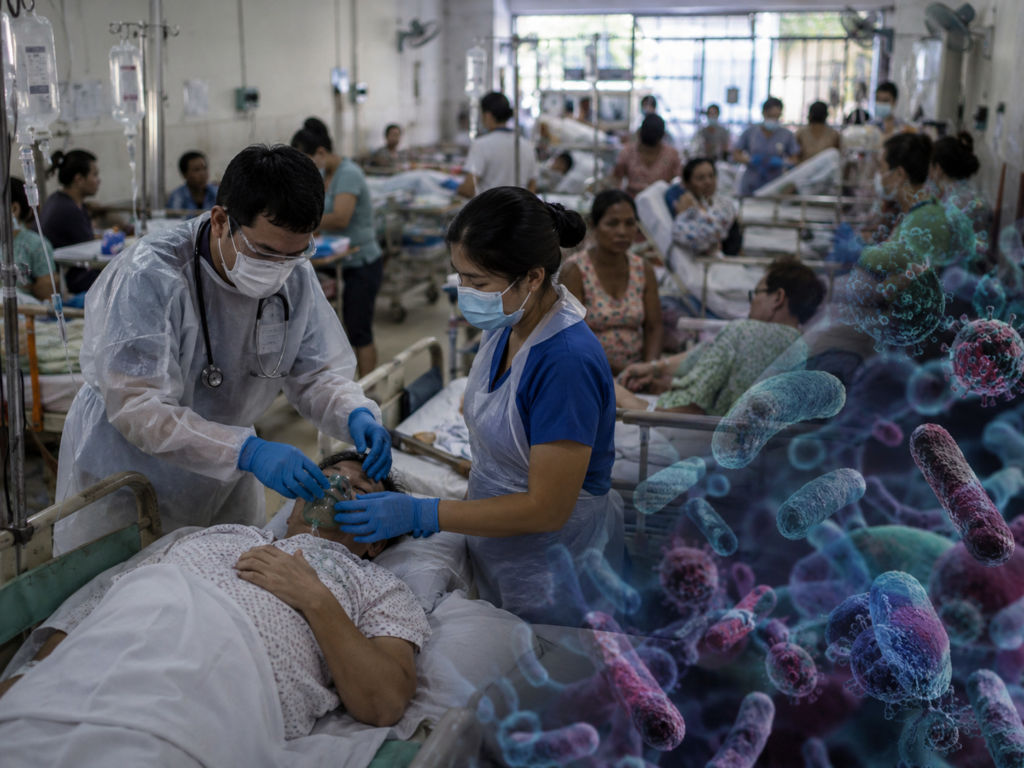
While the world focuses on systemic failures in healthcare infrastructure, the Philippines in 2026 is facing a self-inflicted wound: the return of vaccine-preventable diseases (VPDs). The shadow of the COVID-19 vaccine debates has lengthened, casting doubt over routine immunization programs that were once universally accepted. This hesitation has led to a precarious drop in herd immunity, opening the door for pathogens that should have been relegated to history books.
The Measles Resurgence
Measles is a highly contagious virus that acts as a “canary in the coal mine” for health system resilience. When vaccination rates dip below 95%, outbreaks are inevitable. In early 2026, several municipalities in Mindanao reported clusters of measles among children under five. The root cause is not a lack of supply, but a lack of demand.
Misinformation regarding vaccine contents, often spread through social media platforms like TikTok and Facebook, has frightened parents. The Department of Health has struggled to counter these viral narratives with accurate information. Furthermore, the “Zero-Dose” children—those who have never received a single shot—are concentrated in conflict-affected areas of BARMM (Bangsamoro Autonomous Region in Muslim Mindanao), where health workers face security risks. Reaching these children requires not just medical logistics but community negotiation and peace-building efforts.
The “100-Day Cough” Returns
Pertussis, known commonly as whooping cough, has also made a startling comeback in the National Capital Region (NCR). In 2026, hospital records indicate a rise in infant admissions for severe coughing fits and apnea. Pertussis is particularly lethal for newborns who are too young to be fully vaccinated. The current strategy involves “cocooning,” ensuring all pregnant mothers receive the Tdap vaccine during the third trimester to pass antibodies to the fetus. However, pre-natal care attendance in public health centers has been inconsistent since the pandemic.
The Research Institute for Tropical Medicine (RITM) has confirmed that the circulating strains are still sensitive to existing vaccines, reinforcing that the outbreak is a matter of coverage, not efficacy.
The Economic and Social Fallout
The return of these diseases puts immense pressure on the Philippine Health Insurance Corporation (PhilHealth). Treating a case of complicated measles or pertussis costs significantly more than vaccinating a hundred children. This financial strain on the public health system diverts funds from other critical areas, such as cancer treatment and non-communicable disease management.
Restoring trust is a painstaking process. The DOH is shifting toward a “listening” approach, training healthcare workers in “Interpersonal Communication for Immunization” (IPC-I) to engage with hesitant parents respectfully, rather than dismissively. In 2026, the battle against disease is as much a battle for hearts and minds as it is for syringes and cold chain logistics.