
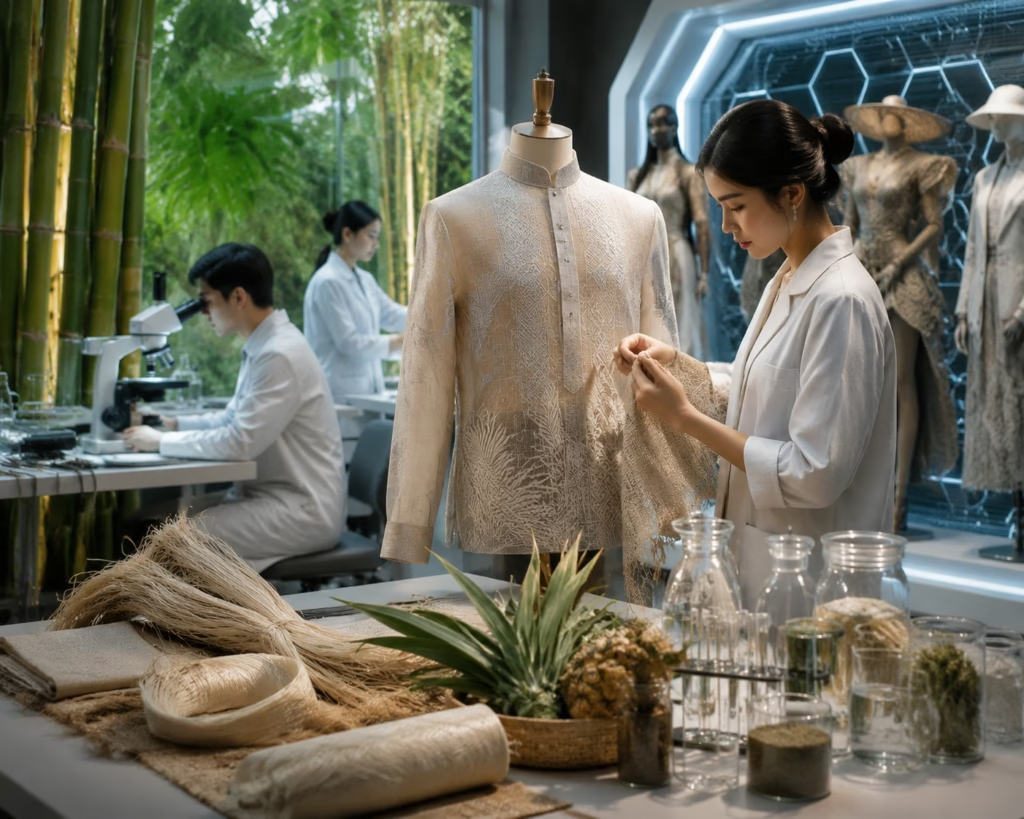
When discussing cultural fusion in Philippine fashion for 2026, the conversation is no longer just about motifs or colors. A far more intriguing evolution is happening in textile laboratories, where scientists and designers work side by side to transform Philippine natural fibers into super-advanced materials. This integration of agricultural heritage and biotechnology is redefining the meaning of “traditional cloth” in the digital age.
Material Revolution: From Abaca to Graphene
Abaca fiber (Manila hemp) has long been known as a material for strong ship ropes. However, by 2026, Abaca has been elevated in status. Research institutions like the Department of Science and Technology – Philippine Textile Research Institute (DOST-PTRI) have successfully developed a processing method where Abaca fiber is blended with silk protein extract and silver nanoparticles. The result is a fabric with tear resistance comparable to nylon, yet possessing natural antibacterial properties and a luxurious drape resembling premium silk.
This process allows designers to create garments rich in cultural narrative. Consider the Barong Tagalog—the official formal wear of the Philippines—traditionally made from Piña. In the 2026 collections, this Barong is presented in a smart fabric version capable of regulating the wearer’s body temperature in the humid tropical climate. This is a brilliant example of how “Cultural Fusion in Philippine Fashion 2026” occurs at the molecular level: the visual identity is preserved, while performance is enhanced by modern science.
Uniting Local Culture with Futuristic Aesthetics
A report from the Manila Bulletin in early 2026 highlights that the young Filipino generation, or Gen Z, has a new pride in wearing traditional garments. The key is modification. They do not want to look like they are standing in a museum; they want to look like characters from a science fiction film with strong cultural roots.
To meet this demand, designers like Monique Lhuillier and other newcomers are aggressively applying laser cutting techniques to Capiz shells for embellishments, or using high-resolution digital printing to replicate Yakan weaving patterns on recycled neoprene. The fusion of ancient geometric patterns with sleek, modern synthetic materials creates a visual contrast that is highly photogenic and favored by social media algorithms.
Real-World Context: Science and Art Collaboration at DOST-PTRI
In the first quarter of 2026, DOST-PTRI announced a breakthrough in converting agricultural waste into textiles. They successfully transformed bamboo stalks and pineapple leaf waste into fully biodegradable viscose fiber. This innovation addresses the global criticism of fashion waste. Using this base material, Filipino designers can produce clothing that combines traditional hand-embroidery techniques from the Laguna community with asymmetrical cutting patterns inspired by contemporary architecture.
Valid data shows that investment in local textile research has surged. The Philippine government, through the Innovation Council, has disbursed significant grants for projects combining local wisdom with Industry 4.0 technology. The goal is clear: to position the Philippines not merely as a consumer market but as a supplier of high-end fashion materials with a low carbon footprint and high storytelling value.
Why This Matters
This shift toward technology ensures that the process of cultural acculturation in fashion does not stop at the surface of the fabric. This is deep integration involving ancestral knowledge of tropical nature with the precision of modern machinery. Thus, Philippine fashion in 2026 becomes tangible proof that tradition is never outdated; it only awaits the right technology to carry it into the future.