
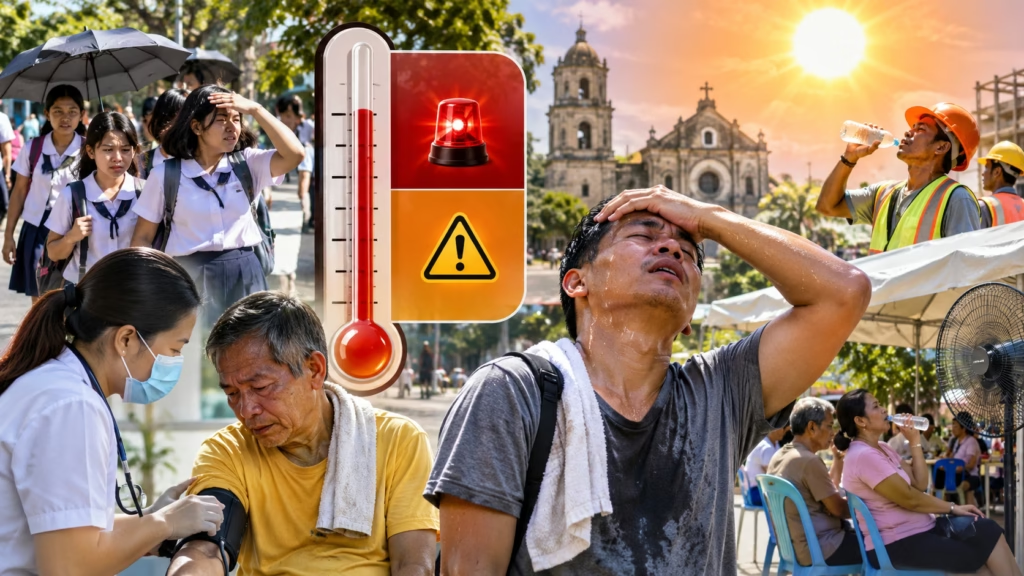
The Department of Health’s messaging on extreme heat has shifted from seasonal reminder to sustained public health campaign. As El Niño conditions intensify toward the last quarter of 2026 and may extend into the first half of 2027, the DOH has warned that the public faces a higher risk of heat exhaustion, heat stroke, and severe dehydration . But the burden is not shared equally.
The Workers Who Cannot Escape the Sun
For drivers, farmers, fisherfolk, construction workers, and traffic enforcers, heat is an occupational hazard that cannot be avoided by staying indoors. A six-wheeler driver in Cebu described being “baked” by the sun from morning until afternoon, a routine that leaves him exhausted and, at times, dizzy . The DOH’s Central Visayas office explains that heat fatigue can progress to muscle twitching, heat cramps, and ultimately heat stroke if exposure continues . Dehydration is the primary driver, preventing the body from regulating its temperature and, in severe cases, leading to multi-organ failure .
Chronic Disease and Hidden Vulnerabilities
The DOH has flagged a less visible dimension of the heat crisis: the exacerbation of non-communicable diseases. Hypertension, diabetes, and respiratory conditions such as asthma can worsen under prolonged thermal stress . Older adults, children, pregnant women, and people with underlying medical conditions are particularly vulnerable, and the DOH has directed hospitals to protect these groups during prolonged dry conditions .
Water- and foodborne diseases add another layer of risk. The DOH expects cases of acute gastroenteritis and cholera to rise as temperatures climb, alongside vector-borne illnesses such as dengue . In Central Visayas alone, dengue cases reached 2,425 with 18 deaths from January to mid-May 2026—an 80 percent increase in fatalities compared with the same period the previous year .
A Whole-of-Government Response Under Strain
The DOH has aligned its advisories with President Ferdinand R. Marcos Jr.’s directive for a whole-of-government approach to climate-related health threats . Recommended measures include drinking water regularly, avoiding direct sun between 10 a.m. and 4 p.m., wearing light and breathable clothing, and taking frequent rest breaks in shaded areas . The agency has also urged the public to keep maintenance medications stocked and to seek early consultation at the first sign of illness .
Yet the scale of the threat is significant. The Climate Impact Lab projects approximately 6,500 additional heat-related deaths in the Philippines from September 2026 to February 2027 compared with a normal year . For a health system already managing dengue outbreaks and chronic disease burdens, the additional caseload of heat emergencies represents a serious test of hospital preparedness and community resilience. The DOH’s challenge is not only to warn the public but to ensure that the most exposed workers and households can act on those warnings.