
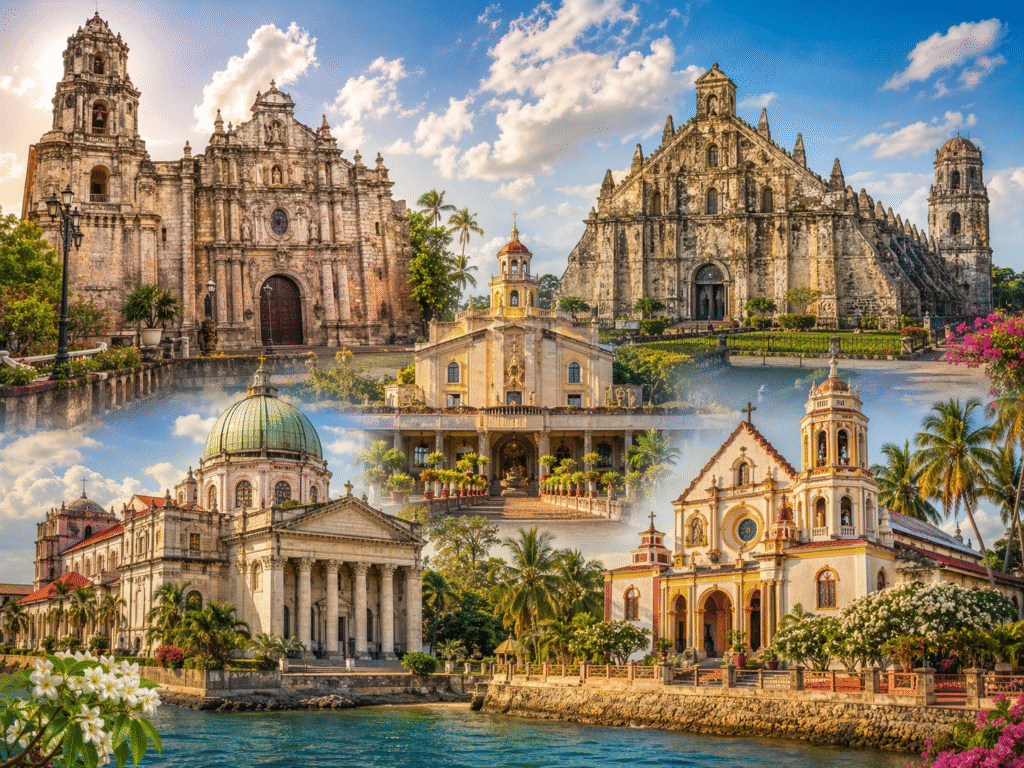
The Philippines, a country with deep Catholic roots, boasts a variety of historic churches and sacred sites that tell the story of its religious and cultural evolution. These places of worship are not only spiritual havens for the faithful but also architectural wonders and symbols of the country’s colonial legacy. If you’re looking to explore the intersection of faith and history, here are some significant religious sites that should be on your radar.
At the heart of Manila, San Agustin Church is a must-visit for anyone interested in religious history. As the oldest stone church in the Philippines, it has stood the test of time since its completion in 1607. Its baroque design, beautiful murals, and intricate woodwork are just a few features that make it a UNESCO World Heritage Site. The church was built by the Augustinian order and has been at the center of various historical events, including the Battle of Manila during World War II.
Another church that stands out is Paoay Church in Ilocos Norte, a stunning example of baroque architecture. Known for its massive buttresses, which were designed to support the church’s structure during earthquakes, Paoay Church is often hailed as one of the finest examples of earthquake baroque architecture in the world. Its location in the scenic province of Ilocos Norte adds to its charm, making it a popular spot for both history buffs and pilgrims alike.
In Cebu, the Basilica del Santo Niño is a major religious landmark. It is the oldest church in the Philippines, built in 1565 to house the Santo Niño, a statue of the child Jesus. The Basilica is a significant site of pilgrimage, especially during the Sinulog Festival, which celebrates the Santo Niño’s presence in Cebu. The church itself is a masterpiece of religious architecture, blending Spanish colonial design with Filipino cultural influences.
Down in Batangas, Taal Basilica is another notable historical church that should not be overlooked. Completed in the mid-19th century, Taal Basilica is the largest church in the Philippines. It features beautiful frescoes, intricate altars, and a grand façade that draws visitors from all over the world. Its historical value is immense, as it played a role in various significant events in Philippine history, including the Philippine Revolution against Spanish rule.
Beyond these well-known churches, the Our Lady of the Pillar Church in Zamboanga is an important yet often overlooked site. The church, which has served as a beacon of faith for the people of Zamboanga for centuries, offers an insight into the region’s religious and cultural history. It is dedicated to Our Lady of the Pillar, the patroness of Zamboanga, and serves as a vital center for the Catholic community.
The Philippines’ religious heritage is not only about churches but also about the deep-rooted faith of its people. These sacred sites are where history, culture, and spirituality converge. For those interested in understanding the Philippines beyond its natural beauty, visiting these religious landmarks is an enriching experience.