
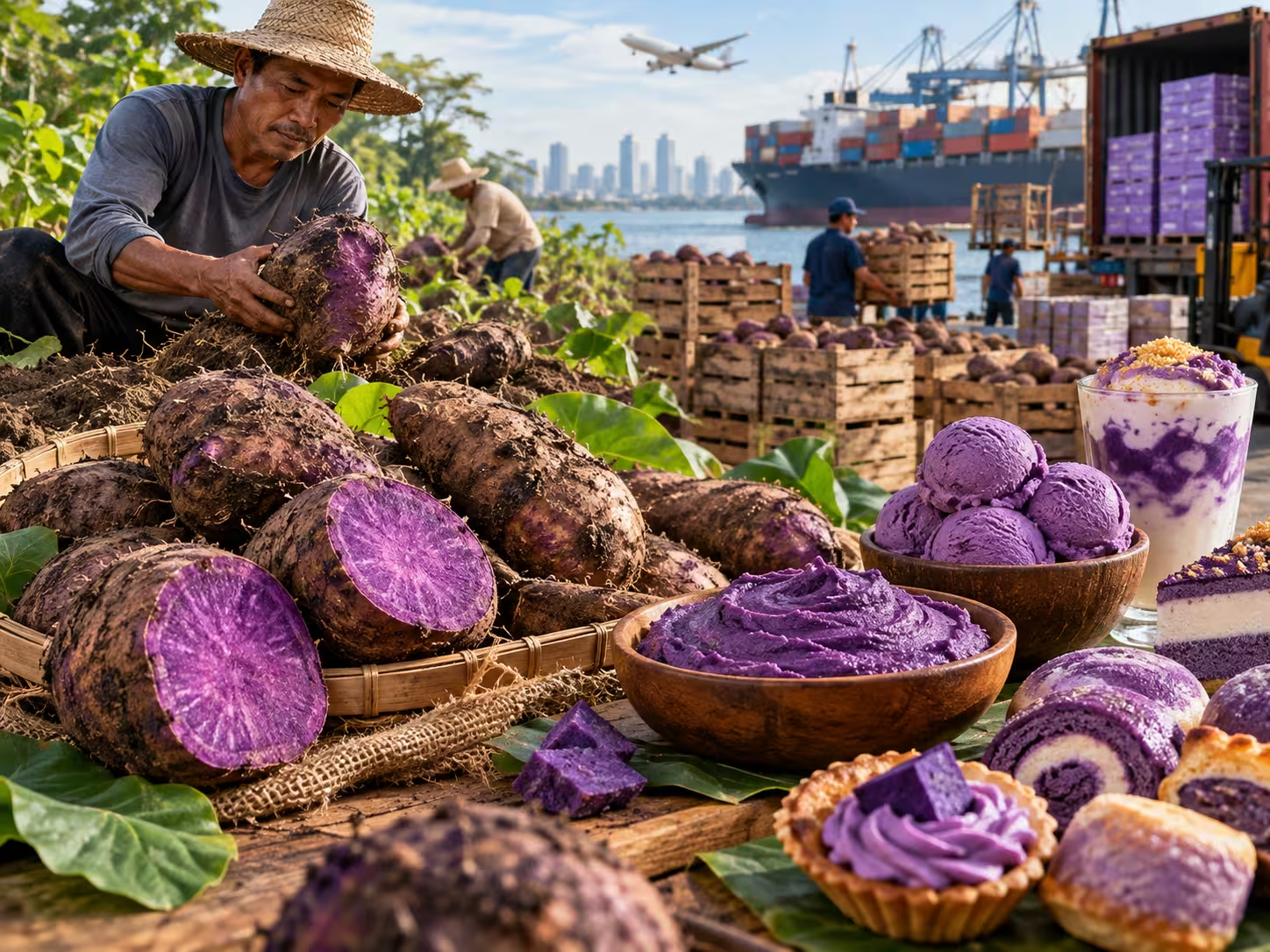
The Anatomy of a Purple Revolution
The transformation of ube from a backyard crop into a premium global ingredient is not simply a story of rising demand. It is a story about an entire value chain—from nursery development and farm production to postharvest handling, processing, and market linkages—being reorganized and upgraded in real time. Understanding this chain is essential to grasping both the opportunities and the vulnerabilities of the Philippine ube economy.
At the Farm Level: Smallholders and Structural Constraints
At the base of the value chain are smallholder farmers who cultivate ube on small, seasonal plots. Their production cycle typically lasts eight to 10 months, starting between May and June or during the onset of the rainy season . This seasonality creates inherent supply instability that is difficult to reconcile with year-round global demand.
The University of Asia and the Pacific’s Center for Food and Agri Business (UA&P-CFA) has highlighted that the industry is constrained not only by limited planting materials but also by inadequate production practices and research-based protocols for farm management, pest and disease control, and nutrient requirements . Addressing tuber dormancy and the crop’s seasonal production cycle is critical to ensuring a more stable supply throughout the year .
Processing: The Gateway to Premium Markets
Moving up the value chain, processing has emerged as the critical bridge between raw agricultural production and premium export markets. Processed forms of ube—powder, puree, paste, extract, halaya, and syrups—offer better shelf life, easier export handling, and wider commercial application compared to fresh tubers .
The DA has emphasized that expanding domestic processing can allow Philippine enterprises to capture more value within the domestic value chain while creating additional markets for farmers . This shift from exporting raw ube to exporting value-added products represents a fundamental strategic pivot.
Success Stories from the Ground
Concrete examples illustrate the potential of this value chain approach. In Quirino province, the Quirino Young Entrepreneurs Association (QYEA) has successfully exported ube powder to Japan, with the latest shipment reaching 1.2 tons—the largest single export volume recorded to date. The initiative has directly benefited over 500 local farmers . The Jabes ube powder underwent a year-long product development process, including improvements in branding, packaging, and labeling, as well as compliance with international quality standards .
The Philippines’ participation in international trade fairs such as SIAL Paris has further strengthened its reputation as a source of premium-quality ube products . These market linkages are essential for connecting smallholder producers to global buyers.
The Standardization Imperative
As the value chain matures, standardization has become a pressing concern. The proposed Steering Committee would define the official scope of ube and harmonize quality requirements across agencies and exporters . The DA has also directed the industry to develop a standardized color classification system for purple ube using a Lovibond colorimeter .
“Improving productivity will require not only greater access to quality planting materials but also better production practices and research-based protocols for farm management,” the UA&P-CFA report noted . Without these systemic improvements, the gap between demand and supply will remain a permanent feature of the Philippine ube economy.
Building a Resilient Chain
The future of the Philippine ube value chain depends on coordinated action across all nodes—from the nursery to the export terminal. The USDA’s Foreign Agricultural Service has identified “significant untapped potential” across the value chain, including nursery development, farm production, postharvest handling, processing, and market linkages . Realizing this potential will require sustained investment, policy coherence, and a willingness to learn from earlier agricultural success stories.