
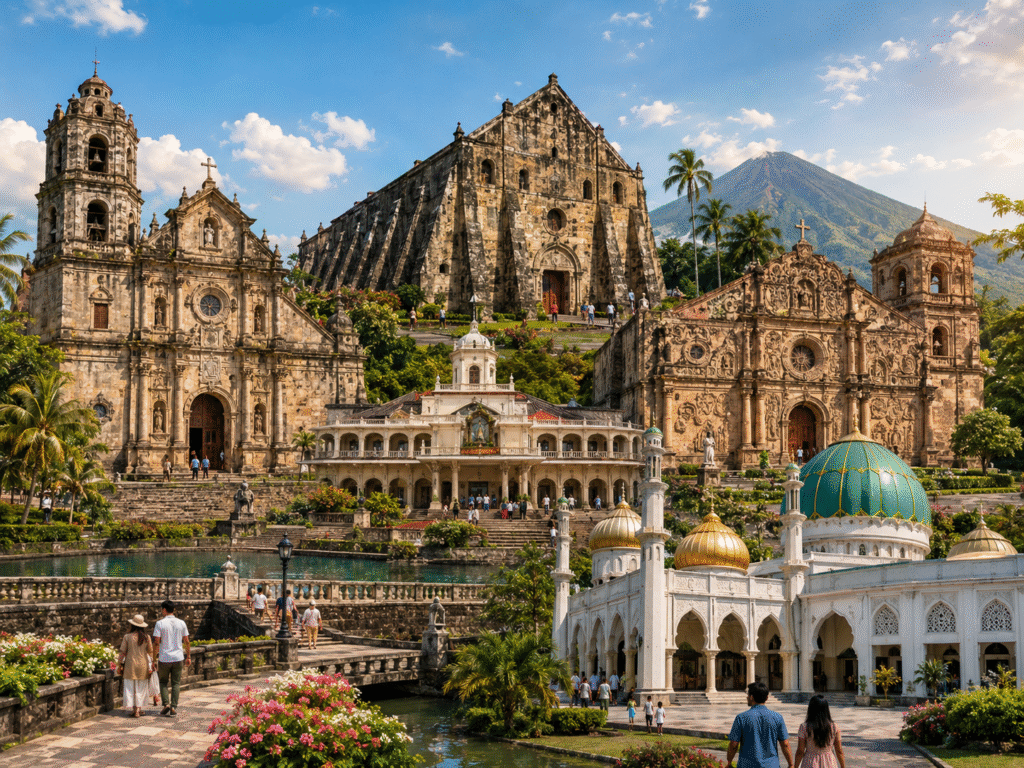
The Philippines, often regarded as the heart of Catholicism in Asia, offers a vast array of religious sites that attract both pilgrims and tourists alike. With centuries-old churches, sacred shrines, and unique local temples, the country provides a spiritual journey intertwined with history, art, and architecture.
A prime example of the country’s religious heritage is San Agustin Church in Intramuros, Manila. Completed in 1607, it is the oldest stone church in the Philippines. Visitors are captivated by its Baroque design, richly decorated interiors, and centuries-old murals. The church has stood through colonial rule, wars, and natural disasters, symbolizing the resilience of Filipino faith. Its designation as a UNESCO World Heritage Site further underscores its historical and cultural significance.
Paoay Church, located in Ilocos Norte, is another must-visit destination for those interested in architectural ingenuity and history. This church’s massive walls and distinctive buttresses were constructed to endure seismic activity, illustrating the practical adaptation of European Baroque style to local conditions. The intricate carvings along the facade narrate biblical stories while reflecting native craftsmanship, making it a landmark of both spiritual and artistic heritage.
In the Visayas region, the Basilica Minore del Santo Niño in Cebu is a central hub of religious devotion. Housing the Santo Niño statue, believed to be the oldest Christian relic in the country, the basilica attracts countless pilgrims, especially during the colorful Sinulog Festival. This celebration combines devotion, dance, and music, offering visitors a deep dive into the living traditions of Filipino Catholicism.
Beyond these famous sites, smaller provincial churches provide equally rich insights into the local culture and faith. Miagao Church in Iloilo is renowned for its facade, decorated with intricate bas-reliefs that merge local flora and fauna with religious symbolism. This unique combination of European design and indigenous artistry makes it a testament to the creativity and adaptability of early Filipino builders.
Religious tourism in the Philippines also encompasses non-Christian sites. Islamic mosques in Mindanao, such as the Grand Mosque of Cotabato, highlight the country’s multi-faith heritage. These sites allow visitors to observe traditional prayer practices and admire Islamic architecture, contributing to a comprehensive understanding of Filipino religious diversity.
Visiting these churches and temples is more than a sightseeing activity. It is an immersive experience that connects travelers to centuries of history, devotion, and community. Each site reflects the enduring faith of the Filipino people and offers a glimpse into how spiritual traditions have shaped local identity, culture, and artistic expression.