
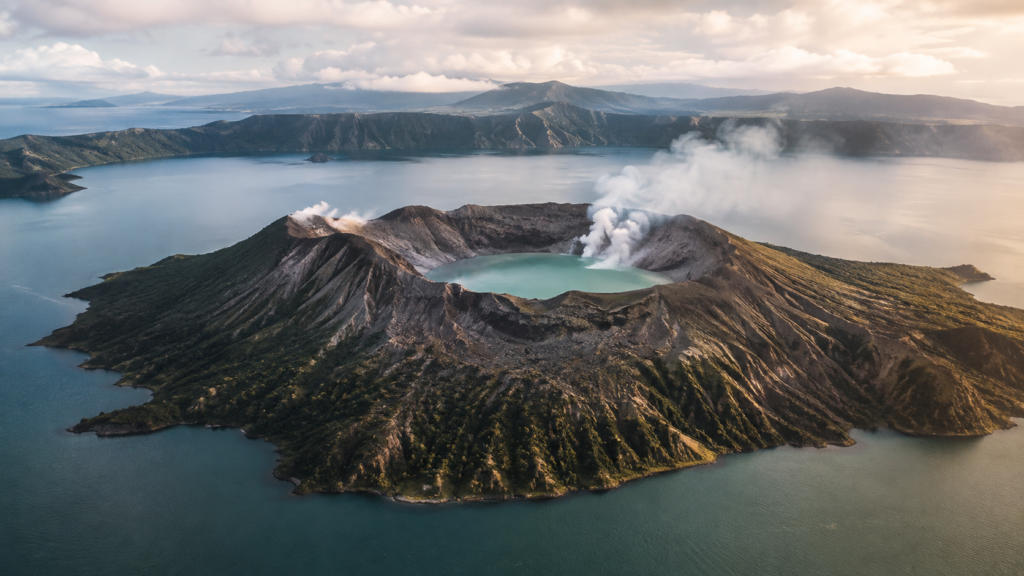
A cataclysmic eruption in 1991 reshaped Central Luzon and, paradoxically, birthed one of Southeast Asia’s most stunning crater landscapes. Mount Pinatubo’s lake-filled caldera, a shimmering turquoise basin set amid moonscape canyons, now anchors a booming ecotourism circuit that offers a gritty, unforgettable adventure.
The Aftermath of the 1991 Eruption: A Landscape Reborn
When Pinatubo blew its top, it ejected over 10 cubic kilometers of magma, collapsing its summit into a 2.5-kilometer-wide caldera. Rainwater slowly filled the hollow, creating a lake that deepens each year and currently measures around 600 meters across. The water’s brilliant blue-green hue stems from dissolved minerals and seasonal algae blooms, though its alkalinity remains too high for swimming. Pinatubo’s crater lake is living proof that destruction can yield breathtaking creation. The surrounding terrain, carved by decades of monsoon-triggered lahar flows, now forms a dramatic canyon system of grayish-white ash walls that serve as the only access route.
2026 Eco-Tourism Boom and Local Community Benefits
By mid-2026, Pinatubo had fully cemented its status as a model for community-based volcano tourism. The Capas municipal government, acting on capacity studies, capped daily visitors at 500 and mandated that all trekkers be accompanied by Aeta guides—indigenous people who have inhabited the Zambales mountains for centuries. The Lonely Planet guide to Mount Pinatubo (https://www.lonelyplanet.com/) notes that the Aeta-led tours not only provide authentic cultural storytelling but also ensure that revenue stays within the local economy. A portion of each permit fee funds watershed reforestation and trail maintenance, making the trek one of the few tourism activities with a measurable regenerative impact.
The 4×4 Adventure and Trekking Experience
The journey begins at the Capas Jump-Off, where visitors board rugged 4×4 jeeps for a spine-jarring hour-long ride across the Crow Valley lahar fields. The route passes through canyon stretches as narrow as 15 meters, with walls towering 30 meters high, leaving passengers awestruck. After reaching the trailhead, a moderate 1.5- to 2-hour hike follows a rocky stream bed shaded intermittently by reforested patches. In July 2026, the local tourism office introduced shaded rest stations and geo-hazard signage, enhancing safety without diluting the raw experience.
Upon reaching the caldera rim, the reveal is pure theater: the crater lake glitters below, its color shifting from emerald to sapphire as clouds drift overhead. Most visitors spend an hour soaking in the panorama, snapping photos of the steam vents that still whisper of Pinatubo’s power. The return trip, often completed by early afternoon, leaves enough time for a soothing dip in the nearby Puning Hot Springs, where sand spa treatments and volcanic mud masks cap the adventure. Mount Pinatubo’s crater lake remains a living classroom in geology and resilience, a must-add to any Philippines itinerary.