
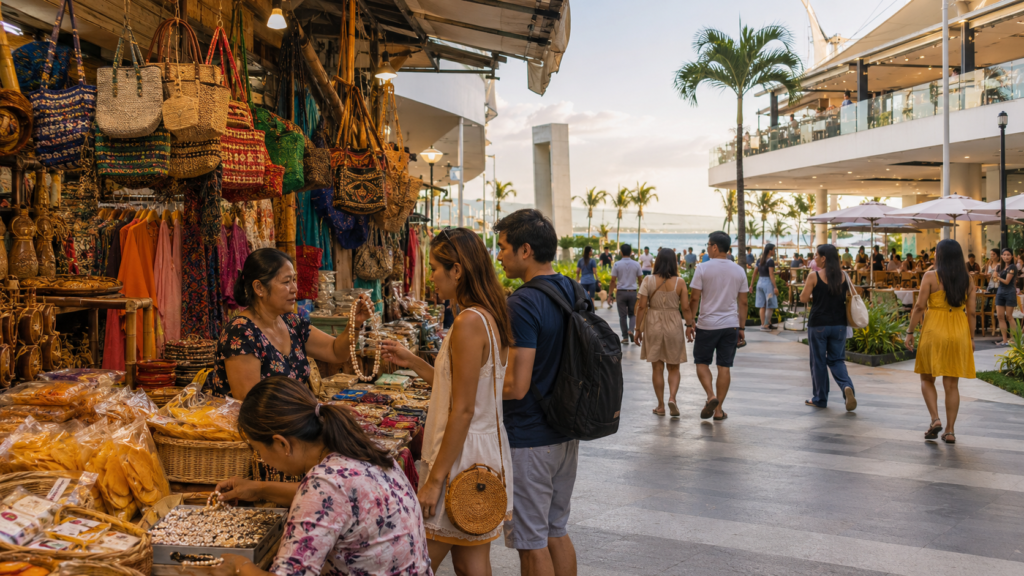
The Philippine shopping scene combines informal street commerce, family-run stalls, large retail chains, and high-end lifestyle developments. This diversity allows visitors to experience two contrasting sides of the country within a single day: the energetic atmosphere of a traditional market and the polished environment of an air-conditioned mega mall.
Shopping has also become part of the wider tourism experience. Many retail complexes now function as dining, entertainment, and social destinations, while traditional markets continue to support wholesalers, small entrepreneurs, food vendors, and local communities.
Inside Manila’s Traditional Commercial Districts
Divisoria is the country’s best-known destination for low-cost and wholesale merchandise. Its tightly packed streets and multi-level shopping buildings contain clothing, footwear, school supplies, wedding decorations, fabrics, toys, and household products.
The district becomes especially busy before Christmas, school openings, and major celebrations. Tourists unfamiliar with the area may find the crowds overwhelming, so morning visits are usually more manageable. Comparing several vendors is essential because similar products may be sold at different prices.
Quiapo is another important commercial area. Around the historic church and surrounding streets, shoppers can find religious goods, herbal products, inexpensive accessories, cameras, optical equipment, and traditional snacks. The area offers a highly local experience, although visitors should remain alert in congested spaces.
Greenhills and the Pearl Trade
Greenhills Shopping Center has developed a reputation for jewelry, fashion, electronics, and collectible items. Its pearl section attracts travelers searching for necklaces, earrings, bracelets, and customized pieces.
Prices vary according to size, color, surface quality, shape, and type of pearl. Customers should avoid judging value based only on appearance. Reputable sellers should be willing to explain product characteristics and provide documentation for higher-value purchases.
The center is also known for repair services and electronics, but warranty terms should always be reviewed before payment.
Modern Malls as Urban Destinations
SM Mall of Asia is not simply a place to purchase clothing. The Pasay complex functions as a complete leisure district with restaurants, cinemas, event spaces, family entertainment, and views of Manila Bay.
In Makati, Greenbelt provides a more refined experience. Luxury stores are integrated with gardens, open-air walkways, hotels, offices, and restaurants. Nearby Glorietta offers a broader selection of mainstream brands, making the district suitable for different budgets.
Bonifacio High Street presents another style of retail development. Its pedestrian-friendly layout connects shops, cafés, public spaces, and business buildings. The location is particularly popular with younger professionals and international visitors.
Cebu has its own major retail centers, including Ayala Center Cebu and SM Seaside City Cebu. These malls demonstrate how large-scale retail growth has expanded beyond Metro Manila.
Official destination information, regional highlights, and travel-planning resources are available through Philippines.travel, the national tourism portal.
Shopping Responsibly in the Philippines
Travelers can make their purchases more meaningful by choosing products made by Filipino artisans. Handwoven cloth, abaca bags, bamboo items, pottery, regional coffee, cacao products, and capiz-shell home decorations can provide direct economic value to local producers.
However, buyers should ask about the source of handmade goods. Labels such as “native,” “tribal,” or “local” do not automatically guarantee that an item was produced by a specific community.
Traditional markets often operate mainly with cash, while malls accept cards and digital payment services. Keeping receipts is important, particularly for electronics, jewelry, and expensive fashion products. Shoppers should also inspect zippers, stitching, packaging, and product seals before leaving the store.