
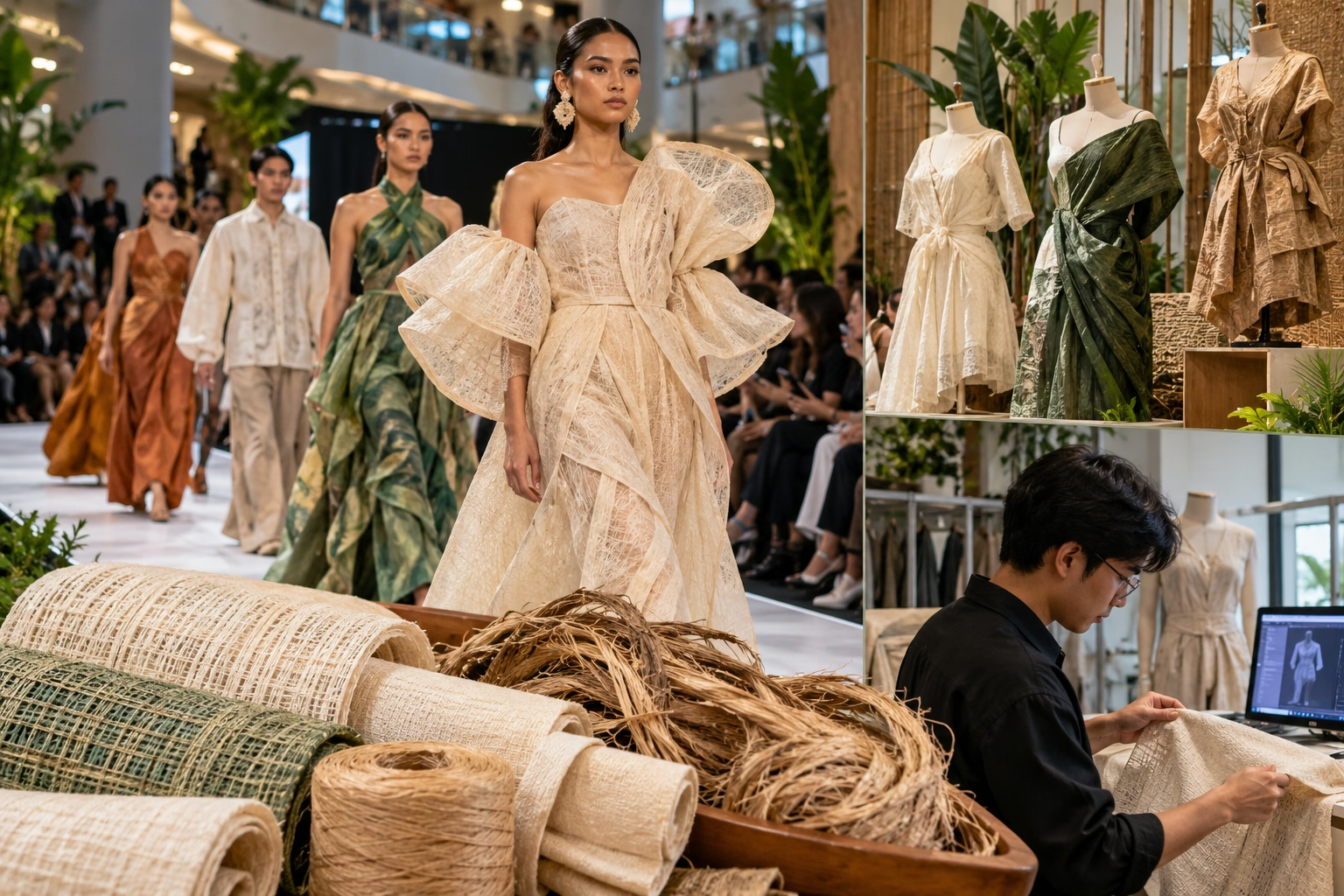
The most talked-about segment of MNL Fashion Week 2026 did not come from the heritage houses or the returning establishment names. It came from the NXTGEN showcase on Day One, where three emerging designers — Yana Kalaw, Kill Joy Studios, and Lilah Roché — presented debut collections that treated identity not as a marketing theme but as a design method.
Yana Kalaw: Feminine Excess as a Queer Declaration
Kalaw’s Girls, Girls, Girls opened with Michelle Dee in a sheer tulle dress bearing the word “tibo,” a term historically used against queer women and here reclaimed as a statement of ownership. The collection built outward from that gesture: gothic sheers, exaggerated volumes, fur textures, exposed stitching, and a camp sensibility drawn from Rococo references and the queer canon of Kalaw’s youth. Her question — why femininity must so often be performed, proven, or restrained — gave the excess a intellectual spine.
Kill Joy Studios: The City as a Collection
If Kalaw looked inward, Eugene Malabad of Kill Joy Studios looked outward, to the rhythm of Metro Manila. His Kalye Trez Mixtape translated commuter culture into garments: roped fringe became skirts and asymmetrical tops, bleach-dyed denim turned into trenches and jumpsuits, and statement bags completed looks built for movement. Models walked with the urgency of passengers racing for a jeepney, turning streetwear into a form of urban portraiture rather than mere merchandising.
Lilah Roché: Manila Noir Gets a Female Lead
Roché closed the showcase with Sampaguita Queenpin, a collection that borrows the visual grammar of late 1960s to early 1980s Philippine action cinema and hands the narrative to a woman. The sampaguita vendor of familiar Manila imagery is reimagined as a queenpin, her wardrobe evolving from sleek black silhouettes into commanding pieces edged with red. Corsetry, cut-outs, and Roché’s signature paneling keep the body central, but the posture is never submissive — this is a femme fatale who arrives already in charge.
Why the NextGen Slot Matters
The NXTGEN showcase was staged with JAG, a denim label celebrating 50 years in the Philippine market. That pairing was more than sponsorship. It placed young experimentalists alongside a mass-market institution, creating a rare visible bridge between avant-garde impulse and commercial infrastructure. Daily Tribune described the segment as evidence that “the next wave of Filipino fashion isn’t interested in playing it safe,” with queer glamour, street energy, and femme-fatale drama arriving as a coherent generational statement.
Vogue Philippines framed the trio’s significance in similar terms, noting that the diversity of the 2026 lineup reflected “a generation unwilling to settle on one definition of Filipino fashion”. The NextGen designers did not simply add diversity to a schedule. They expanded what a Filipino runway look can reference, embody, and refuse.