
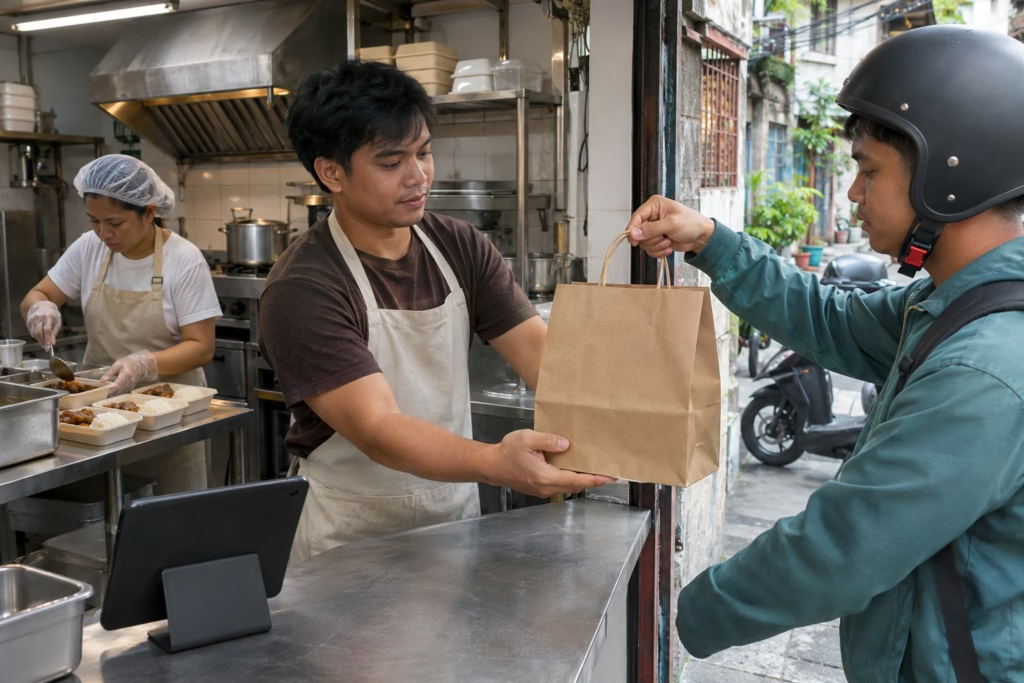
The Gap Between Cheap Entry and Thin Profit
A cloud kitchen looks financially elegant on paper: no dining room, no front-of-house payroll, no premium lease on a mall-facing lot. The first month of live orders often tells a different story. Every transaction must absorb ingredients, packaging, kitchen labor, utilities, platform commissions, and the occasional refund before a single peso of profit emerges. That gap between visible overhead savings and actual contribution margin is the central operational challenge for Filipino delivery-first brands in 2026.
Where the Money Goes
Delivery platform commissions remain the largest single margin variable. GrabFood and Foodpanda, the two dominant gatekeepers of Filipino online food demand, charge commissions that commonly fall in the 20–30% range per order, with additional promotional spend often required to stay visible in saturated app categories. A brand that relies entirely on third-party apps hands over a fifth to a third of its revenue before food cost and labor are even counted.
Food inflation compounds the pressure. Rice, cooking oil, chicken, pork, and imported ingredients have all experienced volatility, and the Philippines’ dependence on imports for several key inputs keeps menu costs unstable. Digital payment fees add another layer: GCash and Maya are the default payment rails for online orders, but merchant processing fees of roughly 1.5–2.5% take a further slice off cashless transactions.
Menu Engineering as a Survival Tool
The operators holding their ground are not necessarily the ones with the lowest rent. They are the ones treating menu design as a margin strategy. Items that travel well, retain heat, and maintain visual appeal after a 30-minute ride generate fewer refunds and better app ratings; dishes that arrive soggy or poorly plated destroy platform ranking and trigger costly remediation. Menu simplification also reduces kitchen complexity, shortening preparation times and lowering error rates during peak demand.
Building Channels Beyond the Apps
Direct ordering has emerged as a structural hedge against commission dependency. A Facebook or Viber ordering flow, a simple owned website, or a QR-based menu with GCash or Maya payment allows repeat customers to bypass the 20–30% platform fee entirely. The strategy does not eliminate the apps; it reduces the share of revenue that must pass through them. In a market where volume can rise while profitability stalls, that distinction is the difference between a busy brand and a durable one.