
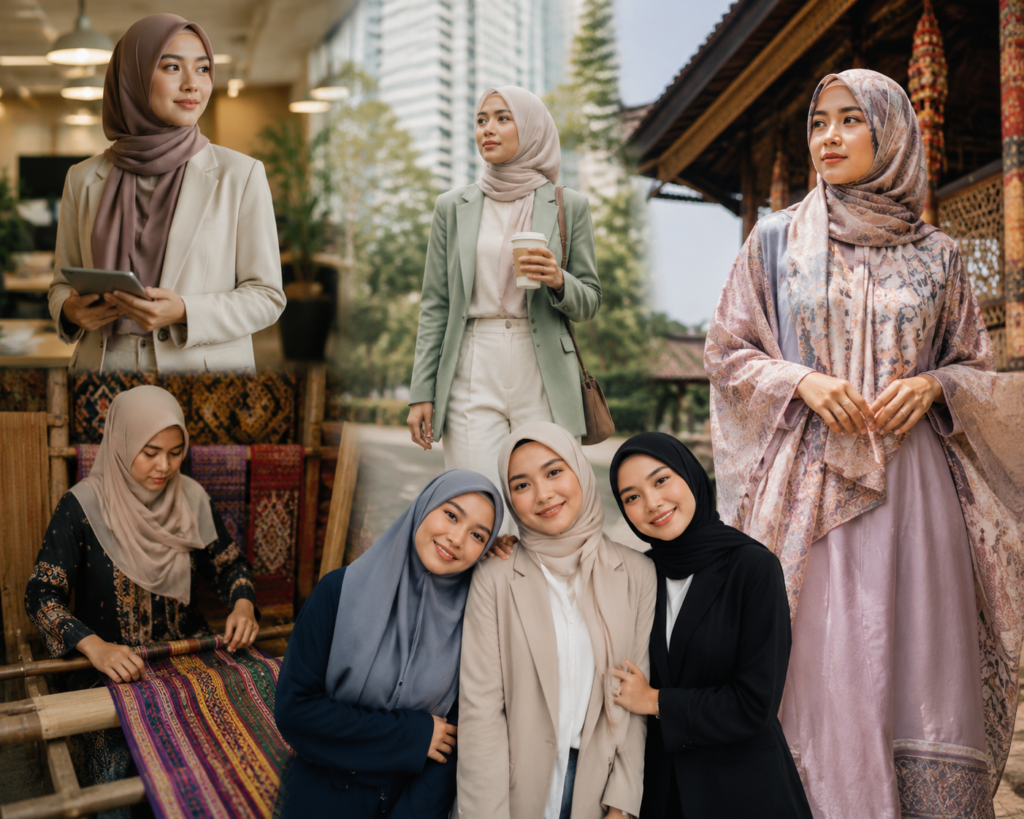
Hijab Style Is Becoming More Locally Defined
The evolution of hijab fashion in the Philippines reflects a broader story about identity. Filipino Muslim women are increasingly combining religious principles with regional traditions and international fashion influences, creating looks that cannot be fully described as Middle Eastern, Indonesian, or Malaysian.
The result is a developing modest fashion identity shaped by the Philippines itself.
This movement is particularly significant because Muslims represent an important minority within the national population. The Philippine Statistics Authority reported nearly seven million people affiliated with Islam in the 2020 census. While the number should not be treated as a current 2026 estimate, it provides useful context for understanding why modest clothing is a meaningful consumer and cultural sector.
Behind the statistics are diverse communities with different languages, histories, and aesthetic traditions.
The Cultural Influence of Mindanao
Regional Heritage Gives Local Fashion Its Character
Mindanao plays a central role in understanding Philippine Muslim fashion. The region is home to communities whose artistic traditions include weaving, embroidery, metalwork, decorative geometry, and sophisticated approaches to color.
These traditions provide a visual vocabulary for contemporary modest fashion.
A modern scarf may feature a color combination inspired by regional textiles. A formal dress may use geometric detailing associated with southern Philippine design traditions. A handbag or accessory may complement a minimalist hijab while introducing a recognizable local pattern.
The strongest contemporary designs do not simply place traditional motifs onto modern products. They consider the meaning and origins of cultural elements, allowing heritage to influence fashion without reducing it to decoration.
That distinction has become increasingly important as younger consumers pay more attention to authenticity and cultural ownership.
Climate Is Changing the Way Hijabs Are Designed
The tropical environment of the Philippines creates practical fashion demands. Heavy layering and thick fabrics may look attractive in international campaigns but can be uncomfortable in hot and humid conditions.
As a result, many consumers prefer lightweight, breathable materials and simpler wrapping techniques. Cotton blends, soft jersey, chiffon, and other manageable fabrics remain relevant because they support mobility during commuting, studying, working, and traveling.
Color also plays an important role. Earth tones and neutral palettes appeal to consumers seeking versatile wardrobes, while bright colors remain popular for celebrations and culturally significant occasions.
This practical adaptation demonstrates how global fashion becomes localized.
A New Generation Is Expanding the Meaning of Modest Style
Young Muslim women in the Philippines are helping move hijab fashion beyond the idea of a single “correct” aesthetic. Some prefer minimalist monochrome clothing. Others choose colorful dresses, sportswear, streetwear, or formal outfits with strong cultural references.
Social platforms have accelerated this diversification. Styling videos allow women to exchange ideas without relying entirely on international magazines or major fashion brands. Small businesses can also test products quickly, respond to customer feedback, and build loyal communities.
This has created space for a new kind of fashion entrepreneurship.
A seller does not necessarily need a major retail shop. A small collection promoted through social media can reach consumers across islands, particularly when the brand understands practical concerns such as scarf opacity, fabric comfort, delivery costs, and sizing.
The cultural significance of this trend goes beyond clothing. Greater visibility allows Filipino Muslim women to define themselves through their own images and stories. Their fashion can express religious commitment while also communicating profession, age, regional background, creativity, and personal taste.
In that sense, the growth of hijab fashion represents a wider shift: Muslim identity in the Philippines is becoming more visible, self-defined, and stylistically diverse.