
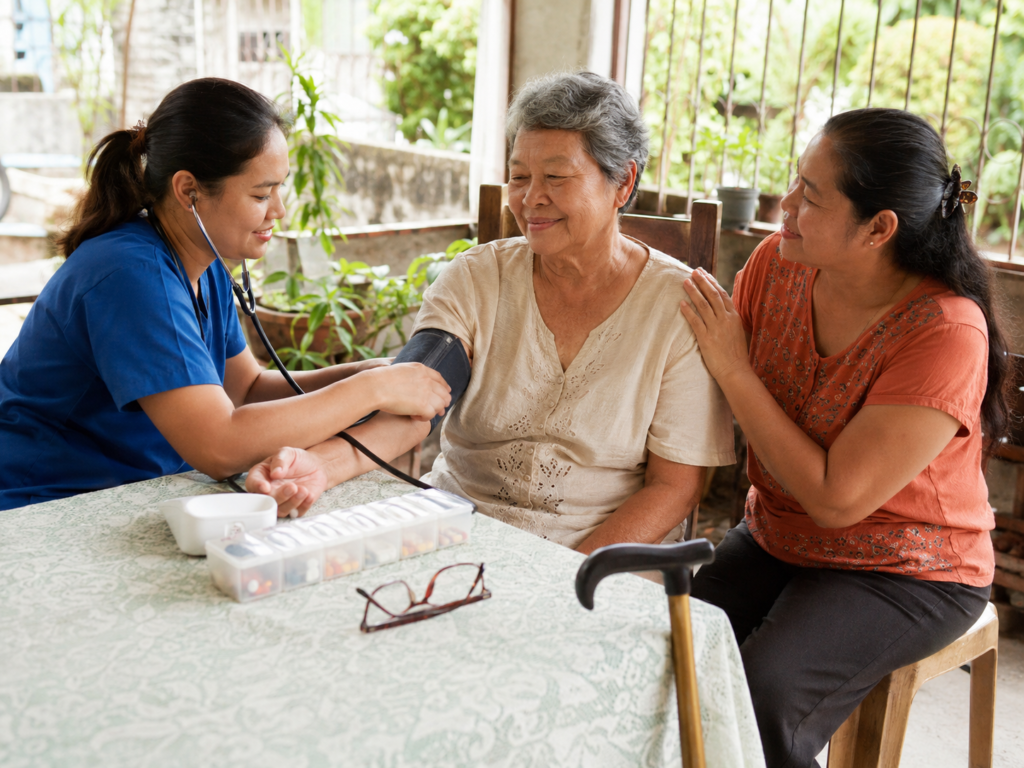
For many Filipino families, caring for an aging parent involves more than arranging a doctor’s appointment. It may require managing prescriptions, monitoring chronic diseases, understanding insurance rules, collecting documents, and traveling between local clinics and larger hospitals.
This is why healthcare for seniors in the Philippines should be viewed as a network rather than a single government program.
The country’s older population is substantial. Philippine Statistics Authority figures from the 2020 census recorded approximately 9.22 million people aged 60 and above. As more families deal with long-term illnesses and age-related health needs, the effectiveness of the senior care system increasingly depends on how well its different parts connect.
Automatic Health Insurance Is a Major Safety Net
A key protection is Republic Act No. 10645, which provides mandatory PhilHealth coverage for senior citizens.
The official text is available through Lawphil at https://lawphil.net/statutes/repacts/ra2014/ra_10645_2014.html.
This framework is particularly important for retirees who no longer receive employer-based health benefits. It helps ensure that reaching old age does not automatically mean losing access to national health insurance.
However, insurance coverage alone does not solve every problem. Older patients may require repeated laboratory tests, maintenance medicines, specialist consultations, rehabilitation, or assistance with transportation.
That is where other senior citizen protections become important.
Medical Discounts Reduce Repeated Healthcare Costs
Under the Expanded Senior Citizens Act, eligible older adults may receive a 20 percent discount and VAT exemption on qualified healthcare expenses.
For a younger, generally healthy person, one discount may appear modest. For an older adult who buys maintenance medicines every month and attends several medical appointments each year, the cumulative impact can be much greater.
The benefit is especially relevant for patients living with noncommunicable diseases such as hypertension and diabetes, which often require continuous monitoring.
A Typical Access Challenge Outside Major Cities
Consider a common situation rather than a single reported case: an elderly resident in a remote municipality experiences persistent dizziness. The first contact may be a barangay health worker or local health station. Further assessment could require travel to a rural health unit, diagnostic center, or hospital.
Each additional step may create a new barrier. The family must consider transportation, appointment schedules, medical documents, medicine availability, and the cost of accompanying the patient.
This illustrates one of the biggest realities of senior healthcare in an archipelagic country. A benefit may exist nationally, but actual access often depends on local capacity.
Local Government Services Are Essential
Barangay health stations and rural health units are important because they bring basic services closer to communities. They can support health monitoring, referrals, health education, and selected preventive services.
OSCA offices also play a practical role in helping older residents access senior citizen benefits and identification.
The most effective approach is proactive. Seniors and caregivers should maintain updated medical records, know which nearby facilities are PhilHealth-accredited, keep a complete list of medications, and seek regular monitoring before symptoms become emergencies.
The deeper issue is coordination. A strong senior health program connects insurance with affordable medicines, primary care, hospital access, and family support.
For Filipino older adults, the quality of the system is ultimately measured at the point of use: whether a patient can obtain the right care at the right time without being overwhelmed by cost, distance, or administrative complexity.